Guilin Travel Guide
If you’ve ever dreamed of stepping into a traditional Chinese watercolor painting, where soft green karst mountains pierce the mist, crystal-clear rivers wind through ancient villages, and every turn brings a view that takes your breath away, Guangxi Guilin is the place for you. For centuries, the Chinese saying “East or west, Guilin landscape is best” has held true, and today, it remains one of the most beloved and bucket-list-worthy destinations for international travelers exploring China. As someone who has traveled to Guilin with foreign friends over 6 times, spent weeks exploring every hidden corner of Guilin Yangshuo, and tasted my way through every local food stall in the city, I’ve put together this no-fluff, hyper-detailed Guilin Travel Guide to make your trip seamless, magical, and 100% tailored to foreign visitors. Whether you’re a first-time traveler using our China Travel Guide to plan your first trip to the country, or a seasoned explorer looking for off-the-beaten-path China Travel Tips, this guide has everything you need: a deep dive into Guilin’s history, all the must-see Famous scenic spots in China in the region, customizable itineraries, a complete food guide (including everything you need to know about iconic Guilin Rice Noodle), and critical tips to avoid common tourist pitfalls.
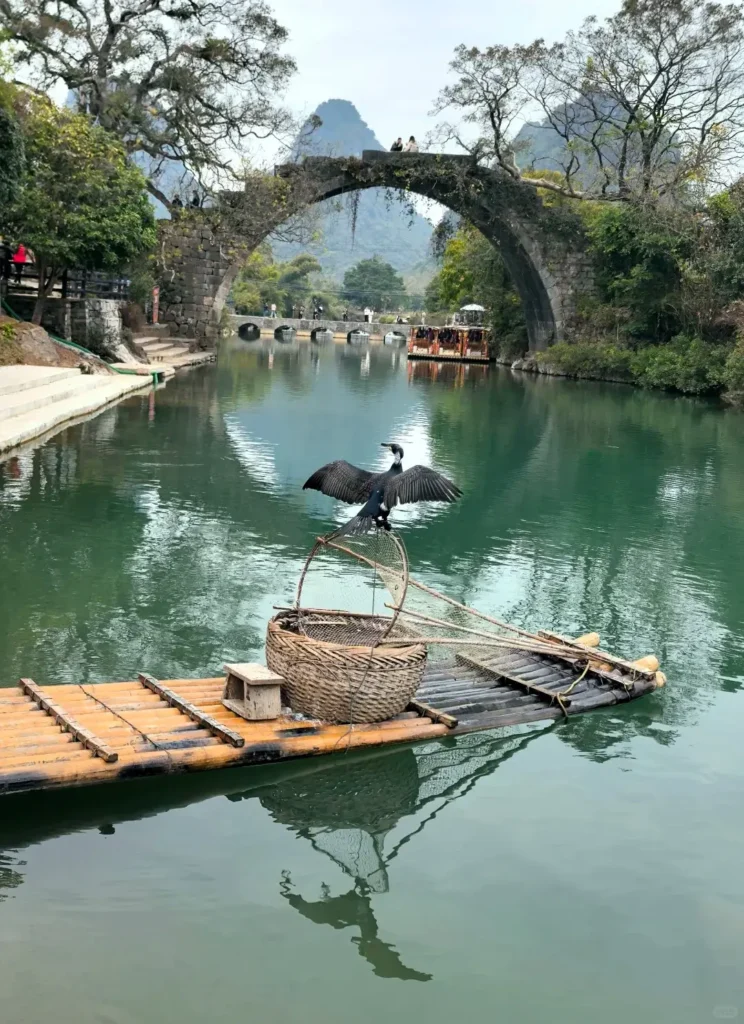

A Little Bit of History & Culture of Guangxi Guilin 🌿
Before we dive into the fun stuff, let’s take a quick look at the rich history that makes Guangxi Guilin so much more than just a pretty landscape. Guilin’s story stretches back over 2,100 years, to the Qin Dynasty (221-206 BCE), when the first emperor of China ordered the construction of the Lingqu Canal—one of the oldest surviving man-made canals in the world. This incredible engineering feat connected the Yangtze River and Pearl River systems, turning Guilin into a critical transportation and trade hub between central China and the southern regions, and later, a key stop on the ancient Maritime Silk Road.
For most of its history, Guilin has been the political, economic, and cultural center of Guangxi, a region home to 12 ethnic minority groups, including the Zhuang, Yao, Miao, and Dong people. This rich ethnic diversity is woven into every part of Guilin’s culture, from its vibrant folk music and traditional embroidery to its unique food and festivals. What makes Guilin world-famous, of course, is its otherworldly karst landscape, formed over millions of years as rainwater eroded the limestone bedrock into thousands of jagged peaks, underground caves, and winding rivers. This unique landscape has inspired Chinese artists and poets for over a thousand years, and today, the Li River and Guilin’s karst mountains are a UNESCO World Heritage Site, recognized as one of the most beautiful natural landscapes on earth.
Even today, Guilin balances its ancient roots with modern convenience: you can wander through 1,000-year-old villages in the morning, and enjoy a sleek, international coffee shop with river views in the afternoon. It’s this perfect blend of natural beauty, rich culture, and accessibility that makes it a must-visit for anyone traveling to China.

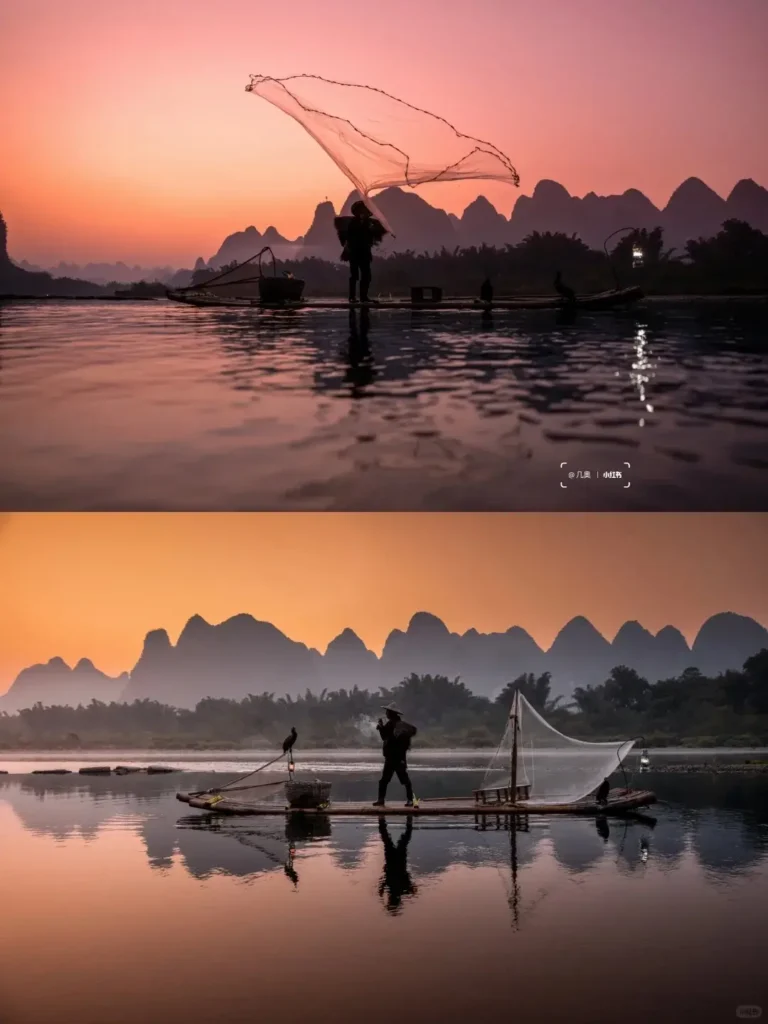
Top Famous Scenic Spots in Guangxi Guilin & Guilin Yangshuo 🏞️
No Guilin Travel Guide would be complete without breaking down the absolute must-see spots in the region. Guilin is split into two main areas: Guilin City Center (the urban heart of the region, with historic sites and iconic landmarks) and Guilin Yangshuo (the rural, scenic county 1.5 hours south of the city, where most of the postcard-perfect karst landscape is located). Below, I’ve broken down the unmissable spots in both areas, with pro tips for each to make your visit perfect.
Guilin City Center Must-Sees
Elephant Trunk Hill (Xiangbi Mountain)
This is the iconic symbol of Guangxi Guilin, and one of the most recognizable Famous scenic spots in China. The mountain gets its name from its shape: it looks exactly like a giant elephant dipping its trunk into the Li River to drink. The archway between the elephant’s trunk and body, called Water Moon Cave, creates a stunning reflection of the moon in the water at night, making it a popular spot for sunset and evening photos.
💡 Pro Tip: Visit early in the morning (before 8 AM) to avoid the crowds and get the best light for photos. The park is small, so you only need 1-2 hours to explore it fully.
Jingjiang Prince City & Solitary Beauty Peak
Step back into imperial China with this 600-year-old royal palace, built during the Ming Dynasty as the home of the Jingjiang Princes. The palace complex is incredibly well-preserved, with ancient halls, courtyards, and even the original imperial examination halls where scholars took the national exams to become government officials. The complex is also home to Solitary Beauty Peak, a sharp karst mountain that rises straight up from the city center, with panoramic views of the entire Guilin skyline and surrounding mountains from the top.
💡 Pro Tip: Don’t skip the free guided tour (available in English) to learn about the palace’s history— it’s included in your ticket and brings the site to life.
Two Rivers and Four Lakes Scenic Area
This is the perfect way to see Guilin’s cityscape and natural beauty in one go. The area connects the Li River and Peach Blossom River with four inner lakes, creating a 7.5km waterway that winds through the city, lined with ancient bridges, pagodas, and karst peaks. The best way to experience it is with an evening cruise: the bridges and pagodas are lit up with thousands of lights, and the reflections on the water are absolutely magical.
💡 Pro Tip: If you don’t want to pay for a cruise, you can walk or bike along the lakefront paths for free, and still get stunning views of the scenery.
Seven Star Park
The largest park in Guilin, Seven Star Park is home to seven karst peaks arranged like the stars of the Big Dipper, plus ancient caves, temples, and a small zoo. The highlight is Seven Star Cave, a massive underground karst cave with stunning stalactites and stalagmites, lit up with colorful lights to create a fairy-tale atmosphere. It’s a great spot to escape the heat of the city in the summer, and perfect for families or anyone who loves natural wonders.
Guilin Yangshuo Unmissable Highlights
If you’re using this Guilin Travel Guide to plan your trip, I’ll let you in on a secret: most travelers spend 1-2 days in Guilin City, and the rest of their time in Guilin Yangshuo— and for good reason. Yangshuo is where you’ll find the most breathtaking karst scenery, the iconic river cruises, and the laid-back, small-town vibe that makes the region so special.
Li River Cruise (Xingping to Yangshuo)
This is the crown jewel of Guangxi Guilin, and the experience that every traveler comes for. The Li River winds 83km from Guilin to Yangshuo, through the most stunning karst landscape in the world, with thousands of peaks rising from the water, ancient villages along the banks, and bamboo rafts floating past. The most iconic stretch is the Xingping to Nine Horse Mural Hill section, which is home to the view on the back of China’s 20-yuan banknote— a must-photo spot for every visitor.
💡 Pro Tip: Skip the large, crowded cruise ships from Guilin to Yangshuo, and opt for a small bamboo raft (motorized, for safety) from Xingping to Nine Horse Mural Hill. It’s more intimate, cheaper, and you can stop for photos whenever you want. For the best light, book a morning raft (8-10 AM) when the mist is still over the mountains.
Yulong River Bamboo Rafting
If the Li River is the grand, iconic experience, the Yulong River is the quiet, romantic alternative. This smaller, slower river winds through the rural Yangshuo countryside, with smaller karst peaks, rice fields, and ancient villages along the banks. The bamboo rafts here are hand-paddled by local villagers, and the trip includes small, gentle waterfalls that the rafts glide down— it’s peaceful, beautiful, and the perfect way to slow down and soak in the scenery.
💡 Pro Tip: Book the Yulong Bridge to Gongnong Bridge section, which is the most scenic stretch. Avoid the touts at the river entrance, and book your raft through your hotel or a reputable local agency to avoid scams.
Xingping Ancient Town
This 1,700-year-old town is the oldest settlement on the Li River, and it’s where you’ll find the 20-yuan banknote view. Unlike the more touristy West Street in Yangshuo, Xingping still has a quiet, authentic vibe, with ancient cobblestone streets, traditional Chinese courtyard homes, and local villagers going about their daily lives. It’s the perfect spot to wander, try local snacks, and watch the sunset over the Li River.
💡 Pro Tip: Climb Laozhai Mountain in Xingping for the absolute best panoramic view of the Li River and the 20-yuan view spot. It’s a 20-minute climb, and the view from the top is 100% worth it.
Xianggong Mountain
If you’re a photography lover, this is non-negotiable. Xianggong Mountain is the best spot in Guilin Yangshuo for sunrise photos, with unobstructed panoramic views of the Li River winding through hundreds of karst peaks. On a misty morning, the peaks peek through the clouds, and it looks exactly like a traditional Chinese painting.
💡 Pro Tip: You’ll need to wake up early (around 4-5 AM, depending on the season) to get to the top for sunrise. Book a driver through your hotel the night before, and bring a jacket— it’s cold at the top before the sun comes up.
Ten Mile Gallery & Yangshuo Countryside
The Ten Mile Gallery is a 10km road that winds through the heart of Yangshuo’s countryside, lined with karst peaks, rice fields, flower farms, and small villages. The best way to explore it is by electric bike (you can rent one for around 20 RMB a day in Yangshuo), which lets you stop whenever you want to take photos, visit a local farm, or just soak in the scenery. It’s completely free to explore, and it’s the perfect way to experience the rural beauty of Guangxi Guilin away from the crowds.
West Street (Yangshuo)
West Street is the main tourist street in Yangshuo, with a 1,400-year history. It’s lined with bars, restaurants, cafes, souvenir shops, and hostels, and it’s the heart of Yangshuo’s nightlife. It’s a fun spot to wander in the evening, grab a drink, and meet other travelers, but it’s very touristy— so don’t expect authentic local culture here.
⚠️ Pitfall Warning: Avoid the street touts who try to pull you into bars or restaurants with “free drinks” or “special deals”— they almost always come with hidden fees, and the food and drinks are overpriced.
Perfect Guilin Travel Guide Itineraries for Foreign Visitors 🗓️
One of the most common questions I get from foreign travelers is: how many days do I need in Guangxi Guilin? The answer depends on how much time you have, and how deep you want to dive. Below, I’ve created two customizable itineraries: a 3-day short getaway (perfect if you’re adding Guilin to a larger China Travel Guide itinerary) and a 5-day deep dive (for travelers who want to see everything the region has to offer, at a relaxed pace).
3-Day Short Getaway Itinerary
This itinerary is perfect for travelers with limited time, hitting all the iconic spots in Guilin and Guilin Yangshuo without feeling rushed.
Day 1: Guilin City Center Exploration
- Morning: Visit Elephant Trunk Hill, watch the sunrise over the Li River, and take photos of the iconic elephant shape.
- Midday: Head to Jingjiang Prince City & Solitary Beauty Peak, take the guided tour to learn about Guilin’s history, and climb to the top for panoramic city views.
- Afternoon: Wander the Two Rivers and Four Lakes lakefront paths, explore the ancient Dongxi Lane historic district (a pedestrian street with traditional architecture, local snacks, and boutique shops).
- Evening: Take a Two Rivers and Four Lakes evening cruise to see the lit-up bridges and pagodas, then grab dinner at a local restaurant in Dongxi Lane.
Day 2: Li River Cruise & Yangshuo Arrival
- Morning: Take the high-speed train from Guilin to Xingping (25 minutes, around 20 RMB), then board your bamboo raft for the iconic Xingping to Nine Horse Mural Hill cruise. Stop at the 20-yuan banknote view spot for photos.
- Midday: Explore Xingping Ancient Town, try local snacks for lunch, and climb Laozhai Mountain for panoramic river views.
- Afternoon: Take a bus from Xingping to Yangshuo (40 minutes, around 10 RMB), check into your hotel, then rent an electric bike to explore the Ten Mile Gallery.
- Evening: Wander West Street, grab dinner at a local restaurant (try the famous Yangshuo beer fish!), and enjoy the laid-back nightlife.
Day 3: Yulong River & Yangshuo Countryside
- Morning: Head to the Yulong River for a hand-paddled bamboo raft cruise along the most scenic stretch of the river.
- Midday: Stop at a local farm restaurant near the river for a farm-to-table lunch, with fresh local vegetables and home-cooked dishes.
- Afternoon: Continue exploring the Yangshuo countryside by electric bike, visit small local villages, and stop for photos at the Moon Hill scenic spot.
- Evening: Take the high-speed train back to Guilin (1.5 hours, around 30 RMB), or head directly to your next destination in China.
5-Day Deep Dive Itinerary
This itinerary is for travelers who want to experience everything Guangxi Guilin has to offer, with plenty of time to slow down, explore off-the-beaten-path spots, and soak in the local culture.
Day 1: Guilin City Center & Historic Exploration
- Morning: Elephant Trunk Hill, followed by a visit to the Lingqu Canal (1 hour from the city center), the ancient Qin Dynasty canal that put Guilin on the map.
- Midday: Lunch at a local restaurant near the canal, trying authentic Guangxi dishes.
- Afternoon: Return to Guilin City, visit Jingjiang Prince City & Solitary Beauty Peak, and explore the Seven Star Park and Seven Star Cave.
- Evening: Two Rivers and Four Lakes evening cruise, dinner at a local restaurant in Dongxi Lane, and a walk through the historic street at night.
Day 2: Longji Rice Terraces Day Trip
- Morning: Take a private car or bus from Guilin to the Longji Rice Terraces (2 hours away), one of the most beautiful rice terrace landscapes in the world. The terraces are carved into the mountains by the Zhuang and Yao people over 700 years ago, and they’re stunning year-round: green in the summer, golden in the fall, and covered in snow in the winter.
- Midday: Lunch at a local Zhuang family homestay, trying home-cooked ethnic minority dishes.
- Afternoon: Hike through the terraces, visit the ancient Ping’an and Jinkeng villages, and meet local villagers.
- Evening: Return to Guilin City, or stay overnight in a homestay at the terraces for a sunrise view the next morning.
Day 3: Li River Cruise & Xingping Ancient Town
- Morning: High-speed train from Guilin to Xingping, bamboo raft cruise along the Li River, and photos at the 20-yuan view spot.
- Midday: Lunch in Xingping Ancient Town, exploring the cobblestone streets and local shops.
- Afternoon: Climb Laozhai Mountain for panoramic views, then visit the nearby Fishing Village, an ancient village where local fishermen still use cormorant birds to catch fish (a 1,000-year-old tradition).
- Evening: Sunset cruise on the Li River, then take the bus to Yangshuo and check into your hotel.
Day 4: Yulong River & Yangshuo Countryside
- Morning: Hand-paddled bamboo raft cruise on the Yulong River, stopping along the way to visit local villages and rice fields.
- Midday: Farm-to-table lunch at a local family restaurant near the river.
- Afternoon: Electric bike ride through the Ten Mile Gallery, visit Moon Hill, and explore the off-the-beaten-path villages around Yangshuo. You can also add a rock climbing session (Yangshuo is one of the best rock climbing destinations in China!) or a cooking class to learn how to make local dishes.
- Evening: Impression Sanjie Liu light show (a massive outdoor performance on the Li River, directed by the famous Chinese director Zhang Yimou, with hundreds of performers on the water), followed by dinner and a walk along the Yangshuo riverfront.
Day 5: Xianggong Mountain Sunrise & Departure
- Morning: Wake up early for a trip to Xianggong Mountain, watch the sunrise over the Li River and karst peaks, and take stunning photos.
- Midday: Brunch in Yangshuo, last-minute souvenir shopping, and a final walk along the riverfront.
- Afternoon: Take the high-speed train back to Guilin, or head directly to your next destination in China.
Ultimate Guangxi Guilin Food Guide: Must-Try Dishes & Where to Eat 🍜
No Guilin Travel Guide is complete without a deep dive into the region’s incredible food. Guangxi Guilin’s cuisine is bold, flavorful, and deeply tied to the local land and ethnic minority culture— it’s spicy, sour, umami-rich, and completely different from the Cantonese or Sichuan food that many foreign travelers are familiar with. Below, I’ve broken down the absolute must-try dishes, with everything you need to know to order like a local, including the iconic Guilin Rice Noodle.
Guilin Rice Noodle (Guilin Mifen)
Let’s start with the star of the show: Guilin Rice Noodle. This is the most famous dish from Guangxi Guilin, and it’s a breakfast staple for locals— you’ll find noodle shops on every corner of the city, open from 5 AM until late at night. The dish is made with fresh, chewy rice noodles, topped with slow-braised pork or beef, fried peanuts, pickled bamboo shoots, chopped scallions, cilantro, and a secret spiced broth that’s been simmered for hours with bones, herbs, and spices.
The best part? Guilin Rice Noodle is completely customizable. Most shops have a self-serve condiment bar, where you can add chili oil, vinegar, garlic, pickled vegetables, and more to make it perfect for your taste. It’s also incredibly cheap: a bowl costs around 10-15 RMB, making it the perfect budget-friendly meal for travelers.
💡 Pro Tip: Locals eat Guilin Rice Noodle “dry” (mixed with the sauce and toppings, with a small bowl of broth on the side) instead of in soup. Order it the local way for the most authentic experience! For the best bowls, skip the tourist shops near the main attractions, and head to small, family-run shops in residential neighborhoods— the older and busier the shop, the better the noodles.
Yangshuo Beer Fish
The second most iconic dish from the region, Beer Fish is a specialty of Guilin Yangshuo. It’s made with fresh fish caught directly from the Li River, braised in local Li River beer, tomatoes, chili, ginger, and garlic, until the fish is tender and the sauce is rich and flavorful. The dish is bright, fresh, slightly spicy, and has a subtle beer flavor that cuts through the richness of the fish.
💡 Pro Tip: Order the dish with a local carp or grass carp, which are the most authentic options. Make sure the restaurant uses fresh, live fish— most restaurants will let you pick your fish from the tank before cooking it.
Stuffed River Snails (Luo Tian Luo)
This is a classic Guangxi dish, and a favorite among locals. Large river snails are stuffed with a mixture of minced pork, glutinous rice, ginger, garlic, chili, and spices, then braised in a rich, spicy broth. The meat is tender, flavorful, and slightly chewy, and the broth is perfect for sopping up with rice. If you’re adventurous and love bold flavors, this is a must-try.
Lipu Taro Pork Belly
This is a traditional festival dish from Guangxi, made with tender, melt-in-your-mouth braised pork belly, layered with slices of Lipu taro (a famous taro variety from Lipu County, near Guilin). The taro absorbs the rich, savory sauce from the pork, and the dish is sweet, salty, and incredibly comforting. It’s the perfect dish for cold days, or for anyone who loves classic Chinese braised dishes.
Guangxi Oil Tea (You Cha)
This is a traditional breakfast drink from the Zhuang and Yao ethnic minorities, and it’s a staple in Guangxi Guilin. It’s made by stir-frying tea leaves with ginger, garlic, and peanuts, then boiling it with water to make a strong, savory, slightly bitter tea. It’s served with puffed rice, fried peanuts, chopped scallions, and pickled vegetables, and it’s meant to wake you up and warm you up in the morning. It’s an acquired taste, but it’s a deeply authentic part of Guangxi culture, so it’s worth trying at least once.
Mugwort Cakes (Ai Ba)
A sweet, chewy snack made from glutinous rice and fresh mugwort leaves, stuffed with sweet sesame, peanut, or red bean paste. The cakes have a subtle herbal flavor, and they’re steamed or fried until they’re soft and chewy. You’ll find them at street stalls all over Guilin and Yangshuo, and they’re the perfect sweet snack to grab while you’re exploring.
Sweet Osmanthus Desserts
Guilin is famous for its osmanthus flowers, which bloom in the fall and fill the city with a sweet, floral scent. Local chefs use osmanthus to make a wide range of desserts, including osmanthus cake, osmanthus sugar water, osmanthus glutinous rice wine, and osmanthus jelly. They’re sweet, fragrant, and the perfect way to end a meal.
Essential China Travel Tips & Guilin Pitfalls to Avoid ⚠️
After 6+ trips to Guangxi Guilin with foreign travelers, I’ve learned all the tips and tricks to make your trip smooth, and all the common pitfalls to avoid. These China Travel Tips will save you time, money, and stress, so you can focus on enjoying the beautiful scenery and delicious food.
Pro Travel Tips for Guilin
- Transportation: The best way to get around Guilin and Yangshuo is by high-speed train, electric bike, and Didi (China’s version of Uber). The high-speed train between Guilin and Yangshuo/Xingping is fast, cheap, and comfortable, and electric bikes are the perfect way to explore the Yangshuo countryside. Didi works with foreign phone numbers and credit cards, so it’s easy to use for foreign travelers.
- Payment: Most hotels, restaurants, and tourist attractions accept Alipay and WeChat Pay with foreign credit cards, but it’s a good idea to carry some cash (RMB) with you for small street stalls, local shops, and rural villages. You can withdraw cash from ATMs at major banks in Guilin City with a foreign debit card.
- Language: Most people working in the tourism industry in Guilin and Yangshuo speak basic English, but very few locals in rural areas or small villages speak English. Download a translation app like Google Translate or Baidu Translate, and download the Chinese language pack for offline use. It’s also a good idea to save the Chinese names of the attractions and hotels you’re visiting, to show to taxi drivers or locals.
- Best Time to Visit: The best time to visit Guangxi Guilin is April to June (spring, when the mountains are green and the rivers are full) and September to November (autumn, when the weather is cool and sunny, and the osmanthus flowers are blooming). Summer (July to August) is hot and rainy, but it’s also the greenest time of year. Winter (December to February) is cold and quiet, but it’s the cheapest time to visit, with very few crowds.
- Packing Essentials: Bring comfortable walking shoes, a portable charger (you’ll be taking thousands of photos!), a rain jacket (it rains often in Guilin), sunscreen, a hat, and insect repellent for the countryside. If you’re visiting in the winter, bring a warm jacket— it gets cold in the mountains in the morning and evening.
- Book Ahead: For popular experiences like the Li River bamboo raft, Xianggong Mountain sunrise trips, and the Impression Sanjie Liu show, book ahead through your hotel or a reputable local agency, especially during peak travel seasons (Chinese New Year, May Day holiday, National Day holiday in October).
Common Pitfalls to Avoid in Guilin
⚠️ Avoid the “black boat” scams: Never book a Li River or Yulong River raft from a random tout on the street, or from someone who approaches you offering a “cheap” cruise. These are almost always unlicensed boats, which are unsafe, and they often cut the trip short or charge hidden fees once you’re on the water. Always book through your hotel or a licensed travel agency.
⚠️ Don’t overpay for souvenirs: The souvenir shops on West Street and near the main tourist attractions are wildly overpriced. If you want to buy souvenirs, head to local markets in residential neighborhoods, or buy directly from local artisans in the villages. Always negotiate politely, but don’t lowball too much— the items are hand-made, and the prices are already very affordable for most foreign travelers.
⚠️ Avoid the “free photo” scams: You’ll find people dressed in traditional ethnic minority costumes near the main attractions, offering to take photos with you for “free”. They will almost always charge you a high fee after the photo is taken, so avoid them unless you ask the price upfront and agree to it.
⚠️ Don’t eat at tourist trap restaurants: The restaurants right next to Elephant Trunk Hill, West Street, and other major attractions are overpriced, and the food is often not authentic. For the best food, head to small, family-run restaurants in residential neighborhoods, where locals eat. If a restaurant is full of locals, it’s going to be good.
⚠️ Don’t skip travel insurance: This is one of the most important China Travel Tips for any foreign visitor. Make sure you have comprehensive travel insurance that covers medical emergencies, trip cancellations, and lost luggage, before you travel to China.
FAQ: About Guilin Travel Guide ❓
These are the 4 most commonly asked questions by foreign travelers planning a trip to Guangxi Guilin, based on Google search data and my own experience helping hundreds of international visitors plan their trips.
- What is the best time of year to visit Guangxi Guilin?
- The best time to visit Guangxi Guilin is during the spring (April to early June) and autumn (September to November) seasons. Spring brings mild temperatures, lush green mountains, and full rivers, making it perfect for river cruises and hiking. Autumn offers cool, sunny weather with very little rain, and the city is filled with the sweet scent of osmanthus flowers in full bloom. These seasons also avoid the extreme heat and heavy rains of summer (July to August) and the cold, dry weather of winter (December to February). That said, winter is the quietest and cheapest time to visit, with almost no crowds, and summer offers the greenest, most vibrant scenery, even with the occasional rainstorm.
- How many days do I need for a complete Guilin Yangshuo trip?
- For a complete, relaxed trip to Guilin Yangshuo and the surrounding areas, I recommend 4-5 days. This gives you enough time to explore Guilin City’s historic sites, take the Li River cruise, spend 2-3 days exploring Yangshuo’s countryside and rivers, and even take a day trip to the Longji Rice Terraces. If you have limited time, you can see all the iconic spots in 3 days, but you’ll be on a tighter schedule, and you won’t have time to slow down and soak in the laid-back vibe of the region. For travelers who want to go off the beaten path, explore hidden villages, and try outdoor activities like rock climbing and hiking, 7 days is the perfect amount of time.
- Is Guilin Rice Noodle suitable for vegetarians and people with dietary restrictions?
- Yes! Guilin Rice Noodle is very easy to adapt for vegetarians, vegans, and people with dietary restrictions. Traditional Guilin Rice Noodle uses pork or beef as the main topping, but almost every noodle shop in Guilin offers a vegetarian version, with tofu, mushrooms, pickled vegetables, and peanuts, instead of meat. The broth for vegetarian noodles is made with vegetables and mushrooms, instead of bones, so it’s completely vegan-friendly. For people with gluten allergies, the rice noodles are naturally gluten-free, and you can ask for no soy sauce or wheat-based condiments at the self-serve bar. Just make sure to tell the shop staff “wo chi su” (I’m vegetarian) when you order, and they’ll be happy to accommodate you.
- Do I need a separate visa to visit Guilin as a foreign tourist in China?
- No, you do not need a separate visa to visit Guangxi Guilin. Guilin is part of mainland China, so you just need a valid Chinese tourist visa (L visa) to visit, the same as you would for any other city in mainland China. If you are from a country that is eligible for China’s 144-hour visa-free transit policy, you can also visit Guilin without a visa for up to 144 hours (6 days), as long as you meet the transit requirements: you must be transiting through a major Chinese international airport (like Guilin Liangjiang International Airport, Guangzhou Baiyun International Airport, or Shanghai Pudong International Airport), and you must have a valid passport, a confirmed onward ticket to a third country or region, and all required documents for your destination. For most foreign travelers, a standard Chinese tourist visa is the easiest option for a trip to Guilin.
Heartfelt Wishes for Your China Travel Adventure ❤️
As you prepare for your journey to Guangxi Guilin, I hope this Guilin Travel Guide has given you all the tools, tips, and inspiration you need to make your trip absolutely magical. China is a country of incredible beauty, rich history, and warm, welcoming people, and Guilin is one of the most special places it has to offer. Whether you’re floating down the Li River on a bamboo raft, eating a steaming bowl of Guilin Rice Noodle at a local street stall, watching the sunrise over the karst peaks from Xianggong Mountain, or just wandering through an ancient village and meeting local villagers, I hope every moment of your trip fills you with wonder, joy, and curiosity.
May your travels be safe, your photos be stunning, your bowls of noodles be delicious, and your heart be full of beautiful memories that will last a lifetime. Whether this is your first trip using our China Travel Guide, or your tenth adventure in China, I hope Guilin steals a piece of your heart, just like it has stolen mine. Welcome to China, welcome to Guilin— your fairy-tale adventure is about to begin.


 English
  Chinese