Terracotta Army
If you’re diving into ancient Chinese history on your trip to China, there’s no archaeological wonder more breathtaking, mysterious, and awe-inspiring than the Terracotta Army. Buried underground for over 2,200 years before its accidental discovery in 1974, this collection of thousands of life-sized terracotta warriors and horses is one of the most incredible archaeological finds in human history, a UNESCO World Heritage Site, and a must-visit on every China Travel Guide bucket list. Located just outside Xi’an, the ancient capital of 13 Chinese dynasties and the heart of ancient Chinese civilization, the Terracotta Army in China isn’t just a museum exhibit—it’s a time capsule that lets you step into the golden age of China’s first imperial dynasty, and witness the ambition, artistry, and ingenuity of a civilization that shaped the world.
Whether you’re a die-hard history fanatic, a culture lover eager to learn about ancient China, or a casual traveler wanting to check off one of the greatest man-made wonders of the world, this ultimate guide will give you every single detail you need to plan an amazing, stress-free visit to the Terracotta Army. I’ve visited this incredible site four times over the past decade, and every time I walk into the museum, I’m still blown away by the scale and beauty of the warriors. This guide isn’t just a list of dry facts—it’s the exact advice I give to my friends and family when they visit Xi’an, with all the insider tips, hidden secrets, and trap-avoiding hacks you need to have the best possible experience, without the common mistakes that ruin so many travelers’ trips. I’ll walk you through the full history of the warriors, the incredible stories behind their creation, the must-see spots in the museum, the best way to get there, and all the practical details you need to make your visit unforgettable.
The Origin and Core Purpose of the Terracotta Army
To truly appreciate the Terracotta Army, you need to understand the man behind it: Qin Shi Huang, the first Emperor of China, and the visionary (and ruthless) ruler who unified China and changed the course of history forever.
Qin Shi Huang was born Ying Zheng in 259 BCE, during the chaotic Warring States Period, when China was split into seven warring kingdoms that had been fighting for control of the country for over 200 years. He ascended to the throne of the Qin Kingdom at just 13 years old, in 246 BCE, and by the time he was 39, he had conquered all six rival kingdoms, unifying China for the first time in history in 221 BCE. He declared himself the “First Emperor” (Shi Huangdi), creating the imperial system that would rule China for the next 2,000 years, until the fall of the Qing Dynasty in 1912.
From the very first day he ascended to the throne, at 13 years old, Qin Shi Huang began planning and building his mausoleum, the final resting place where he would spend eternity. In ancient Chinese culture, people believed strongly in the concept of “treating death as if it were life” (shi si ru shi sheng). They believed that the afterlife was an exact continuation of the life you lived on Earth, and that you would need the same wealth, power, and protection in the afterlife that you had in your mortal life. For Qin Shi Huang, the most powerful man in China, this meant building a mausoleum that was an exact replica of his empire, his palace, and his army, so that he could continue to rule as Emperor in the afterlife.
The construction of the mausoleum and the Terracotta Army was one of the largest and most ambitious building projects in human history. It took 39 years to complete, from 246 BCE to 208 BCE, and employed over 700,000 skilled craftsmen, artisans, and laborers from across the entire Qin Empire. The project was overseen by the Emperor’s Prime Minister, Li Si, one of the most influential politicians in Chinese history, and the general in charge of construction was Zhang Han, a famous Qin military general.
The core purpose of the Terracotta Army was threefold, and it’s far more than just a set of “decorative statues” as many travelers mistakenly believe:
- Eternal Military Protection: The primary purpose of the army was to serve as Qin Shi Huang’s personal imperial guard in the afterlife, protecting him from evil spirits, enemy ghosts, and any threats to his eternal rule. The warriors are arranged in a full battle formation, exactly as the Qin imperial army would have been arranged during the Emperor’s life, ready to march into battle at a moment’s notice. They were armed with real, functional bronze weapons—swords, spears, crossbows, and arrowheads—so that they could defend the Emperor in the afterlife.
- A Symbol of Imperial Power and Unification: The Terracotta Army was a physical representation of Qin Shi Huang’s military might and his achievement of unifying China. The army is a perfect replica of the real Qin imperial army, with different ranks, units, and branches of the military, from ordinary infantry soldiers to high-ranking generals, from cavalry to archers to chariot units. It was a way for the Emperor to show off the power and organization of his empire, both to his people in the mortal world, and to the spirits in the afterlife.
- A Humane Alternative to Human Sacrifice: Before the Qin Dynasty, it was common for Chinese rulers to practice human sacrifice when they died. During the Shang and Zhou Dynasties, when a king died, hundreds or even thousands of his soldiers, servants, concubines, and officials would be killed and buried with him, to serve him in the afterlife. By the time of the Qin Dynasty, this practice had become less common, but it still happened. Qin Shi Huang’s decision to build a terracotta army instead of sacrificing his real army was a radical, humane choice for the time, and it saved the lives of thousands of his soldiers and subjects. This is a detail that many travelers don’t know, and it adds a fascinating layer to the story of the Terracotta Army.
Tragically, Qin Shi Huang never got to see his mausoleum completed. He died suddenly in 210 BCE, at the age of 49, while on a tour of his empire. His body was buried in the central mausoleum, and the construction of the Terracotta Army was rushed to completion by his son, the Second Emperor, Qin Er Shi. Just two years later, in 208 BCE, the Qin Dynasty collapsed, overthrown by rebel forces during a massive peasant uprising. The Terracotta Army was burned, damaged, and buried underground, forgotten for over 2,000 years, until its accidental discovery in 1974.
The Incredible History and Discovery of the Terracotta Army
For over two millennia, the Terracotta Army lay buried and forgotten beneath the fields of Lintong County, just outside Xi’an. Local farmers had found small pieces of terracotta and ancient bronze artifacts in their fields for centuries, but no one had any idea of the massive, world-changing discovery that lay just beneath their feet.
The story of the discovery of the Terracotta Army is one of the most fascinating in archaeological history, and it all started with a group of farmers digging a well during a devastating drought. In March 1974, six farmers from the village of Xiyang, in Lintong County, were struggling to find water for their crops. The region had been hit by a severe drought, and all the local wells had dried up. The farmers decided to dig a new well in a small, wooded area at the foot of Lishan Mountain, about 1.5 kilometers east of Qin Shi Huang’s mausoleum mound.
On March 29, 1974, when the farmers had dug the well about 5 meters deep, one of them, Yang Zhifa, hit something hard with his shovel. At first, they thought it was a rock, but as they dug around it, they realized it was the head of a life-sized terracotta figure, with a painted face and hair. They also found broken terracotta arms and legs, bronze arrowheads, and ancient bricks. The farmers had no idea what they had found—they thought it was an old statue from a local temple, or a clay figure from a grave. They took the terracotta head back to the village, and some of the villagers thought it was bad luck, a ghost that would bring more drought to the village. Others thought it was a valuable antique, and tried to sell the broken pieces.
Word of the discovery eventually reached a local cultural relics official, Zhao Kangmin, who immediately recognized the significance of the find. He rushed to the village, collected all the broken terracotta pieces, and began to restore them. He realized that the terracotta figure was from the Qin Dynasty, over 2,200 years old, and that it was part of a much larger site. He reported the discovery to the national cultural relics authorities in Beijing, and in July 1974, a team of national archaeologists arrived in Lintong to begin a formal excavation of the site.
What they found shocked the world. The archaeologists uncovered a massive pit, 230 meters long and 62 meters wide, filled with thousands of life-sized terracotta warriors and horses, arranged in a full battle formation. This pit, now known as Pit 1, is the largest of the Terracotta Army pits, and it’s the one that you see in all the iconic terracotta army photos. Over the next few years, the archaeologists discovered three more pits: Pit 2, Pit 3, and an unfinished Pit 4, which was empty, likely abandoned when the Qin Dynasty collapsed.
In 1979, the Emperor Qin Shi Huang’s Terracotta Warriors and Horses Museum officially opened to the public, just five years after the initial discovery. In 1987, the Mausoleum of the First Qin Emperor, including the Terracotta Army, was listed as a UNESCO World Heritage Site, and it was named the “Eighth Wonder of the World”. Since then, over 100 million visitors from around the world have visited the site, including over 200 heads of state and government, from Queen Elizabeth II to Barack Obama.
What’s most incredible is that we’ve only scratched the surface of the site. So far, archaeologists have excavated less than 1% of the entire Qin Shi Huang Mausoleum complex, which covers a total area of 56.25 square kilometers—about 78 times the size of the Forbidden City in Beijing. The Terracotta Army is just a small part of the mausoleum complex, which includes hundreds of other burial pits, palaces, temples, and the central underground mausoleum, which has never been excavated. Every year, archaeologists make new discoveries at the site, uncovering more secrets about the Qin Dynasty, and the incredible man who built this wonder.
Fascinating Secrets and Historical Stories of the Terracotta Army
The Terracotta Army is full of incredible secrets, details, and stories that most travelers never learn about, even after visiting the museum. Knowing these secrets will make your visit infinitely more meaningful, and help you appreciate the incredible artistry and ingenuity that went into creating these warriors. Here are the most fascinating stories and secrets you need to know before you go:
Every Single Warrior is Completely Unique
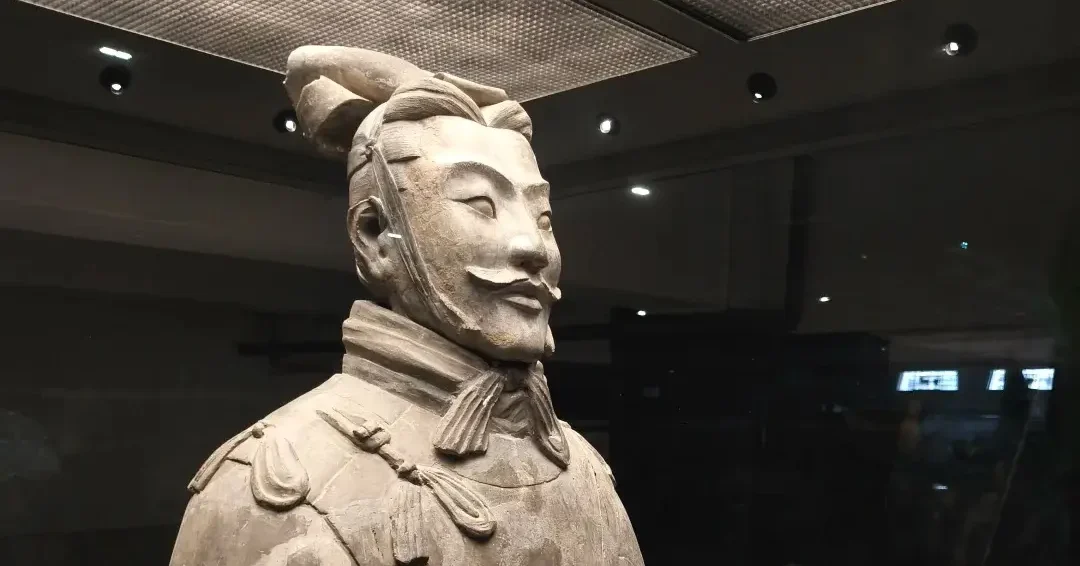
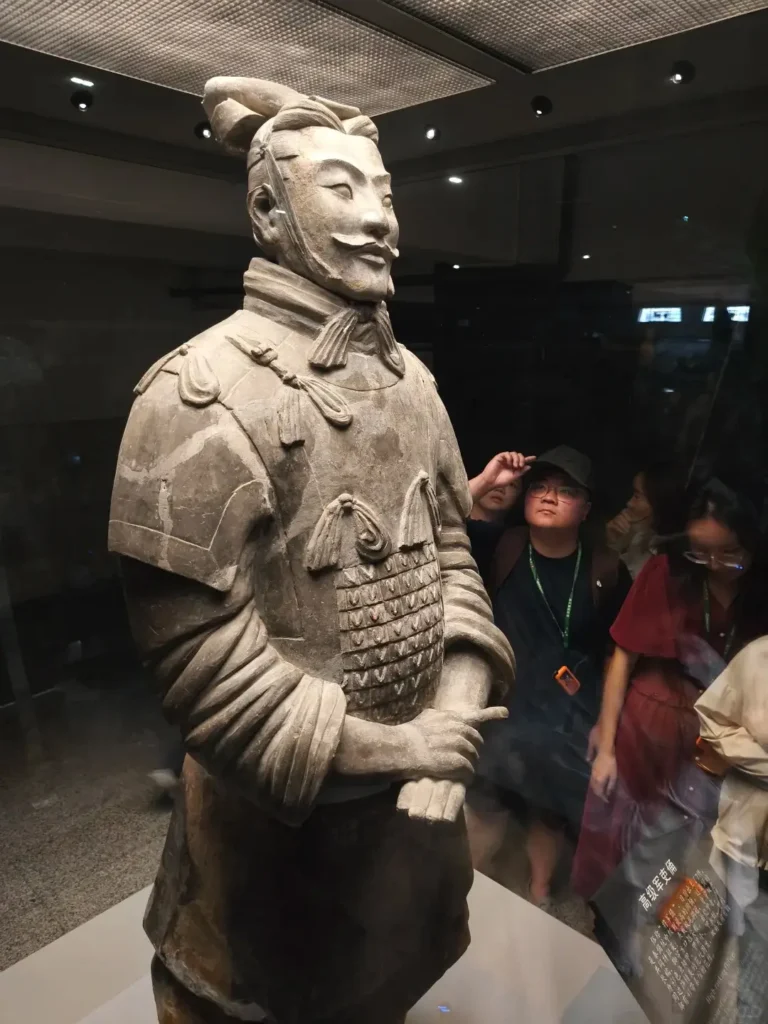
One of the most incredible facts about the Terracotta Army is that no two warriors are exactly alike. Every single one of the over 8,000 warriors excavated so far has a completely unique face, with distinct facial features, expressions, hairstyles, beards, and even ears. For decades, people thought that the warriors were mass-produced using molds, but modern archaeological research has shown that while the basic body parts were made using molds, every single face was hand-carved and customized by the artisans, to make each warrior unique.
Archaeologists have identified over 40 different facial shapes, hundreds of different hairstyles and beards, and thousands of unique facial features. The warriors have different expressions: some are stern and serious, some are calm and determined, some have a faint smile, some look angry and ready for battle. The hairstyles are also unique, and they tell us about the warrior’s rank, where they came from, and their role in the army. For example, ordinary soldiers have simple topknots, while high-ranking officers have more elaborate, decorated hairstyles, and some warriors have braids and hairstyles that show they came from minority ethnic groups in the Qin Empire.
Even more incredibly, archaeologists have found the names of over 80 different craftsmen carved into the hidden parts of the warriors, like the back of the neck or the inside of the armor. These were the master artisans who created the warriors, and each master was responsible for a team of craftsmen. This was a quality control system: if a warrior was defective, the craftsman who made it could be identified and punished. This system ensured that every single warrior was made with the highest level of skill and attention to detail, and it’s why the warriors are so incredibly well-made, even after 2,200 years.
The Warriors Were Originally Brightly Colored
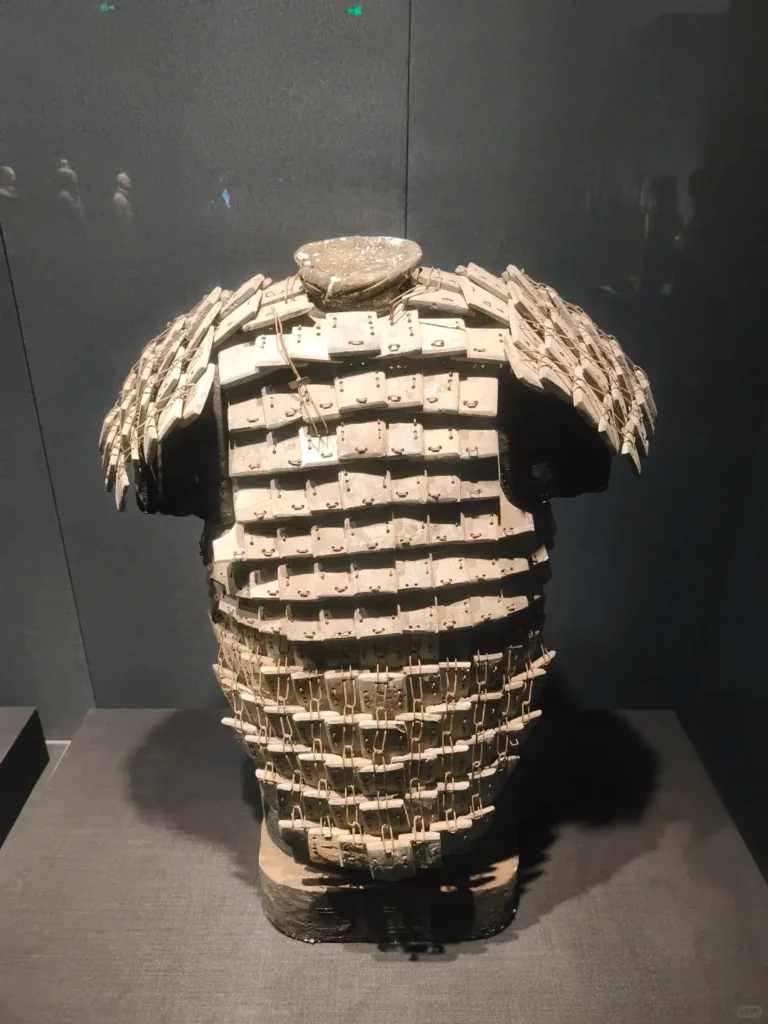
Another huge surprise for most travelers is that the Terracotta Army wasn’t always the grey, terracotta color that you see today. When the warriors were first buried, every single one was painted with bright, vivid colors: red, blue, green, purple, yellow, black, and white. Their faces were painted with skin tones, their eyes were painted black and white, their hair was painted black, their armor was painted with bright colors and patterns, and even the details of their uniforms and weapons were painted.
Tragically, most of the paint has been lost over the centuries. When the Qin Dynasty collapsed, rebel forces broke into the pits, set fire to the wooden roof structures, and damaged the warriors. The fire and the collapse of the roof destroyed most of the paint, and the 2,200 years underground also caused most of the remaining paint to fade and peel off. Even worse, when the warriors were first excavated in the 1970s, the remaining paint on the warriors oxidized and peeled off within seconds of being exposed to the air and light. The paint was bound to the terracotta with a thin layer of lacquer, which dried out and shrank as soon as it was exposed to the air, taking the paint with it.
Today, archaeologists have developed advanced technology to preserve the remaining paint on the warriors. When a new warrior is excavated, it’s immediately sprayed with a special chemical solution to preserve the lacquer, and it’s wrapped in plastic to keep it moist, before being moved to a special laboratory for restoration. Using this technology, archaeologists have been able to preserve dozens of painted warriors, which are now on display in the museum. When you visit, you can see these painted warriors, and get a sense of how bright and vibrant the entire army would have looked when it was first built. It’s a truly incredible sight, and it’s one of the hidden gems of the museum that many travelers miss.
The Warriors Were Armed With Real, Functional Weapons
The Terracotta Army isn’t just a model of an army—it’s a fully equipped, functional military force, at least in the eyes of the ancient Qin people. Every single warrior was originally armed with real, functional bronze weapons: swords, spears, lances, halberds, crossbows, and over 40,000 bronze arrowheads. These weren’t decorative replicas—they were real, working weapons, the same ones used by the Qin imperial army in battle.
The quality of these weapons is absolutely incredible, and it shows just how advanced the Qin Dynasty’s metallurgy and weapon-making technology was. The bronze swords found in the pits are up to 90 centimeters long, far longer than the swords made by other civilizations at the time. They’re made from a high-tin bronze alloy, which makes them extremely strong and sharp, and they were sharpened to a razor edge, capable of cutting through armor. Even more incredibly, many of the swords were found to be coated with a thin layer of chromium oxide, which protected them from rust and corrosion. When they were unearthed, after 2,200 years underground, they were still shiny and sharp, as if they had been made yesterday. This chromium plating technology was thought to have been invented in the 20th century, but the Qin Dynasty was using it over 2,000 years ago.
The crossbows found in the pits are also a marvel of ancient engineering. The Qin crossbow was the most advanced weapon of its time, with a range of over 800 meters, far longer than any other bow or crossbow in the world at the time. The crossbows had a standardized trigger mechanism, with parts that were interchangeable, so that a broken part could be replaced quickly in battle. This is the earliest example of standardized, mass-produced weapon parts in history, a technology that wasn’t widely used in the West until the Industrial Revolution, over 2,000 years later.
Most of the weapons were stolen by rebel forces when the Qin Dynasty collapsed, but archaeologists have found thousands of arrowheads, hundreds of swords and spears, and dozens of crossbow triggers in the pits. Many of these weapons are on display in the museum, and they’re an incredible sight to see.
The Unopened Mausoleum: A Hidden World of Secrets
The Terracotta Army is just the guard post for Qin Shi Huang’s main mausoleum, a massive underground palace that has remained sealed and unexcavated for over 2,200 years. The mausoleum is buried beneath a 76-meter-high earth mound, about 1.5 kilometers west of the Terracotta Army pits, and it’s one of the most mysterious archaeological sites in the world.
According to the ancient historical text Records of the Grand Historian, written by Sima Qian about 100 years after Qin Shi Huang’s death, the underground mausoleum is an exact replica of the Qin Empire. It has a ceiling decorated with pearls and precious stones to represent the sun, moon, and stars, and a floor with rivers and seas of flowing mercury, to represent the Yangtze River, the Yellow River, and the oceans of China. The mausoleum is filled with priceless treasures, gold, silver, and jade, and it’s protected by automatic crossbow traps that will fire on anyone who tries to break in.
For decades, historians thought that Sima Qian’s description was just a myth, but modern archaeological research has proven that much of it is true. Archaeologists have tested the soil around the mausoleum mound, and found extremely high levels of mercury, far higher than the natural level, which confirms that there is a large amount of mercury buried beneath the mound, just as Sima Qian described. They’ve also used ground-penetrating radar and other non-invasive technology to map the underground mausoleum, and found that it’s a massive, multi-chambered palace, about the size of a football field, buried 30-40 meters beneath the earth.
So why haven’t archaeologists excavated the mausoleum? There are two main reasons. First, the technology to safely excavate and preserve the contents of the mausoleum doesn’t exist yet. When the Terracotta Army was first excavated, the paint on the warriors oxidized and peeled off within seconds, and archaeologists don’t want the same thing to happen to the treasures in the mausoleum. The mercury in the mausoleum is also extremely toxic, and excavating it would be dangerous for the archaeologists, and could damage the site.
Second, there is a deep cultural respect for the dead in China, especially for a historical figure as important as Qin Shi Huang. Many people believe that the mausoleum should remain sealed, as a sign of respect for the Emperor, and that we shouldn’t disturb his final resting place. For now, the mausoleum remains sealed, a hidden world of secrets waiting to be discovered, and it’s one of the most fascinating parts of the Terracotta Army story.
The Must-See Spots of the Terracotta Army Museum
The Emperor Qin Shi Huang’s Terracotta Warriors and Horses Museum is a massive complex, with four main exhibition halls, plus the nearby Lishan Garden (Qin Shi Huang’s Mausoleum Park). It’s easy to get overwhelmed, and many travelers rush through the museum, missing some of the most incredible spots. Here’s my detailed breakdown of the must-see spots, in the order you should visit them, to get the most out of your experience, as part of your essential China Travel Tips for visiting this iconic site, one of the most famous Famous scenic spots in China.
Pit 1: The Main Army Formation
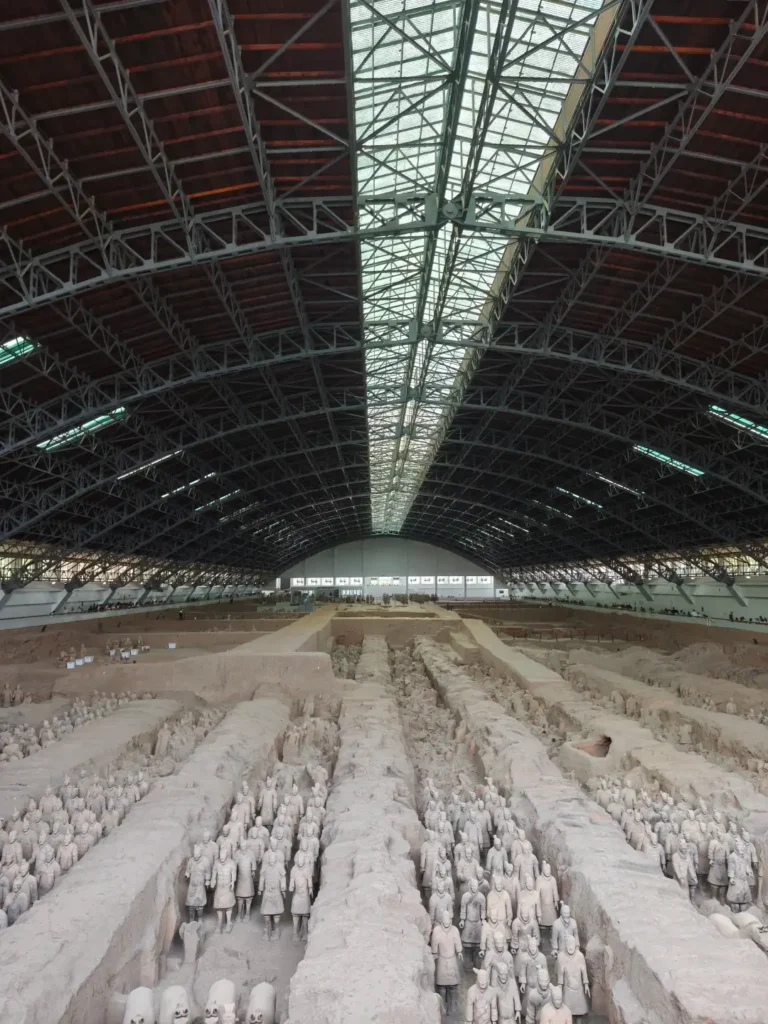
Pit 1 is the largest, most famous, and most awe-inspiring of all the pits, and it’s the first spot you’ll visit when you enter the museum. This is the pit that was discovered by the farmers in 1974, and it’s the one you see in all the iconic terracotta army photos. It’s absolutely massive: 230 meters long, 62 meters wide, and 5 meters deep, with a total area of 14,260 square meters, about the size of two and a half football fields.
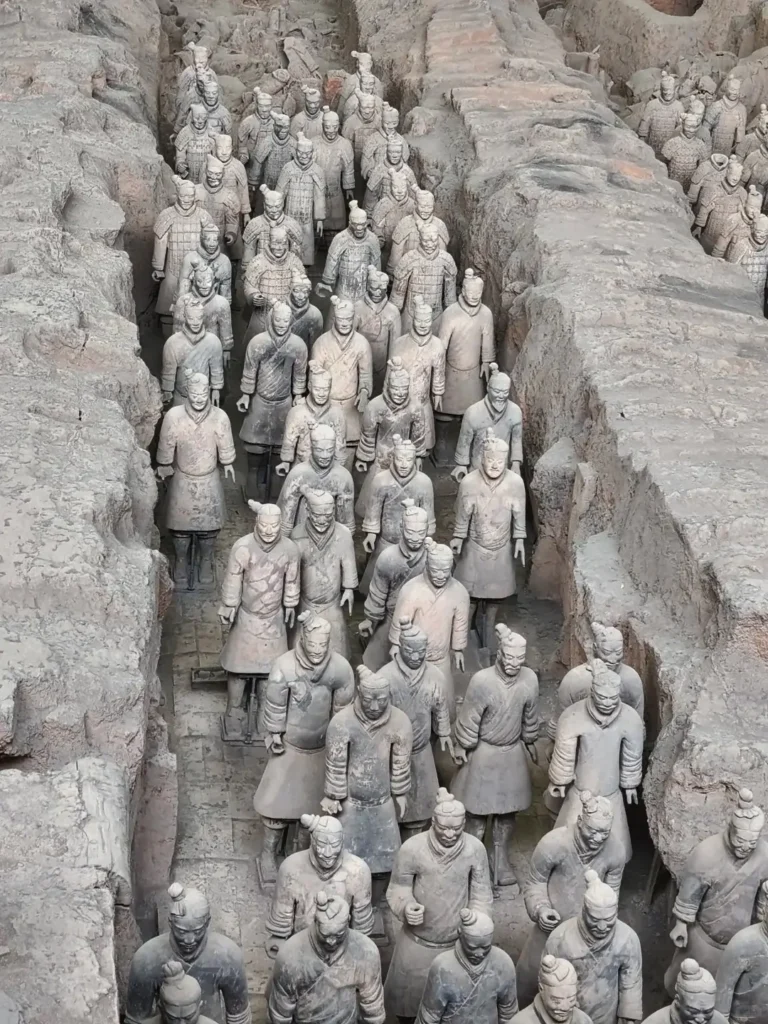
Pit 1 is the main battle formation of the Terracotta Army, and it contains over 6,000 terracotta warriors and horses, arranged in a full, battle-ready formation, exactly as the Qin imperial army would have been arranged for war. The formation is divided into three parts: the vanguard, the main body, and the flanks and rear guard. The vanguard is made up of three rows of 70 archers each, 210 soldiers total, who would have led the attack with a hail of arrows. Behind the vanguard is the main body of the army: 38 columns of infantry soldiers and chariots, arranged in 9 rows, stretching all the way to the back of the pit. The flanks and rear guard are made up of soldiers facing outwards, to protect the army from attacks from the sides and behind.
When you first walk into the exhibition hall, the view is absolutely breathtaking. You’ll look down from a viewing platform, and see thousands of warriors lined up in perfect formation, stretching all the way to the back of the hall. It’s a sight that will stay with you forever, and no photo or video can do it justice. The front section of the pit has fully restored warriors, standing in perfect formation, while the back section of the pit is an active archaeological excavation site. You can watch archaeologists working on excavating and restoring the warriors, which is a fascinating sight to see.
My insider tip for Pit 1: don’t just stop at the entrance viewing platform. Most travelers crowd around the entrance, taking photos, and never walk all the way to the end of the hall. The viewing platform wraps around the entire pit, and if you walk to the back of the hall, you’ll get a much better view of the full formation, with far fewer crowds. You’ll also be able to see the excavation site up close, and get a better look at the details of the warriors’ armor and faces. This is also the best spot for terracotta army photos, as you can capture the full scale of the army without crowds blocking your shot.
Pit 2: The Elite Multi-Branch Army
Pit 2 is the second largest pit, and it’s the most fascinating and complex of all the pits. It’s located about 20 meters north of Pit 1, and it was discovered in 1976. It’s 124 meters long, 98 meters wide, with a total area of 6,000 square meters, and it contains over 1,300 terracotta warriors and horses, 89 chariots, and thousands of bronze weapons.
What makes Pit 2 so special is that it’s an elite, multi-branch military formation, combining four different branches of the Qin army into a single, coordinated battle unit: the archer unit, the chariot unit, the cavalry unit, and the infantry unit. This is the most complete example of an ancient Chinese military formation ever discovered, and it shows just how advanced the Qin army’s military tactics were.
The pit is divided into four sections:
- The Archer Unit: Located in the northeast corner of the pit, this unit is made up of 334 archers, including both standing and kneeling archers. The kneeling archers are some of the most well-preserved warriors in the entire museum, with incredible details in their armor, their posture, and their faces. Many of them still have traces of the original paint, which you can see up close.
- The Chariot Unit: Located in the south of the pit, this unit is made up of 64 chariots, each pulled by four terracotta horses, with three warriors per chariot: a driver, a long-spear soldier, and an archer. The chariots are exact replicas of the Qin army’s war chariots, with incredible details in the wheels, the harnesses, and the armor of the warriors.
- The Combined Infantry and Chariot Unit: Located in the center of the pit, this unit is made up of 19 chariots, 264 infantry soldiers, and 8 cavalry horses, arranged in a coordinated formation that combines chariots and infantry.
- The Cavalry Unit: Located in the north of the pit, this unit is made up of 108 cavalry soldiers and 108 horses, arranged in 12 rows. The cavalry warriors are some of the most unique in the museum, with short armor that allows them to ride horses, and special boots designed for riding. The horses are also perfectly sculpted, with details in their manes, their tails, and their harnesses.
Pit 2 is also where you’ll find the most well-preserved high-ranking warriors, including the famous General Terracotta Warrior, the highest-ranking warrior ever discovered. You’ll also find many of the painted warriors on display here, in a special exhibition hall that shows the original colors of the warriors. For history buffs and anyone who wants to see the incredible details of the warriors, Pit 2 is an absolute must-see. Many travelers rush through Pit 2, but it’s where you’ll find the most fascinating details of the entire museum.
Pit 3: The Army Headquarters
Pit 3 is the smallest of the three pits, but it’s the most important in terms of military hierarchy. It was discovered in 1976, just 25 meters north of Pit 1, and it’s 28.8 meters long, 24.5 meters wide, with a total area of just 520 square meters. It contains 68 terracotta warriors, 4 horses, and 1 chariot.
Pit 3 is the command center, the headquarters of the entire Terracotta Army. This is where the high-ranking generals and commanders would have been stationed, leading the entire army into battle. Unlike Pits 1 and 2, which are arranged in battle formation, Pit 3 is arranged like a military headquarters, with the main chariot and the high-ranking officers in the center, and the guard soldiers arranged around the outside. The pit also contains a sacrificial hall, where the generals would have held ceremonies and prayed for victory before battle.
Archaeologists believe that Pit 3 is the only pit that was fully completed before the Qin Dynasty collapsed, and it was never damaged by fire or looting, so most of the warriors are well-preserved. It’s a fascinating look at the military command structure of the Qin Dynasty, and it’s a must-see for anyone who wants to understand how the ancient Chinese army was organized.
The Bronze Chariots and Horses Exhibition Hall
This is the most underrated, must-see spot in the entire museum, and it’s the one that most travelers miss. Located between Pit 1 and Pit 2, this exhibition hall houses the two famous Bronze Chariots and Horses, which were discovered in 1980, in a burial pit just west of Qin Shi Huang’s mausoleum mound. They’re widely considered to be the “Crown Jewel” of the museum, and they’re one of the most incredible archaeological finds in Chinese history.
The two bronze chariots are half-scale replicas of the real imperial chariots that Qin Shi Huang used during his life, and they’re the largest, most complex, and best-preserved bronze artifacts ever discovered from ancient China. They were buried with the Emperor to serve as his transportation in the afterlife, and they’re made entirely of bronze, with gold and silver decorations. Each chariot is pulled by four bronze horses, and they’re incredibly detailed, with every single part of the chariot perfectly replicated, down to the smallest nail and rivet.
The first chariot, known as the “High Chariot”, is the lead chariot, used to clear the way and protect the second chariot. It has an umbrella-shaped canopy, and it’s driven by a standing charioteer, with a crossbow and other weapons on board. The second chariot, known as the “Security Chariot”, is the Emperor’s personal chariot, with a closed, windowed carriage where the Emperor would have sat. It has windows with sliding bronze shutters, which can be opened and closed to control the temperature inside, and the entire carriage is decorated with intricate gold and silver patterns.
What’s most incredible about the bronze chariots is the level of detail and craftsmanship. They’re made up of over 3,400 individual parts each, and they were assembled using a variety of advanced techniques, including casting, welding, riveting, and inlaying. The horses’ reins are made of dozens of small gold and silver links, welded together to form a flexible chain, and the umbrella on the first chariot has a hidden mechanism that allows it to rotate 360 degrees, and be tilted to block the sun from any angle. Even after 2,200 years, all the moving parts still work perfectly.
The bronze chariots are an absolute must-see. They’re a masterpiece of ancient Chinese art and engineering, and they’re just as impressive as the terracotta warriors themselves. Don’t miss this exhibition hall—many travelers skip it, and it’s one of the biggest mistakes you can make at the museum.
Lishan Garden (Qin Shi Huang Mausoleum Park)
Most travelers finish visiting the Terracotta Army pits and leave the museum, but they’re missing half the experience: the Lishan Garden, also known as the Qin Shi Huang Mausoleum Park. This is the site of Qin Shi Huang’s main mausoleum mound, the massive underground palace that remains unexcavated, and it’s included in the price of your museum ticket. There’s a free, frequent shuttle bus that runs between the Terracotta Army Museum and the Lishan Garden, just a 5-minute ride away.
The Lishan Garden covers an area of 2.13 square kilometers, and it’s centered around the 76-meter-high mausoleum mound, which is the final resting place of Qin Shi Huang. You can walk up to the base of the mound, and even climb to the top, to get a sense of the massive scale of the mausoleum. The view from the top is incredible, with the Lishan Mountains to the south, the Wei River to the north, and the entire mausoleum complex stretching out around you.
The Lishan Garden also has several other excavation sites and exhibition halls, including the 9901 Burial Pit, which is known as the “Acrobats Pit”. This pit contains terracotta figures of acrobats, dancers, and strongmen, which were buried to entertain the Emperor in the afterlife. These figures are completely different from the military warriors, with dynamic poses, bare torsos, and incredible details in their muscles and movements. There’s also the 9902 Burial Pit, which contains terracotta civil officials, the first civil servant figures ever discovered from the Qin Dynasty, which show us what the Emperor’s civilian government looked like.
The Lishan Garden is almost always quiet, with very few visitors, so you can explore it at your own pace, without the crowds of the main museum. It’s a peaceful, beautiful place, and it gives you a much better understanding of the full scale of Qin Shi Huang’s mausoleum complex. My insider tip: visit the Lishan Garden after you finish the main museum, spend about an hour there, and don’t miss the Acrobats Pit exhibition hall—it’s a fascinating contrast to the military warriors.
Complete Terracotta Army Travel Guide: Everything You Need to Know for a Perfect Visit
Now that you know all about the history and the must-see spots of the Terracotta Army, here’s my complete, step-by-step guide to planning your trip, with all the practical details, insider tips, and must-know information to make your visit smooth, stress-free, and unforgettable.
Best Time to Visit the Terracotta Army
The best time to visit the Terracotta Army is during the spring (March to May) and autumn (September to November). These seasons have the most comfortable weather in Xi’an, with mild temperatures, low rainfall, and clear skies, perfect for exploring the museum and the surrounding area. The spring brings blooming flowers and greenery, and the autumn brings cool, crisp weather, which is ideal for walking around the large museum complex.
Summer (June to August) is peak tourist season, and it can be extremely hot in Xi’an, with temperatures often reaching 38°C (100°F) or higher, and heavy rainstorms in the afternoons. The museum is also very crowded during the summer, especially during the school holidays, and the exhibition halls can get hot and stuffy with the crowds. If you do visit in the summer, go as early as possible, when the museum opens at 8:30 AM, to beat the crowds and the heat.
Winter (December to February) is the quietest time to visit, with almost no crowds, and much lower ticket prices. The downside is that it can be very cold in Xi’an, with temperatures often dropping below freezing, and the wind can be bitter. The exhibition halls are indoors and heated, so you’ll be warm inside, but the walk between the different halls can be cold. If you don’t mind the cold, winter is a fantastic time to visit, as you can explore the museum without the crowds, and you’ll have plenty of space to look at the warriors up close.
The absolute worst time to visit is during China’s public holidays, especially the National Day Golden Week (October 1-7), the Spring Festival (Chinese New Year, usually late January to early February), and the Labor Day holiday (May 1-5). During these holidays, the museum is absolutely packed with tourists, with long lines for tickets, security, and even the viewing platforms. You’ll be lucky to get a glimpse of the warriors through the crowds, and you won’t be able to enjoy the experience at all. If you can, avoid visiting during these times at all costs.
How to Get to the Terracotta Army from Xi’an City Center
The Terracotta Army is located in Lintong District, about 40 kilometers east of Xi’an city center. There are several different ways to get there, each with its own pros and cons. Here’s my breakdown of the best options, with all the insider tips to avoid scams:
High-Speed Train
The fastest, most convenient, and most reliable way to get to the Terracotta Army is by high-speed train. You can take a high-speed train from Xi’an North Railway Station to Lintong East Railway Station, which takes just 9 minutes, and costs 10 RMB per person. From Lintong East Railway Station, you can take a taxi or a ride-hailing car to the museum entrance, which takes about 10 minutes, and costs 15-20 RMB. The total journey time from Xi’an city center to the museum is about 1 hour, including the time to get to the train station and wait for the train.
This is my top recommendation for most travelers, especially foreign travelers. The high-speed trains are clean, comfortable, safe, and always on time, and they’re far less crowded than the buses. The only downside is that you need to get to Xi’an North Railway Station, which is about 30 minutes from the city center by subway.
Subway and Bus
For budget travelers, the cheapest option is to take the Xi’an Metro Line 9 (the orange line) to Huaqing Pool Station, which takes about 40 minutes from the city center, and costs 5 RMB per person. From Huaqing Pool Station, you can take Bus 613, which goes directly to the Terracotta Army Museum entrance, which takes about 15 minutes, and costs 2 RMB per person. The total journey time is about 1 hour, and the total cost is just 7 RMB per person.
This is a great option for budget travelers, and it’s safe and reliable. The only downside is that the subway and bus can be crowded during peak times, and you’ll need to navigate the subway and bus stations, which can be challenging if you don’t speak Chinese. My insider tip: always take the official, numbered buses from the subway station, and never take the “private buses” or “tour buses” that approach you outside the station—these are almost always scams.
Private Car or Charter
For families, groups of friends, or anyone who wants a hassle-free, comfortable trip, hiring a private car and driver is the best option. The driver will pick you up directly from your hotel in Xi’an, take you to the Terracotta Army Museum, wait for you while you explore, and take you back to the city center. You can also add stops at other nearby attractions, like the Huaqing Hot Springs, the Banpo Museum, or a local restaurant for an authentic Xi’an meal.
The cost of a private car and driver for a full day is usually between 300-500 RMB, depending on the size of the car and the itinerary. It’s a great option if you want to travel at your own pace, without having to worry about public transportation. My insider tip: book your private car through a reputable travel platform or your hotel, never through a random driver on the street, to avoid scams.
Organized Group Tours
Organized group tours are a popular option for first-time visitors, but they come with big pros and cons. The pros are that they’re usually cheap, they include transportation, tickets, and a guide, and you don’t have to plan anything. The cons are that almost all cheap group tours include mandatory shopping stops at jade factories, silk shops, and souvenir stores, where the guides get a commission for every sale. These shopping stops can take up 2-3 hours of your day, leaving you with very little time to actually explore the museum. Some of these tours are also run by unlicensed companies, and they can be unsafe or unreliable.
If you do want to take a group tour, only book a premium, “no shopping” tour through a reputable international travel platform, even if it costs more. These tours will take you directly to the museum, with no shopping stops, and include a licensed, English-speaking guide who can tell you all about the history of the Terracotta Army. Never book a “cheap day tour” from a street vendor, a hotel lobby flyer, or a random website—these are almost always scams.
Ticket and Booking Information
The Terracotta Army Museum requires a paid ticket for entry, and you must book your ticket in advance, especially during peak seasons. Tickets are sold on the official museum website, and on major Chinese travel platforms like Ctrip and Fliggy. For foreign travelers, you’ll need to use your passport number to book the tickets, and you must bring your original passport with you to the entrance—you will not be able to enter without it, as all tickets are checked against your passport.
The ticket price is 120 RMB per person during the peak season (March 1 to November 30), and 80 RMB per person during the off-season (December 1 to February 28). The ticket includes entry to all four exhibition halls in the Terracotta Army Museum, plus entry to the Lishan Garden (Qin Shi Huang Mausoleum Park), and the free shuttle bus between the two sites. The ticket is valid for two consecutive days, so you can visit the Terracotta Army on one day, and the Lishan Garden on the next day, if you want.
The museum is open from 8:30 AM to 6:00 PM during the peak season, with last entry at 5:00 PM, and from 8:30 AM to 5:30 PM during the off-season, with last entry at 4:30 PM. My insider tip: always book your tickets at least 1-3 days in advance, especially if you’re visiting on a weekend or during peak season. During the busiest times, tickets can sell out completely, and you won’t be able to buy them at the gate. Also, arrive as early as possible, when the museum opens at 8:30 AM, to beat the crowds and have the museum almost to yourself for the first hour.
Guide and Audio Guide Information
One of the most important things you can do to make the most of your visit is to get a good guide or audio guide. Without a guide, the Terracotta Army is just a bunch of clay statues—you won’t understand the history, the stories, or the incredible details behind the warriors. A good guide will bring the warriors to life, and make your visit infinitely more meaningful.
There are two main options: a licensed human guide, or an official audio guide.
- Licensed Human Guide: You can hire a licensed, official guide from the museum’s service center, right at the entrance. A licensed English-speaking guide costs 300 RMB for a 2-hour tour of the museum, and they can take up to 10 people. This is the best option, as a good guide will be able to answer all your questions, point out details you would never notice on your own, and tell you all the fascinating stories and secrets of the warriors. My insider tip: only hire guides from the official service center inside the museum entrance. Never hire the “guides” who approach you outside the museum, on the street, or in the parking lot—these are almost always unlicensed, unqualified scammers, who will give you incorrect information, or drag you to shopping stops.
- Official Audio Guide: If you’re traveling alone, or on a budget, you can rent an official audio guide from the service center at the entrance. The audio guide is available in multiple languages, including English, French, German, Spanish, Japanese, and Korean, and it costs 30 RMB per device. It will guide you through each pit and exhibition hall, telling you the history and details of each spot. It’s a great budget option, and it will give you all the basic information you need.
Essential Items to Bring
Packing the right items can make your visit to the Terracotta Army much more comfortable and enjoyable. Here’s my essential packing list for every visitor:
- Original Passport: You will not be able to buy tickets or enter the museum without your original passport. Keep it in a safe, waterproof bag at all times.
- Comfortable Walking Shoes: The museum complex is huge, and you’ll be walking for 3-4 hours, at least. Wear comfortable, supportive sneakers or walking shoes—never wear high heels or uncomfortable shoes, as you’ll be on your feet all day.
- Water and Snacks: The restaurants and shops inside the museum are overpriced, with a bottle of water costing 10 RMB or more. Bring at least 1-2 liters of water per person, and some high-energy snacks like nuts, energy bars, or fruit, to keep you going during your visit.
- Sun Protection: The walk between the different exhibition halls is outdoors, with no shade. Bring a high-SPF sunscreen, a wide-brimmed hat, and sunglasses, even on cloudy days.
- Weather Protection: Xi’an’s weather can change quickly. Bring a lightweight jacket or windbreaker, even if it’s warm in the city, and a compact umbrella or rain jacket in case of rain. In the winter, bring warm layers, gloves, and a hat, as it can be very cold.
- Power Bank: You’ll be taking a lot of photos and videos, and there are very few charging stations in the museum. Bring a fully charged power bank to make sure your phone doesn’t die during your visit.
- Headphones: If you’re renting an audio guide, bring your own headphones, so you can listen to the commentary clearly, without having to hold the device up to your ear the whole time.
- Face Mask: The exhibition halls can get very crowded during peak times, and a face mask can make the experience more comfortable, especially if you’re sensitive to crowds.
Essential Travel Tips and Pitfall Avoidance
After multiple visits to the Terracotta Army, I’ve learned all the common mistakes that travelers make, and all the insider tips to make your trip as smooth and enjoyable as possible. Here are my top 10 must-know tips and pitfall avoidance hacks:
- Never fall for the cheap guide or cheap tour scam: This is the most common mistake that foreign travelers make. Any guide who offers to show you around for less than 100 RMB, or any tour that costs less than 100 RMB per person, will almost certainly include mandatory shopping stops, or give you incorrect information. Only hire guides from the official service center inside the museum, and only book tours through reputable platforms.
- Avoid weekends and public holidays at all costs: I cannot stress this enough. On weekends and public holidays, the museum is so crowded that you can barely get near the viewing platforms, let alone look at the warriors in peace. On a weekday, you can walk around the museum at your own pace, with plenty of space to look at the details and take photos. If you can only visit on a weekend, arrive before 8:30 AM, when the gates open, to beat the crowds.
- Don’t buy overpriced souvenirs from street vendors: The souvenirs sold by vendors outside the museum, and in the parking lot, are almost always low-quality, overpriced fakes. Many of them sell fake “ancient artifacts” that are just mass-produced in a factory, and they’ll charge you hundreds of RMB for them. If you want to buy a souvenir, buy it from the official, licensed souvenir shops inside the museum, or from a reputable store in Xi’an city center. Also, be aware that large, heavy terracotta warrior replicas may not be allowed on your flight home, so stick to small, lightweight items.
- Don’t use flash photography, and don’t touch the warriors: The use of flash photography is strictly prohibited in all the exhibition halls, as the flash can damage the remaining paint on the warriors and the ancient artifacts. You will be stopped by security if you use flash, so make sure your camera’s flash is turned off before you enter the halls. Also, never touch the warriors, never climb over the barriers, and never try to enter the excavation pits. This is a protected UNESCO World Heritage Site, and damaging or touching the artifacts is a criminal offense in China, which can result in heavy fines or even detention.
- Don’t miss the Bronze Chariots Exhibition Hall and the Lishan Garden: As I mentioned earlier, these are the two most underrated spots in the museum, and most travelers miss them. The Bronze Chariots are an absolute masterpiece, and the Lishan Garden gives you a much better understanding of the full scale of the mausoleum complex. Your ticket includes both, so make sure you don’t skip them.
- Don’t believe the “museum is closed” or “tickets are sold out” scams: Many scammers and unlicensed tour guides will tell you that the museum is closed, that tickets are sold out, or that you need a special permit to enter, to trick you into booking their overpriced tours or private cars. This is almost always a lie. Check the official museum website for the latest opening information, and only buy tickets from official channels.
- Don’t eat at the overpriced restaurants inside the museum: The restaurants inside the museum are extremely expensive, with mediocre food. If you want to have a meal after your visit, go back to Xi’an city center, where you can find delicious, authentic Xi’an food like roujiamo (Chinese hamburger), yangrou paomo (lamb soup with bread), biangbiang noodles, and cold skin noodles, for a fraction of the price. If you do need to eat, there are a few small, local restaurants in the nearby village, which are much better and cheaper than the ones inside the museum.
- Pace yourself, and don’t rush through the museum: Many travelers try to rush through the museum in an hour or two, and they miss most of the incredible details. Plan to spend at least 3-4 hours at the museum, plus an extra hour for the Lishan Garden. Take your time, walk slowly, and look at the details of the warriors’ faces, their armor, and their poses. This is a once-in-a-lifetime experience, so don’t rush it.
- Walk to the back of Pit 1 for the best views and photos: Most travelers crowd around the entrance of Pit 1, and never walk all the way to the back. The viewing platform wraps around the entire pit, and the back of the hall has far fewer crowds, with a much better view of the full army formation. This is the best spot for terracotta army photos, as you can capture the full scale of the army without people blocking your shot.
- Put your phone away and enjoy the moment: It’s easy to spend your entire visit taking photos and videos, and forget to actually experience the wonder of the Terracotta Army. Take some time to put your phone down, stand in front of the warriors, and appreciate the incredible scale, artistry, and history of what you’re looking at. These warriors were made over 2,200 years ago, by hand, by skilled artisans, and they’ve been buried underground for most of that time. It’s a once-in-a-lifetime experience, so don’t miss it by staring at your screen the whole time.
Frequently Asked Questions (FAQ)
FAQ 1: What is the Terracotta Army, and why was it built?
The Terracotta Army is a collection of thousands of life-sized terracotta warriors, horses, and chariots, buried in underground pits near the mausoleum of Qin Shi Huang, the first Emperor of China. It was built between 246 BCE and 208 BCE, over 2,200 years ago, to serve as the Emperor’s personal imperial guard in the afterlife.
In ancient Chinese culture, people believed that the afterlife was a continuation of mortal life, and that the Emperor would need the same power, protection, and status in the afterlife that he had in his mortal life. The Terracotta Army was built to protect the Emperor from evil spirits and enemy threats in the afterlife, to symbolize his military power and his achievement of unifying China, and to serve as a humane alternative to the ancient practice of human sacrifice, where rulers would kill their soldiers and servants to be buried with them.
FAQ 2: How many terracotta warriors are there, and are they all unique?
So far, archaeologists have excavated over 8,000 life-sized terracotta warriors, 130 chariots, 600 terracotta horses, and thousands of bronze weapons from the three main pits. However, this is just a fraction of the total number—archaeologists believe that there are thousands more warriors still buried in the unexcavated parts of the pits, and hundreds more in the other burial pits around the mausoleum complex.
The most incredible fact about the warriors is that every single one is completely unique. No two warriors have the same face, facial features, expression, hairstyle, or beard. While the basic body parts were made using molds, every face was hand-carved and customized by skilled artisans, to make each warrior a unique individual. Archaeologists have identified over 40 different facial shapes, hundreds of different hairstyles, and thousands of unique facial features, making each warrior one of a kind.
FAQ 3: How do I get to the Terracotta Army from Xi’an city center, and do I need to book tickets in advance?
The fastest, most reliable way to get to the Terracotta Army from Xi’an city center is by high-speed train: take the high-speed train from Xi’an North Railway Station to Lintong East Railway Station (9 minutes, 10 RMB), then take a 10-minute taxi to the museum entrance. For budget travelers, take Xi’an Metro Line 9 to Huaqing Pool Station (40 minutes, 5 RMB), then take Bus 613 directly to the museum entrance (15 minutes, 2 RMB). You can also hire a private car and driver for a hassle-free trip, which costs 300-500 RMB for a full day.
Yes, you must book your tickets in advance, especially during peak travel seasons (summer, public holidays). Tickets can sell out completely 1-2 days in advance during the busiest times, and you won’t be able to buy them at the gate. You can book tickets on the official museum website, or on reputable travel platforms like Ctrip and Fliggy, using your passport number. You must bring your original passport with you to enter the museum, as all tickets are checked against your passport.
FAQ 4: Is the Terracotta Army suitable for kids and elderly visitors, and how long should I plan to spend there?
Yes, the Terracotta Army is absolutely suitable for kids and elderly visitors. The entire museum is wheelchair-accessible, with flat, paved walkways between the exhibition halls, and elevated viewing platforms that are easy to access for people with limited mobility, families with strollers, and elderly visitors. The exhibition halls are indoors, with heating in the winter and air conditioning in the summer, so it’s comfortable for visitors of all ages. Kids love seeing the warriors, and there are plenty of interactive exhibits and educational displays to keep them engaged.
For most visitors, you should plan to spend at least 3-4 hours at the Terracotta Army Museum, plus an additional 1 hour for the Lishan Garden (Qin Shi Huang Mausoleum Park). If you’re a history buff, or you want to take your time and explore every detail, plan to spend a full half-day (4-5 hours) at the museum. Don’t rush your visit—take your time to explore each pit, look at the details of the warriors, and learn the incredible history behind this amazing site.
Travel Blessings for Your China Trip
As you prepare for your journey to China, I hope this guide helps you unlock the incredible secrets of the Terracotta Army and experience the magic of ancient Xi’an. This extraordinary archaeological wonder isn’t just a collection of clay statues—it’s a testament to the ingenuity, artistry, and ambition of ancient Chinese civilization, a place where every warrior holds a 2,200-year-old story, and every detail leaves you in awe of what humans can create. Whether you’re standing in front of the grand army in Pit 1, marveling at the intricate details of the bronze chariots, or exploring the quiet grandeur of the Qin Shi Huang Mausoleum, I hope your visit is filled with wonder, curiosity, and unforgettable moments.
May your travels across China be safe, smooth, and full of beautiful surprises. May you taste the most delicious local delicacies, from the crispy roujiamo and savory yangrou paomo of Xi’an, to the world-famous Peking duck of Beijing, from the spicy hot pot of Sichuan to the delicate dim sum of Guangdong. May you meet the kindest, warmest locals, who welcome you with open arms, share their stories and their culture, and make you feel at home in this incredible country. May you discover hidden gems off the beaten path: ancient villages tucked away in the mountains, quiet temples with centuries of history, stunning natural scenery that most tourists never see, and small moments of joy that you’ll cherish forever.
Welcome to China, a land where 5,000 years of ancient history meets vibrant, modern innovation, a country of incredible natural beauty, rich and diverse culture, and warm, welcoming people. May every step of your journey be filled with magic, happiness, and endless discovery. I hope this guide is just the start of your incredible adventure in China, and that the Terracotta Army is just the first of many iconic, unforgettable sites you’ll explore on your trip. May your travels be blessed with wonder, your heart be filled with joy, and your memories last a lifetime.


 English
  Chinese