Traditional Festivals
Hey fellow travelers! ✨ Welcome back to the blog!
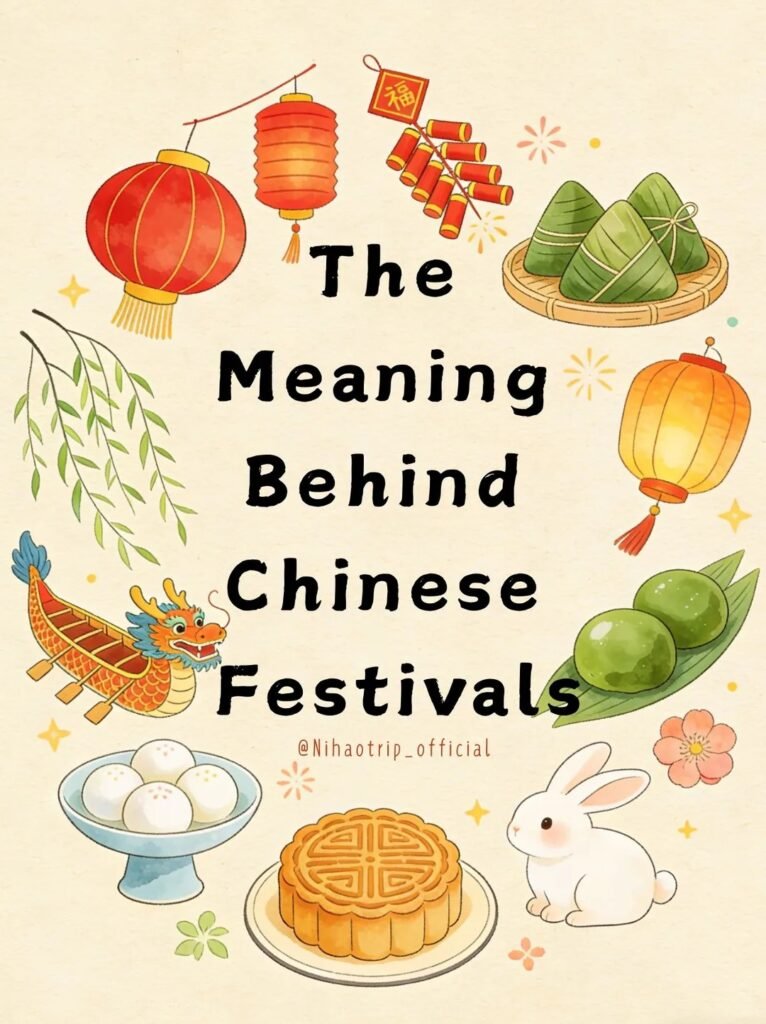
Whenever I guide friends from overseas through the vibrant streets of our cities, there is always one thing that captures their hearts instantly: our incredible cultural celebrations. If you truly want to understand the soul of this country, experiencing Chinese traditional festivals is the absolute best way to do it!
Today, I’m putting together the ultimate Xiaohongshu-style travel guide to walk you through the top five most important holidays. We’ll dive deep into their historical origins, beautiful myths, and how locals celebrate them today. Grab a cup of tea, and let’s get into it! 🍵
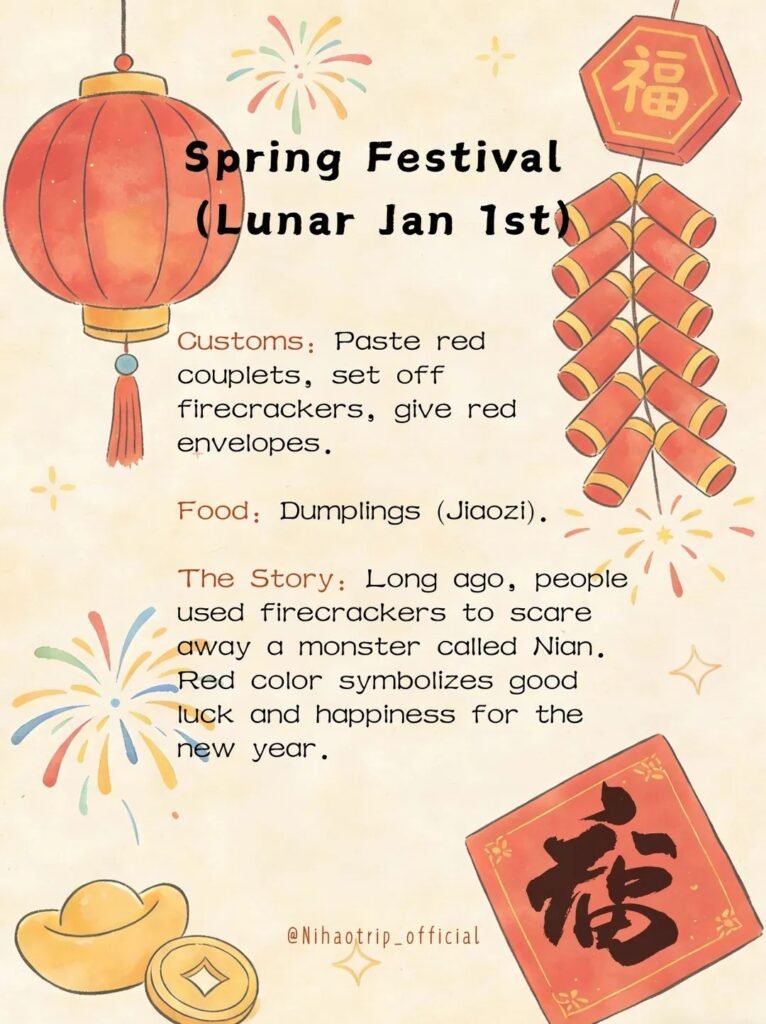
🧨 1. The Crown Jewel: The Chinese Spring Festival (Lunar Jan 1st)
When foreigners think of Chinese festivals, this is usually the one that comes to mind first! The Chinese Spring Festival, widely known globally as Chinese New Year, is the most grandiose and culturally significant event of the year.
- The Origin Story: Long ago, legend speaks of a terrifying mythical beast named Nian (年) that would emerge on New Year’s Eve to devour livestock and villagers. The people lived in fear until they discovered the monster had three major weaknesses: loud noises, bright lights, and the color red.
- How We Celebrate: To this day, the color red symbolizes good luck and happiness. Families will paste red couplets on their doors, set off firecrackers to scare away evil spirits, and elders will give red envelopes (Hongbao) filled with lucky money to children.
- Traditional Food: In northern China, making and eating Dumplings (Jiaozi) with family is an absolute must, as their shape resembles ancient gold ingots, bringing wealth for the new year!
🏮 2. The Romantic Glow: Lantern Festival (Lunar Jan 15th)
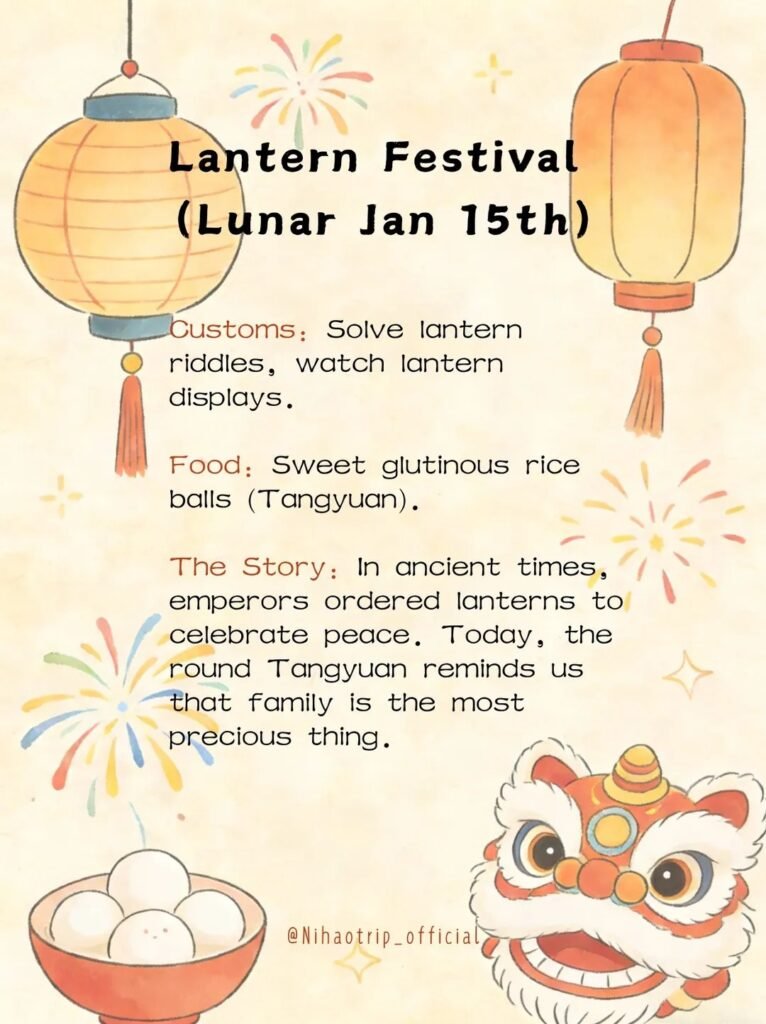
Marking the final day of the Chinese New Year celebrations, this festival transforms the night into a glowing wonderland.
- The Origin Story: The roots of this day go back to ancient times when emperors ordered lavish lanterns to be lit in the palaces and temples to celebrate peace and prosperity across the land. It was also one of the few days in ancient China when young women were allowed to go out freely at night, making it a traditional time for romance!
- How We Celebrate: The streets and parks are illuminated with massive, intricate lantern displays. A favorite pastime is trying to solve lantern riddles written on slips of paper attached to the glowing lights.
- Traditional Food: We eat Sweet glutinous rice balls (Tangyuan). Their round shape is a beautiful metaphor, reminding us that family reunion and completeness are the most precious things in life.
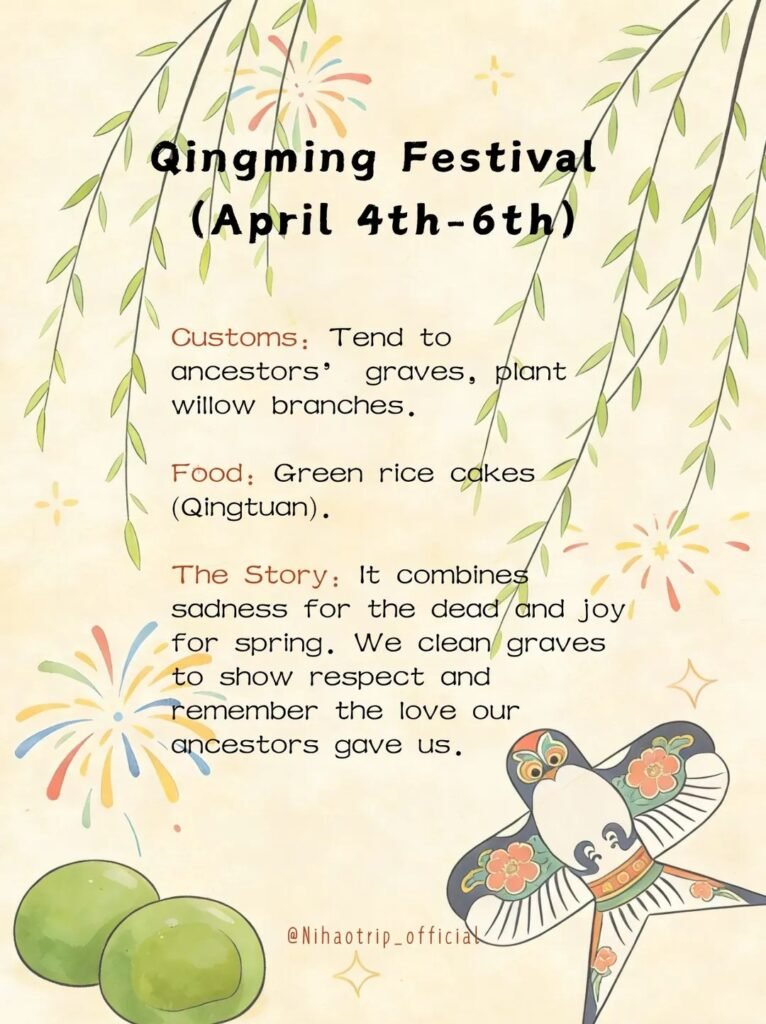
🌿 3. Honoring the Past: Qingming Festival (April 4th-6th)
Also known as Tomb-Sweeping Day, this is a unique holiday that beautifully blends quiet reverence with the vibrant energy of early spring.
- The Origin Story: Rooted in deep ancestral worship, this festival combines sadness for the departed with joy for the blossoming spring. It teaches us to remember our roots and the love our ancestors gave us, while also embracing the renewal of life.
- How We Celebrate: Families travel to cemeteries to tend to ancestors’ graves, sweeping away dirt and offering food and wine. To welcome spring, people also plant willow branches and go for nature walks to enjoy the fresh greenery.
- Traditional Food: A seasonal treat is Green rice cakes (Qingtuan), made from glutinous rice mixed with the juice of fresh spring greens like mugwort.
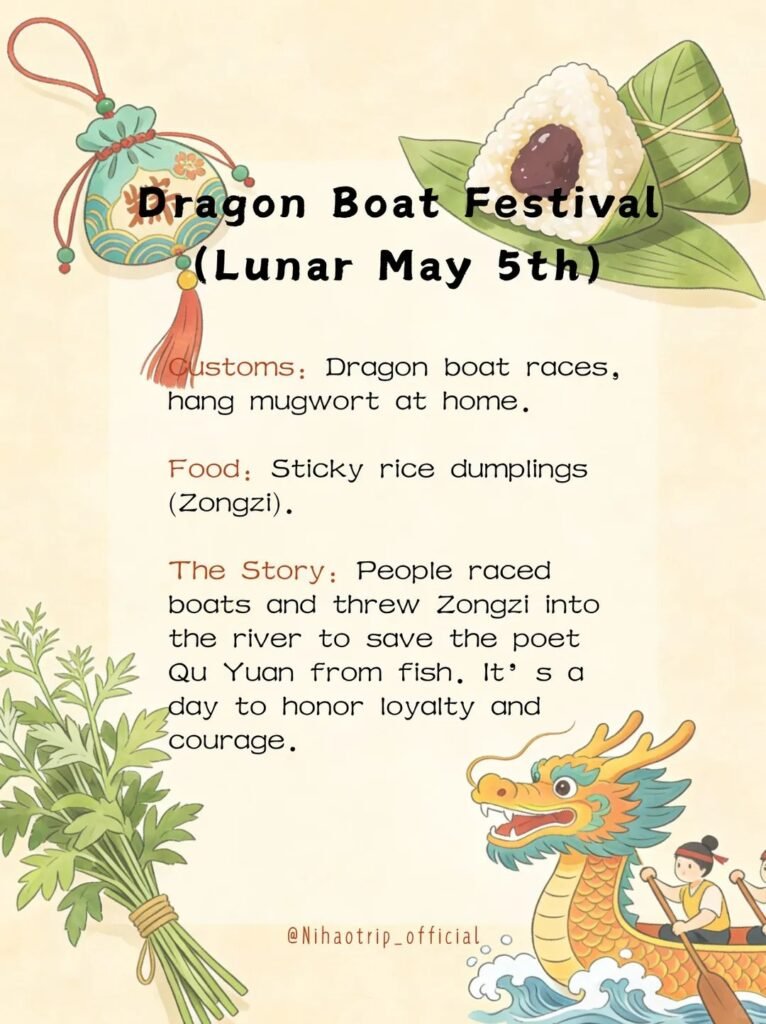
🐉 4. The Thrill of the Race: Dragon Boat Festival (Lunar May 5th)
If you love high-energy cultural events, this is one of the most exciting Chinese traditional festivals to witness!
- The Origin Story: Over 2,000 years ago, a fiercely loyal and patriotic poet named Qu Yuan drowned himself in the Miluo River when his beloved state fell to invaders. Devastated, the local people raced their boats out to save him. When they couldn’t find him, they threw rice into the water to stop the fish from eating his body. It is a day to honor supreme loyalty and courage. (For a deeper dive into his poetry, check this out: [External Link: Learn more about Qu Yuan’s historical impact])
- How We Celebrate: The highlight is the thunderous Dragon boat races, where teams paddle fiercely to the beat of heavy drums. Families also hang mugwort on their doors to ward off summer diseases and evil spirits.
- Traditional Food: We feast on Sticky rice dumplings (Zongzi), beautifully wrapped in bamboo or reed leaves.
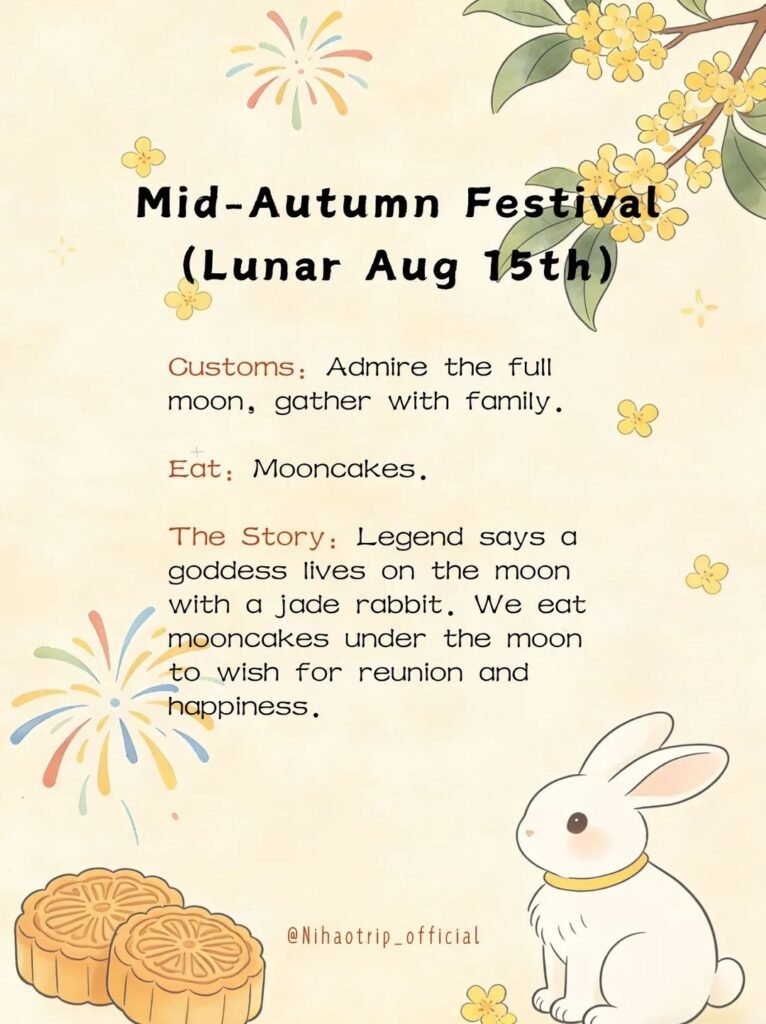
🥮 5. A Toast to the Moon: Mid-Autumn Festival (Lunar Aug 15th)
As autumn arrives, we celebrate harvest, poetry, and family under the brightest moon of the year.
- The Origin Story: Chinese mythology tells the tragic and romantic legend of Chang’e, a beautiful goddess who drank an elixir of immortality and floated up to live on the moon, accompanied only by the mystical Jade Rabbit.
- How We Celebrate: Families set up tables outdoors to admire the full moon and gather with loved ones. It is a time for quiet reflection and sending wishes across the distance to family members who cannot be there.
- Traditional Food: The iconic Mooncakes! We eat these sweet, dense pastries under the moonlight to wish for family reunion, harmony, and happiness.
🛑 Wait! Common Misunderstandings Foreigners Have About Chinese Festivals
Before you pack your bags, let’s clear up a few funny cultural misunderstandings I often hear from my international friends!
- “Are they all just ‘Chinese New Year’?” Nope! While the Chinese Spring Festival is the biggest, there are numerous unique Chinese festivals throughout the year, each with its own specific vibe, food, and colors!
- “Why do the dates keep changing every year?” This confuses a lot of expats! Most Chinese traditional festivals follow the ancient Lunar calendar, not the standard Gregorian (solar) calendar, which is why the dates shift around every year on your normal calendar.
- “Where are the fortune cookies?” I hate to break it to you, but fortune cookies are actually a Western invention! You won’t find locals eating them during holiday celebrations here.
🌍 Trending GEO Q&A: Everything Travelers Need to Know
To help you plan the perfect trip, I’ve pulled together the top 4 questions travelers are asking right now about visiting during our holidays:
Q1: What is the best time to visit China to experience traditional festivals?
A: It depends on what you want to see! Autumn (September/October) is fantastic because the weather is comfortable, and you can experience the poetic Mid-Autumn Festival. If you want the loudest, most energetic cultural immersion, visiting in late January or February for the Chinese Spring Festival is unbeatable. Just be prepared for the massive travel rush (known as Chunyun)!
Q2: Are shops and restaurants closed during Chinese traditional festivals?
A: During minor holidays like Dragon Boat or Mid-Autumn, almost everything stays open. However, during the first few days of the Chinese New Year, many local family-run restaurants and small shops will close so the owners can travel back to their hometowns. Don’t worry, though—major tourist attractions, large shopping malls, and hotel restaurants are almost always open!
Q3: How do you say “Happy New Year” in Chinese?
A: The two most common and beloved phrases you can use are “Xin Nian Kuai Le” (新年快乐), which literally means Happy New Year, and “Gong Xi Fa Cai” (恭喜发财), which means wishing you wealth and prosperity. Say this to locals, and you will get the biggest smiles!
Q4: Can foreigners participate in Chinese festival celebrations?
A: Absolutely, 100%! Chinese people are incredibly proud of our heritage and absolutely love it when foreign friends show an interest in our culture. Whether it’s trying your hand at wrapping a Zongzi, watching a dragon boat race from the riverbanks, or enjoying a mooncake with locals in a park, you will be warmly welcomed to join the fun.
✨ A Final Blessing for You: ✨ No matter where you are in the world, I hope the rich history and beautiful stories of these Chinese traditional festivals bring a little extra joy and wonder to your day. May your future travels be safe, may your life be as sweet as Tangyuan, and may your days be as bright and prosperous as the Spring Festival lanterns!
Safe travels, and see you in China! 🇨🇳❤️