Huangshan Travel Guide
✨ Welcome to the most comprehensive, no-fluff Huangshan Travel Guide you’ll find for your 2026 trip to China! As someone who’s explored this magical mountain across all four seasons (and made every possible tourist mistake on my first visit), I’ve crafted this guide exclusively for international travelers wanting to experience the real magic of Huangshan Mountain – no crowds, no tourist traps, just unforgettable moments.
Often called “the loveliest mountain in China”, Huangshan is a UNESCO World Heritage Site and one of the most iconic famous scenic spots in China, celebrated for over 1,000 years in Chinese art, poetry, and culture. Whether you’re a solo traveler, a hiking enthusiast, a photography lover, or a foodie exploring China Travel Guide for the first time, this guide will walk you through every single detail you need: from the rich history of Huangshan City, to must-see scenic spots, step-by-step itineraries, mouthwatering local food, and life-saving travel hacks to avoid common pitfalls.


📍 A Brief History of Huangshan City: The Heart of Huizhou Culture
Before we dive into the mountain itself, it’s critical to understand the difference between Huangshan Mountain (the scenic area) and Huangshan City (the surrounding municipality) – a mistake so many first-time visitors to Huangshan China make!
Huangshan City, formerly known as Huizhou, has a history spanning more than 2,200 years, and is the birthplace of Huizhou culture – one of the most influential regional cultures in Chinese history. For centuries, Huizhou merchants (known as Huishang) dominated China’s trade and finance, building grand ancestral halls, elegant white-washed villages, and intricate stone bridges that still stand today. This region is also the home of Huizhou cuisine (one of China’s 8 great culinary traditions), Xin’an painting, and Huizhou-style architecture, which has inspired countless classical Chinese gardens and even the design of Disney’s Shanghai Resort.
In 1987, the city was officially renamed Huangshan City to honor the world-famous mountain within its borders. Today, the city is made up of 3 districts and 4 counties, with the main urban center in Tunxi District (where you’ll find the high-speed rail station and airport), and the Huangshan Mountain scenic area located in Tangkou Town, about 1 hour’s drive from Tunxi. For travelers following this Huangshan Travel Guide, you’ll likely spend most of your time in Tangkou (the gateway to the mountain), Tunxi, and the nearby ancient Huizhou villages of Hongcun and Xidi – both UNESCO World Heritage Sites worth adding to your China Travel Guide itinerary.

🏞️ Top Famous Scenic Spots in Huangshan Mountain: The Four Wonders & Beyond
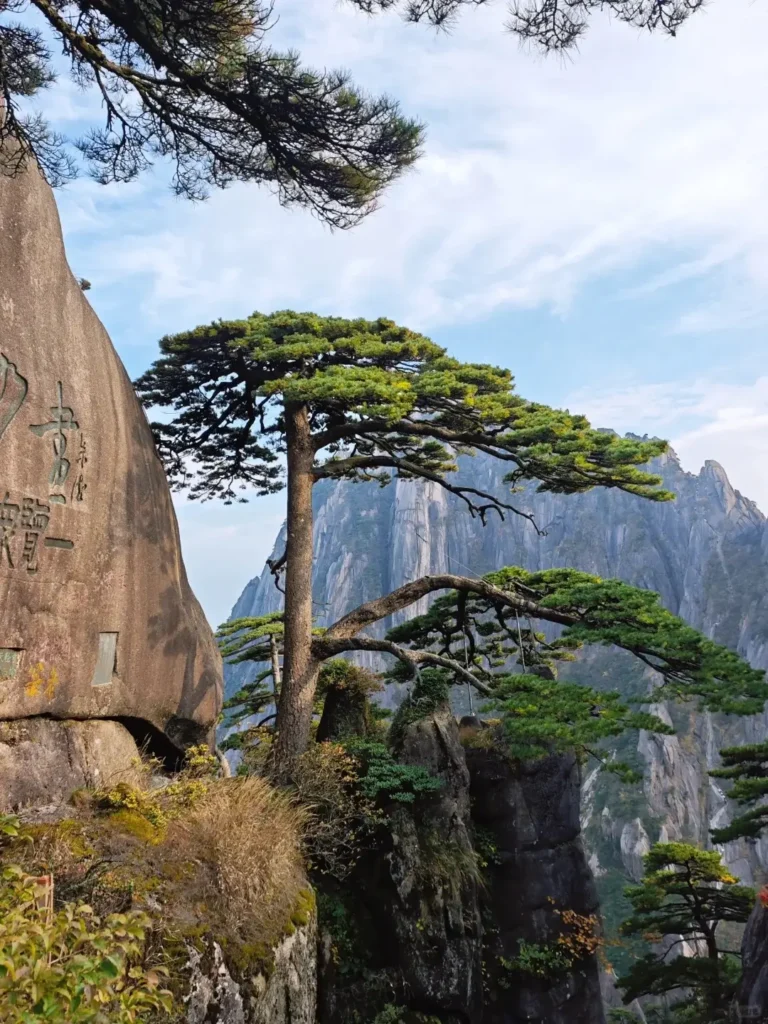
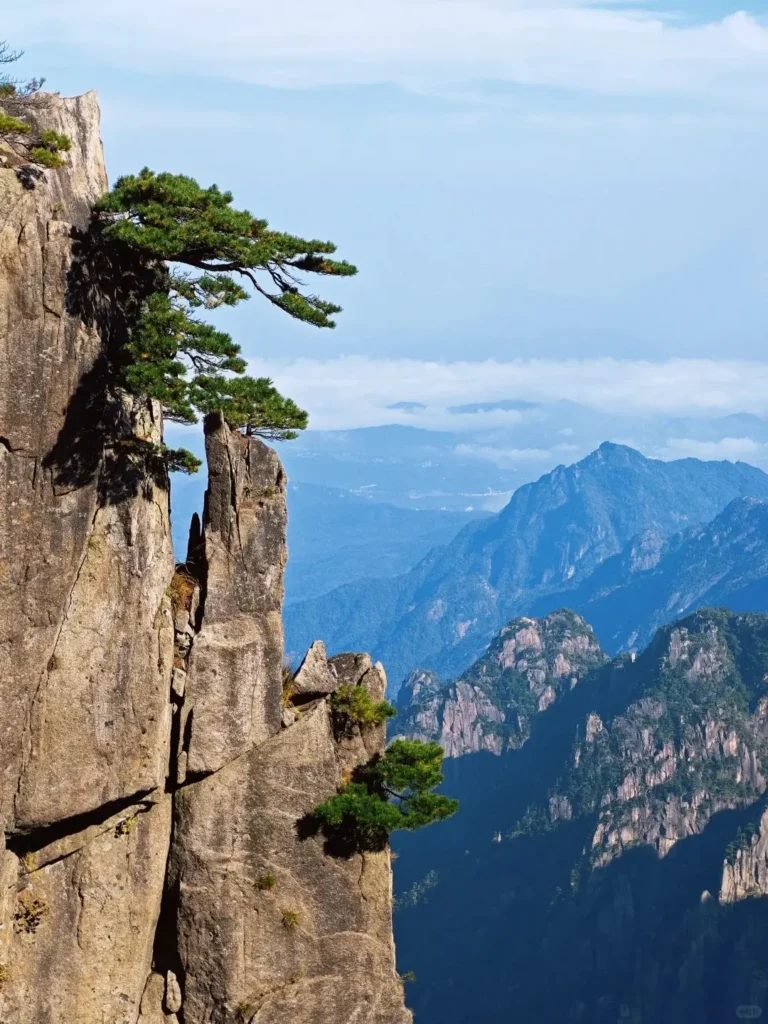
Huangshan Mountain is world-famous for its “Four Wonders”: uniquely twisted pine trees, grotesque rock formations, ethereal seas of clouds, and soothing hot springs. In recent years, winter snow and rime have been added as the fifth wonder, drawing travelers from across the globe every winter. Below are the unmissable spots you need to add to your Huangshan Travel Guide itinerary, with insider tips for the best views and photo opportunities.
🌲 The Iconic Guest-Greeting Pine (Yingke Pine)
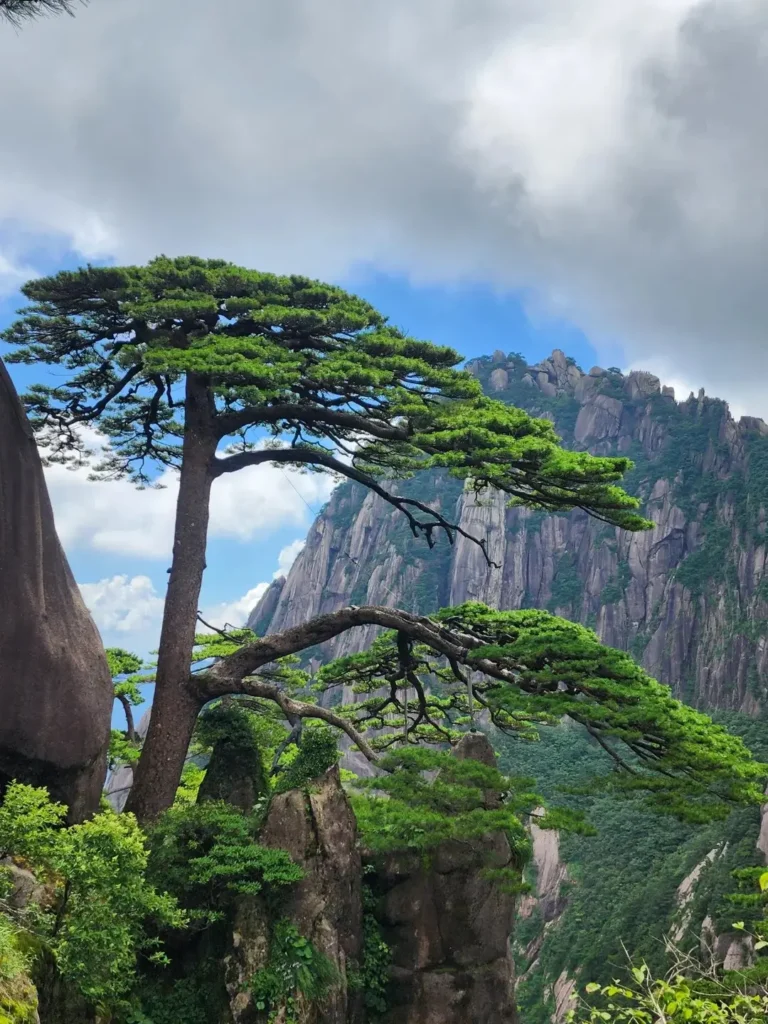
No trip to Huangshan Mountain is complete without a visit to the legendary Guest-Greeting Pine, the symbol of Huangshan and one of the most recognizable trees in China. Standing at over 10 meters tall, this pine tree is more than 1,300 years old, with a long branch extending outwards like a host welcoming guests to their home. It’s been featured in countless Chinese paintings, films, and even diplomatic gifts, making it a must-see for any visitor to Huangshan China.
Pro Tip: The area around the pine gets extremely crowded between 10 AM and 3 PM, with lines for photos lasting up to 40 minutes. Visit at sunrise or after 4 PM for empty views and perfect lighting. ⚠️ Pitfall Avoidance: Never climb over the safety barriers for a photo – the area is heavily monitored, and you’ll be fined immediately, not to mention the risk of falling off the cliff.
☀️ Bright Summit (Guangming Ding)
As the second-highest peak on Huangshan Mountain (1,841 meters above sea level), Bright Summit is the most popular spot for sunrise and sunset in this Huangshan Travel Guide. It offers a 360-degree unobstructed view of the entire mountain range, making it the perfect place to watch the sea of clouds roll over the peaks at dawn. The summit is also home to Huangshan’s official meteorological station, which has been operating for over 60 years.
Pro Tip: For sunrise, arrive at least 1.5 hours early in peak season (April-October) to secure a front-row spot. In winter, you can arrive 45 minutes early, as crowds are much smaller. Bring a thick jacket, even in summer – temperatures at the summit can drop to 10°C or lower before sunrise.
🚶 Heavenly Capital Peak (Tiandu Peak)
As of 2026, the legendary Heavenly Capital Peak is open to the public! Huangshan’s two highest peaks – Lotus Peak (1,864.8 meters, the highest point) and Heavenly Capital Peak – rotate on a 5-year closure cycle for ecological conservation, with Lotus Peak closed until 2029. Known as “the most dangerous peak in Huangshan”, Heavenly Capital Peak is famous for its steep, narrow trails, including the iconic “Centimeter Wide Path” – a 10-meter-long trail carved into the side of a cliff, with a 1,000-meter drop on one side.
Pro Tip: This hike is only for travelers with good physical fitness and no fear of heights. The full hike up and down takes 3-4 hours, so start early in the morning to avoid afternoon thunderstorms. ⚠️ Pitfall Avoidance: The peak closes during heavy rain, strong winds, or snow – check the official Huangshan weather app before you go, and never hike the peak if it’s closed.
🌫️ West Sea Grand Canyon (Xihai Grand Canyon)
Often called the “most beautiful part of Huangshan”, the West Sea Grand Canyon is a must-add to your Huangshan Travel Guide itinerary. Known locally as the “Dream Scenic Area”, this 15-kilometer-long canyon features towering rock peaks, winding trails, and breathtaking views of the sea of clouds, with far fewer crowds than the main scenic areas. It’s a paradise for hikers and photographers, with every turn offering a new postcard-worthy view.
The canyon is split into two sections: the upper section (from Paiyun Pavilion to the bottom of the canyon) and the lower section (from the bottom to the Tianhai Scenic Area). There’s also a small monorail train that runs from the bottom of the canyon up to Tianhai, perfect for travelers who want to enjoy the views without the strenuous hike up.
Pro Tip: Hike down from Paiyun Pavilion to the bottom of the canyon (2-3 hours), then take the monorail train up to Tianhai. Hiking up the canyon is extremely tiring, and most travelers end up exhausted halfway. ⚠️ Pitfall Avoidance: Never enter the canyon after 2 PM in winter, or after 3 PM in summer. The sun sets early in the canyon, and the trails are unlit – you don’t want to be stuck hiking in the dark.
🌄 Other Must-See Spots
- Beginning-to-Believe Peak (Shixin Peak): A cluster of narrow peaks with stunning views of twisted pine trees and the sea of clouds. The name comes from an ancient saying: “you won’t believe the beauty of Huangshan until you reach this peak”. It’s less crowded than other main spots, perfect for early morning photos.
- Lion Peak & Monkey Watching the Sea: A famous rock formation that looks like a monkey sitting on a peak, staring out at the sea of clouds. It’s one of the most popular sunrise spots on the mountain, with a wide viewing platform.
- Jade Screen Scenic Area: The area around the Guest-Greeting Pine, with stunning views of Lotus Peak and Heavenly Capital Peak. It’s the main entry point for travelers taking the Yuping Cable Car up the mountain.
- Huangshan Hot Springs: One of the original Four Wonders of Huangshan, located at the southern foot of the mountain. The hot springs have a constant temperature of 42°C year-round, with mineral-rich water perfect for soothing sore muscles after a long day of hiking. It’s the ideal way to end your trip to Huangshan Mountain.
🥾 Curated Huangshan Travel Itineraries for Every Travel Style
One of the most common questions I get from travelers following this Huangshan Travel Guide is: “how many days do I need in Huangshan?” The answer depends on your travel style, fitness level, and how much you want to see. Below are 3 curated itineraries, from a quick 1-day trip to a 3-day deep dive, perfect for every traveler visiting Huangshan China.
1-Day Huangshan Essential Itinerary (For Time-Strapped Travelers)
This itinerary is only for travelers who have extremely limited time, as you’ll miss the sunrise, sunset, and the full West Sea Grand Canyon. It’s a fast-paced, strenuous day, but it covers the most iconic spots of Huangshan Mountain.
- 6:30 AM: Arrive at Tangkou Transfer Center, take the scenic bus to Yuping Cable Car Station
- 7:30 AM: Take Yuping Cable Car up the mountain, visit the Guest-Greeting Pine and Jade Screen Scenic Area
- 9:00 AM: Hike up to Lotus Pavilion (for views of the closed Lotus Peak), then hike to Aoyu Peak
- 11:00 AM: Reach Bright Summit, take in the 360-degree views of the mountain range
- 12:30 PM: Hike to Beihai Scenic Area, visit Lion Peak and the Monkey Watching the Sea rock formation
- 2:00 PM: Explore Beginning-to-Believe Peak, the most beautiful pine forest on the mountain
- 3:30 PM: Take the Yungu Cable Car down the mountain, take the scenic bus back to Tangkou Transfer Center
Pro Tip: Wear comfortable hiking shoes, bring plenty of water and snacks, and start as early as possible to avoid crowds and cable car lines.
2-Day Classic Huangshan Travel Itinerary (Most Recommended)
This is the itinerary I recommend to 90% of travelers following this Huangshan Travel Guide. It gives you enough time to see all the iconic spots, watch the sunrise and sunset, explore the full West Sea Grand Canyon, and avoid rushing. It’s the perfect balance of hiking and relaxation, and the best way to experience the magic of Huangshan Mountain.
Day 1: West Sea Grand Canyon & Sunset
- 8:00 AM: Arrive at Tangkou Transfer Center, take the scenic bus to Yungu Cable Car Station
- 9:00 AM: Take Yungu Cable Car up the mountain, hike to Beginning-to-Believe Peak and Beihai Scenic Area
- 11:30 AM: Check in to your mountain hotel (I recommend Paiyun Hotel or Paiyun Xinglu, the closest hotels to the West Sea Grand Canyon)
- 12:30 PM: Lunch at your hotel, rest for an hour to avoid the midday heat and crowds
- 2:00 PM: Hike the West Sea Grand Canyon from Paiyun Pavilion down to the bottom of the canyon (2-3 hours)
- 5:00 PM: Take the monorail train up to Tianhai Scenic Area, hike to Bright Summit for sunset
- 7:00 PM: Dinner at your hotel, rest for the early sunrise wake-up call
Day 2: Sunrise & Iconic Spots
- 4:30 AM (summer) / 6:30 AM (winter): Wake up, hike to Bright Summit or Lion Peak for sunrise (check the official sunrise time the night before)
- 7:30 AM: Breakfast at your hotel, check out
- 8:30 AM: Hike to Aoyu Peak, then to the Jade Screen Scenic Area
- 10:30 AM: Visit the Guest-Greeting Pine, take photos of Heavenly Capital Peak
- 12:00 PM: Optional: Hike Heavenly Capital Peak (3-4 hours, for fit travelers only)
- 3:30 PM: Take Yuping Cable Car down the mountain, take the scenic bus back to Tangkou Transfer Center
- 5:00 PM: Optional: Visit Huangshan Hot Springs to soothe your sore muscles
Pro Tip: Book your mountain hotel at least 1-2 months in advance during peak season. There are very few hotels on the mountain, and prices can double or triple during weekends and holidays.
3-Day Deep Dive Huangshan Itinerary (For Hikers & Culture Lovers)
This itinerary is for travelers who want to experience everything Huangshan China has to offer: the full mountain, ancient Huizhou culture, and local food. It’s perfect for travelers who love hiking, photography, and learning about Chinese history, and a great addition to your China Travel Guide for a more immersive experience.
- Day 1: Arrive in Huangshan City, explore Tunxi Old Street and the Huizhou Culture Museum, try authentic Huizhou cuisine in Tunxi
- Day 2: Follow the Day 1 itinerary of the 2-day classic trip, stay overnight on the mountain, watch sunset
- Day 3: Follow the Day 2 itinerary of the 2-day classic trip, then take a bus to Hongcun Ancient Village (1 hour from Tangkou), explore the UNESCO World Heritage Site, stay overnight in a traditional Huizhou-style homestay
🍜 Must-Try Huizhou Cuisine & Huangshan Food Guide
No Huangshan Travel Guide is complete without a deep dive into Huizhou cuisine – one of China’s 8 great culinary traditions, born right here in Huangshan City. Huizhou cuisine is known for its focus on wild, local ingredients (like mountain bamboo shoots, stone ear fungus, and wild herbs), slow braising and stewing techniques, and rich, savory flavors. Below are the must-try dishes and snacks for your trip to Huangshan China, with insider tips on where to eat and what to avoid.
Signature Huizhou Main Dishes
Stinky Mandarin Fish (Chou Gui Yu)
The most iconic dish of Huizhou cuisine, and a must-try for any adventurous foodie. The mandarin fish is fermented in a salt brine for 7-10 days, giving it a strong, pungent smell – but don’t let that scare you! When braised in soy sauce, ginger, and garlic, the fish has a firm, tender texture and a rich, umami flavor that’s completely different from the smell. It’s been a staple of Huizhou cuisine for over 200 years, and a dish you’ll only find authentic versions of here in Huangshan City.
Where to Eat: Laojie Diyi Lou (Old Street First Building) in Tunxi Old Street, or Huizhou Damao Restaurant in Tangkou. ⚠️ Pitfall Avoidance: Never order this dish on the mountain – it’s 2-3 times more expensive than in the city, and rarely authentic. Save it for your meal in Tunxi or Tangkou.
Hairy Tofu (Mao Dou Fu)
Another iconic Huizhou fermented dish, hairy tofu is made by fermenting fresh tofu for 3-5 days, until it grows a thin layer of white, hair-like mycelium. When pan-fried until crispy on the outside and creamy on the inside, it’s served with a spicy chili sauce, giving it a rich, nutty flavor with a slight tang. It’s a popular street food in Huangshan City, and a great snack to try while exploring Tunxi Old Street.
Where to Eat: Street stalls in Tunxi Old Street, or the food court at the entrance of Hongcun Village. Look for stalls with fresh, white hairy tofu – avoid any that look yellow or discolored.
Stone Ear Stewed Chicken (Shi Er Dun Ji)
A nourishing, flavorful dish perfect for after a long day of hiking Huangshan Mountain. Stone ear is a wild fungus that grows on the cliff faces of Huangshan, known for its rich, earthy flavor and high nutritional value. It’s slow-stewed with local free-range chicken for 2-3 hours, resulting in a clear, savory broth that’s perfect for warming up on a cold mountain day.
Where to Eat: Most mid-range restaurants in Tangkou and Tunxi serve this dish. Look for restaurants that advertise “local free-range chicken” for the most authentic flavor.
Dried Bamboo Shoot with Braised Pork (Sun Gan Shao Rou)
Huangshan is famous for its wild bamboo shoots, which are harvested in spring, dried, and used in Huizhou cuisine year-round. The dried bamboo shoots are rehydrated, then slow-braised with fatty pork belly in soy sauce and rice wine, until the meat is melt-in-your-mouth tender and the bamboo shoots are crisp and flavorful. It’s a classic home-style Huizhou dish, and a great option for travelers who prefer less adventurous flavors.
Must-Try Huangshan Snacks & Souvenirs
Huangshan Sesame Cakes (Huangshan Shao Bing)
The most popular souvenir from Huangshan China, these small, crispy cakes are made with a flaky pastry, filled with preserved mustard greens and minced pork, and coated in sesame seeds. They’re baked in a clay oven until golden and crispy, with a salty, savory flavor that’s addictive. They’re perfect for a snack on the trail, or to bring home to friends and family.
Where to Buy: Look for small, family-run bakeries in Tunxi Old Street that bake the cakes fresh in front of you. ⚠️ Pitfall Avoidance: Don’t buy pre-packaged sesame cakes from tourist shops – they’re stale, and don’t have the same crispy texture as fresh ones.
Huizhou Wontons (Hui Zhou Huntun)
A classic breakfast staple in Huangshan City, Huizhou wontons have an ultra-thin, translucent wrapper, filled with a small amount of minced pork and shrimp. They’re served in a clear broth with green onions, dried shrimp, and sesame oil, making them a light, flavorful breakfast before a long day of hiking.
Where to Eat: Local breakfast stalls in Tunxi and Tangkou, open from 6 AM to 10 AM every day.
Kudzu Flour Balls (Ge Fen Yuan Zi)
A sweet, chewy dessert made from wild kudzu root powder, which is grown in the mountains around Huangshan. The kudzu flour is mixed with water, formed into small balls, filled with black sesame or red bean paste, and boiled in sweet syrup. It’s a light, healthy dessert, and a great way to end a meal of Huizhou cuisine.
💡 Pro China Travel Tips & Pitfalls to Avoid in Huangshan
After 5 trips to Huangshan Mountain and countless mistakes, I’ve compiled these life-saving China Travel Tips to help you avoid tourist traps, save money, and have the best possible experience on your trip. These are the tips I wish I’d had before my first visit, and they’re non-negotiable for anyone following this Huangshan Travel Guide.
1. Book Everything in Advance
- Tickets: You must book your Huangshan Mountain tickets online in advance, especially during peak season (April-October), weekends, and Chinese holidays. You can book tickets up to 15 days in advance on the official Huangshan Tourism WeChat account or website, using your passport number. You’ll need to show your original passport to enter the scenic area.
- Hotels: Mountain hotels sell out months in advance during peak season. Book your hotel at least 2 months ahead, and choose a hotel close to the sunrise spot you want to visit.
- Transport: High-speed rail tickets from Shanghai, Hangzhou, and Beijing sell out quickly during holidays. Book your tickets at least 2 weeks in advance on the official 12306 app or website.
2. Pack the Right Gear
- Hiking Shoes: Non-slip, waterproof hiking shoes are an absolute must. The mountain trails are steep and slippery, especially when it rains or snows. On my first trip, I wore regular sneakers and slipped multiple times – don’t make the same mistake.
- Layers: The temperature on Huangshan Mountain can change drastically throughout the day. Even in summer, bring a warm jacket for sunrise and sunset. In winter, bring thermal underwear, a thick down jacket, gloves, and a hat.
- Rain Gear: The mountain weather is extremely unpredictable, and it can rain at any time. Bring a lightweight, waterproof rain jacket and pants – umbrellas are dangerous on the mountain, as strong winds can blow you off the trail.
- Snacks & Water: Food and water on the mountain are extremely expensive (a bottle of water costs 10-15 RMB, a bowl of instant noodles costs 30 RMB). Bring a reusable water bottle and high-energy snacks like nuts, energy bars, and dried fruit to save money.
- Hiking Pole: You can buy a cheap wooden hiking pole for 5-10 RMB in Tangkou. It will save you a huge amount of energy on the steep trails, especially when hiking downhill.
3. Avoid the Crowds
- Visit During the Week: Weekends and holidays are extremely crowded, with cable car lines lasting up to 3 hours. Visit from Monday to Thursday for empty trails and shorter lines.
- Start Early: The earliest scenic buses leave Tangkou at 6 AM. Arrive at the transfer center at 6 AM to be one of the first people up the mountain, and you’ll have the trails almost to yourself until 10 AM.
- Avoid Midday: Most tour groups arrive between 10 AM and 3 PM. Use this time to rest at your hotel, eat lunch, or hike less popular trails, and explore the main spots in the early morning or late afternoon.
4. Common Tourist Traps to Avoid
- Black Taxis: Never take unmarked taxis from Huangshan North Station or Tunxi Airport. They will charge you 2-3 times the normal price, and often take you to tourist shops or overpriced hotels. Take the official scenic buses, or use Didi (the Chinese ride-hailing app) for a fixed price.
- Fake Tea & Souvenirs: Many tourist shops in Tunxi Old Street sell fake Huangshan Maofeng tea and overpriced souvenirs. If you want to buy tea, go to a reputable tea shop, and ask to taste the tea before you buy it.
- Forced Photo Opportunities: Some vendors at the main scenic spots will offer to take your photo, then charge you a huge fee for the print. Always ask the price before you agree to a photo, or just ask another traveler to take your photo for free.
- Unlicensed Tour Guides: Many people will offer to be your tour guide at the transfer center, for a very low price. Most of them are unlicensed, and will take you to overpriced restaurants and shops to get a commission. Book a licensed tour guide through the official Huangshan Tourism website if you need one.
❓ FAQs: About Huangshan Travel
1. Do I need to book Huangshan Mountain tickets in advance, and what documents do I need for entry?
Yes, you must book your Huangshan Mountain tickets in advance for all visits, especially during peak season, weekends, and Chinese national holidays. Tickets can be booked up to 15 days in advance via the official Huangshan Tourism online platform, using your passport number. For entry, you must present your original physical passport – photos or copies of your passport will not be accepted.
Ticket prices are 190 RMB per person for peak season (March 1 to November 30) and 150 RMB per person for off-season (December 1 to February 28). Your ticket is valid for 2 consecutive days, and includes access to all scenic areas on the mountain. Note that the scenic shuttle bus (38 RMB round-trip) is mandatory, as private cars are not allowed to enter the mountain area, and cable car tickets are sold separately.
2. What’s the best time to visit Huangshan Mountain to see the iconic sea of clouds?
The sea of clouds is the most iconic and sought-after natural wonder of Huangshan Mountain, and the best time to see it is in the early morning or late evening, immediately after 1-2 days of steady rain. The highest probability of seeing the sea of clouds (up to 80%) is during the spring (March to May) and autumn (September to November) seasons, when temperature differences between day and night are large, and mist forms easily over the peaks.
Winter (December to February) is also an excellent time to see the sea of clouds, with a high occurrence rate and far fewer crowds than peak season. Summer has the lowest probability of sea of clouds, though it still occurs frequently after heavy summer thunderstorms. The best viewing spots for the sea of clouds are Bright Summit, Beginning-to-Believe Peak, Lion Peak, Paiyun Pavilion, and Aoyu Peak.
3. Is it worth staying overnight on Huangshan Mountain, or can I see everything in a day trip?
While a 1-day trip to Huangshan Mountain is possible, I strongly recommend staying at least 1 night on the mountain for any traveler following this Huangshan Travel Guide. A 1-day trip will only allow you to see the most iconic, crowded spots, and you will miss the magical sunrise, sunset, and quiet early morning views that make Huangshan so special. A 1-day itinerary is also extremely strenuous, requiring 8-10 hours of non-stop hiking, and most travelers end up exhausted rather than enjoying the experience.
Staying overnight on the mountain allows you to hike at a relaxed pace, avoid the midday tour group crowds, watch the sunrise and sunset over the sea of clouds, and explore the West Sea Grand Canyon fully. If you only have 1 day, prioritize the Yuping Cable Car up to the Guest-Greeting Pine, Bright Summit, and Beginning-to-Believe Peak, then take the Yungu Cable Car down – but know that you will only see a small fraction of what Huangshan has to offer.
4. How to get to Huangshan Mountain from major Chinese cities like Shanghai, Hangzhou, and Beijing?
Huangshan China is extremely well-connected to major Chinese cities via high-speed rail and air travel, making it easy to add to any China Travel Guide itinerary.
- By High-Speed Rail: Huangshan North Railway Station is the main transport hub, with direct high-speed trains to all major Chinese cities. From Shanghai, the journey takes 2.5-3 hours; from Hangzhou, 1.5-2 hours; from Beijing, 4.5-6 hours. From Huangshan North Station, you can take the official scenic shuttle bus directly to Tangkou Transfer Center (the gateway to Huangshan Mountain) for 20 RMB per person, with departures every 30 minutes. The journey takes 1 hour.
- By Air: Huangshan Tunxi International Airport (TXN) has direct domestic flights from Beijing, Shanghai, Guangzhou, Shenzhen, and other major cities, as well as limited international flights from Southeast Asia. The airport is 20 minutes from Tunxi city center, and 1 hour from Tangkou Transfer Center via shuttle bus or taxi.
⚠️ Critical Tip: Never take unmarked “black taxis” from the station or airport, as they will overcharge you and may take you to tourist traps. Always use the official scenic shuttle buses or a licensed ride-hailing service like Didi.
🌟 Warm Wishes for Your China Travel Adventure
As you prepare for your journey to China, we hope this Huangshan Travel Guide has given you all the tools, tips, and inspiration you need to create unforgettable memories in one of the most breathtaking places on earth. China is a country woven together by thousands of years of ancient history, otherworldly natural scenery, warm and welcoming people, and incredible culinary traditions – every corner holds a new story to discover, a new flavor to savor, and a new wonder to take your breath away.
Whether you’re hiking the mist-shrouded trails of Huangshan Mountain at dawn, wandering the cobblestone alleyways of ancient Huizhou villages, sharing a meal of authentic Huizhou cuisine with local people, or simply sitting and watching the sea of clouds roll over the peaks, we hope you open your heart to every moment of your adventure. May your trip to China be filled with safe travels, stunning sunrises, delicious food, endless joy, and friendships that last a lifetime.
Welcome to China, and enjoy every single step of your incredible journey.


 Chinese
  English