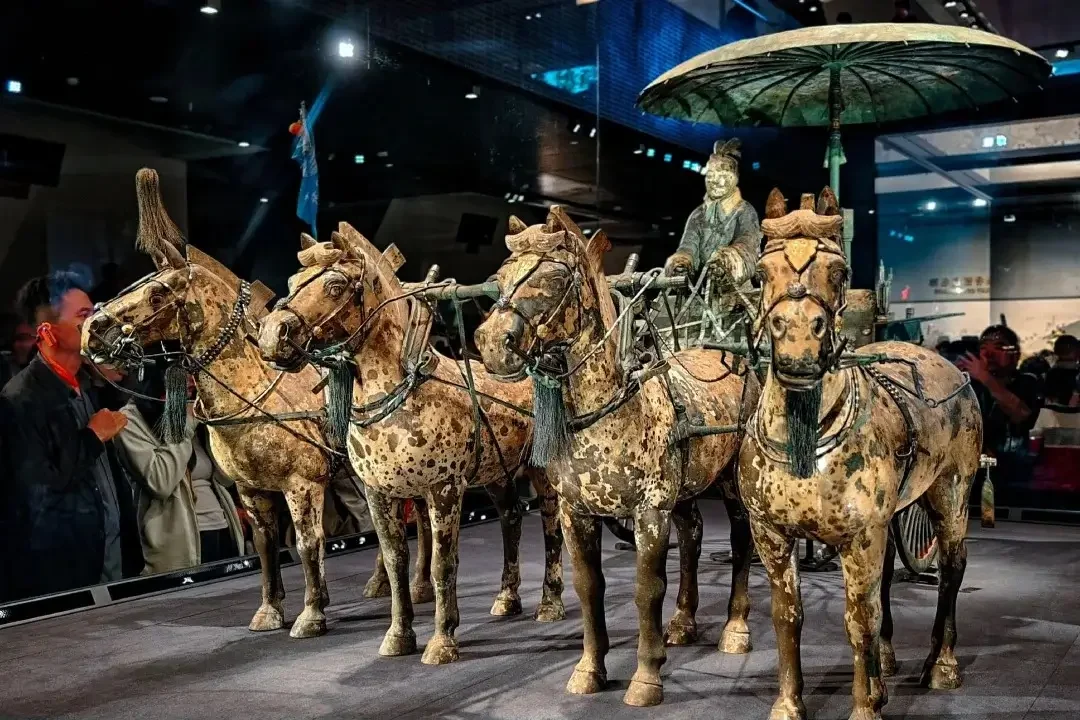
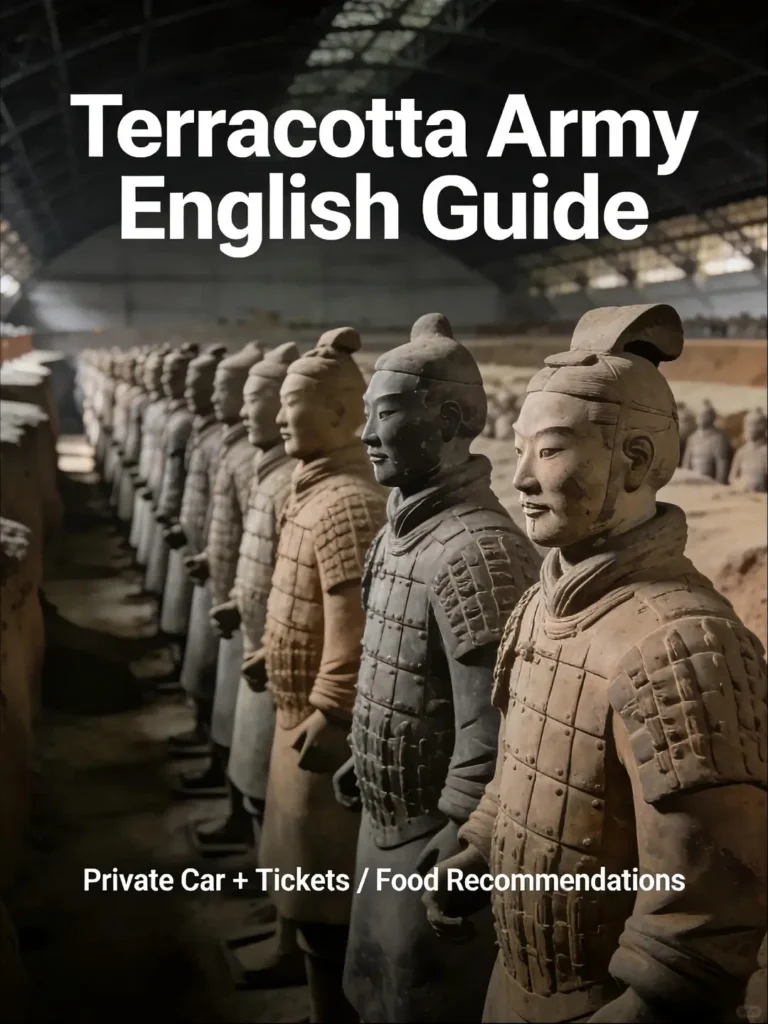
Terracotta Army
Hey there, world travelers! 👋 Are you ready to dive deep into a fascinating Chinese history timeline? Today, we are unlocking the secrets of the legendary Terracotta Army. Every year, millions of international friends are absolutely mind-blown by this ancient wonder, and once you understand the story behind it, you’ll see exactly why!
If you are planning a trip and dream of visiting The Terracotta Army of China, grab your notebook! I’m going to walk you through the epic origins, the hidden geographical gems, and exactly how to explore this masterpiece step-by-step. Let’s go! 🎒✨
The Epic Origins: Who Built the Terracotta Army?
To truly appreciate what you are looking at, we have to travel back over 2,200 years to the mighty Qin Dynasty (221–206 BCE). The mastermind behind this colossal project was Emperor Qin Shi Huang. He wasn’t just any ruler; he was the first emperor to unify a fractured China after the chaotic Warring States period.
Emperor Qin Shi Huang was a visionary, but he was also deeply obsessed with immortality. He ordered the construction of a massive necropolis (a city of the dead) long before he actually passed away. The Terracotta Army was created for one specific, awe-inspiring purpose: to guard the Emperor in the afterlife and ensure his rule continued for eternity.
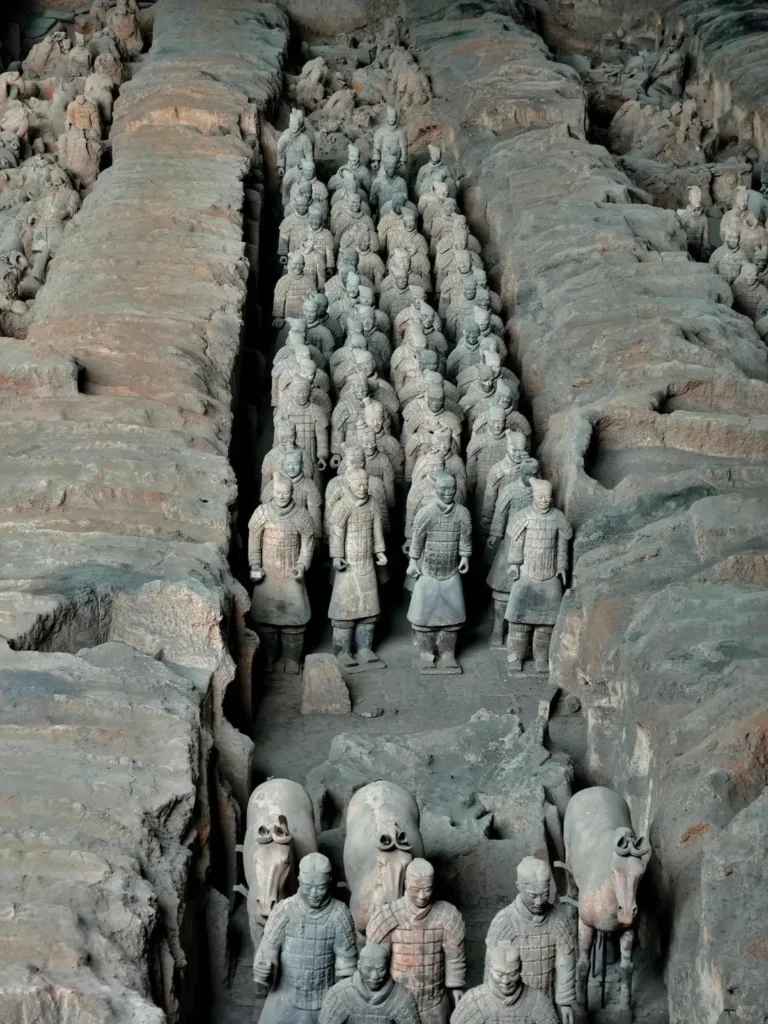
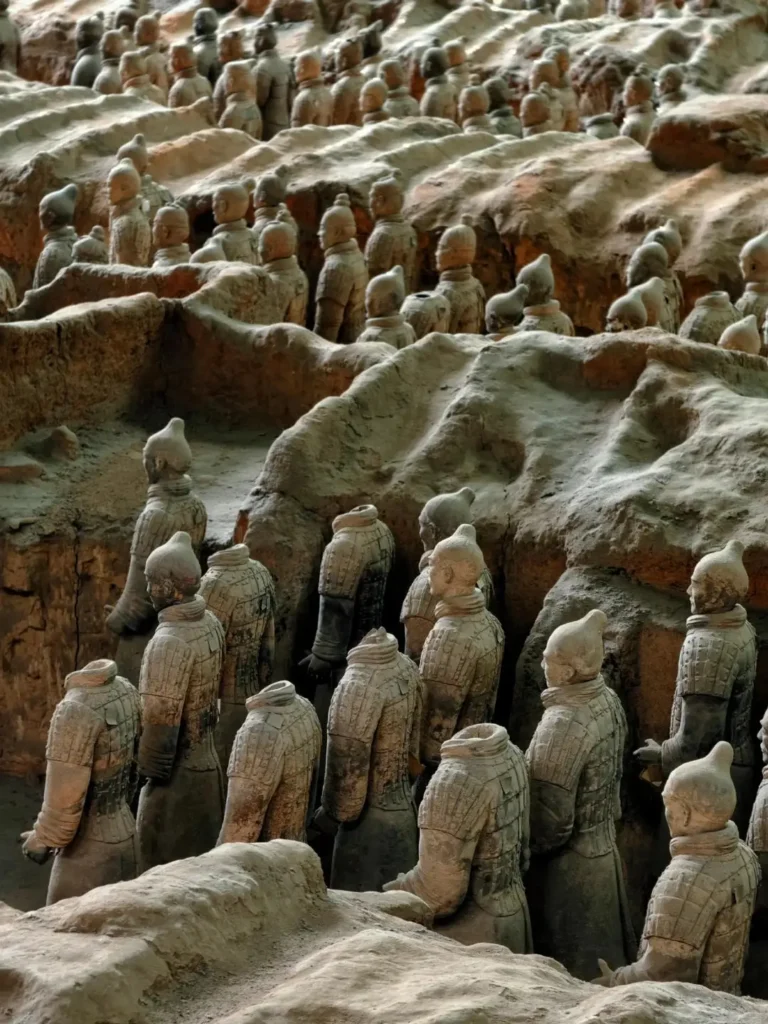
Imagine this: over 700,000 artisans and laborers worked for decades to craft these life-sized clay warriors. What shocks foreign visitors the most is that no two faces are exactly alike. From generals to archers to horses, every single statue has unique facial features, hairstyles, and armor! It is a breathtaking testament to ancient craftsmanship.
Geography: Where is this Historical Treasure Hidden?
You’ll find this world wonder in the historic city of Xi’an, the capital of Shaanxi Province in northwestern China. Xi’an is not just any city; it is the starting point of the ancient Silk Road and served as the capital for numerous major empires when exploring Chinese dynasties (including the glorious Tang Dynasty).
The museum itself is located in the Lintong District, about 40 kilometers east of the Xi’an city center. Nestled right at the foot of the picturesque Mount Li, the location was chosen by ancient Feng Shui masters for its ideal natural landscape—mountains behind and a river in front, offering perfect spiritual protection for the Emperor’s tomb.
Step-by-Step Guide: Exploring the Pits Like a Pro 🗺️
When you arrive, the scale of the site can be overwhelming. Here is my blogger-approved route to make sure you don’t miss a thing!
📍 First Stop: Pit 1 – The Grand Army
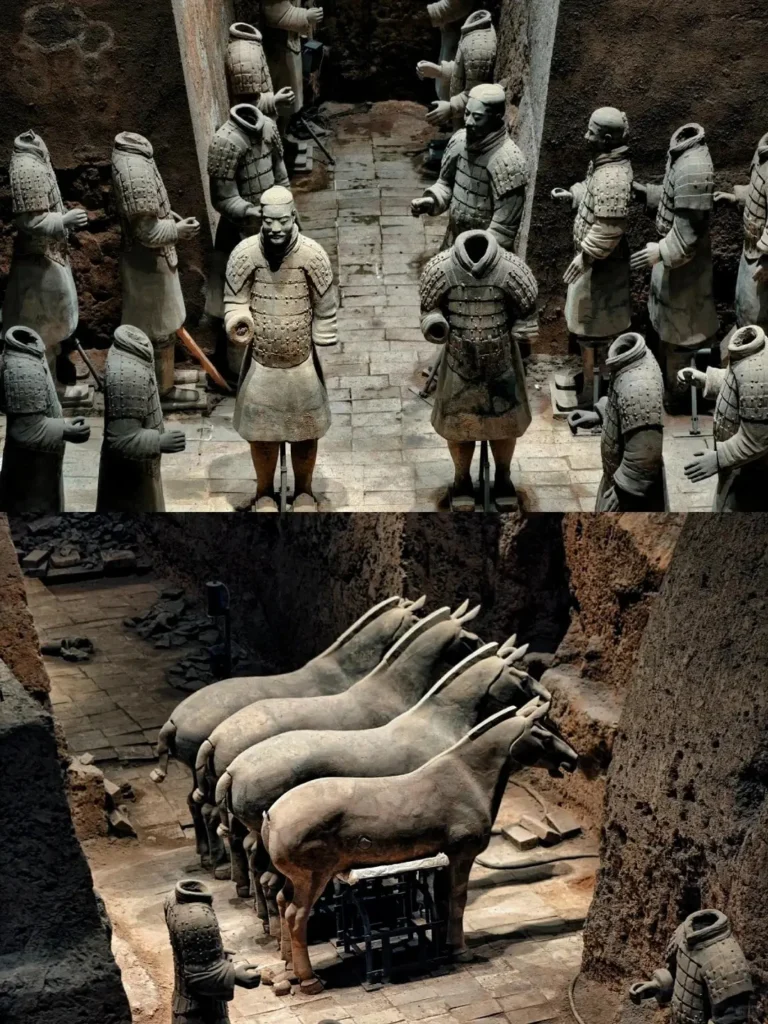
Prepare to have your breath taken away. Pit 1 is the largest and most famous excavation site. Housed inside an airplane-hangar-sized building, this pit contains over 6,000 infantrymen and horses arranged in strict battle formation.
- Pro-Tip: Walk the entire perimeter. The front view is iconic, but the side angles allow you to see the intricate details of their armor and the fascinating process of archaeological restoration happening in real-time at the back of the pit.
📍 Second Stop: Pit 2 – The Specialist Forces
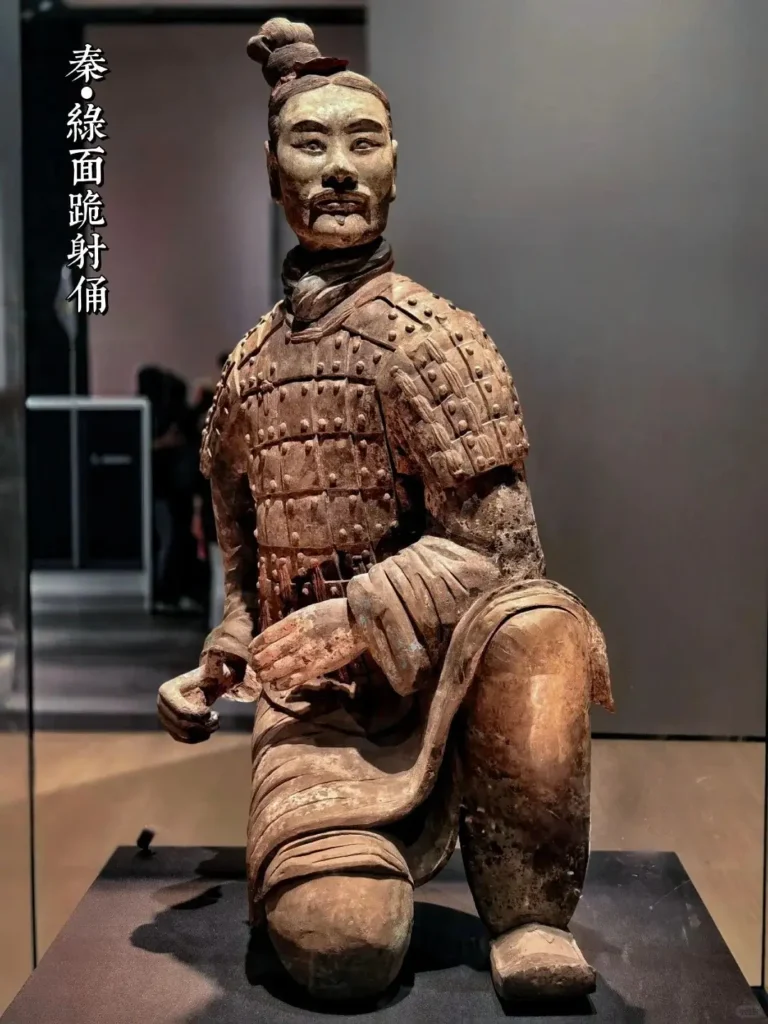
While Pit 1 gives you scale, Pit 2 gives you variety. This is the most complex pit, featuring cavalrymen, war chariots, and kneeling archers.
- Must-See: Keep an eye out for the individual glass display cases here. You can get up close and personal with a perfectly preserved “Kneeling Archer” and a “High-Ranking Officer.” The detail on the tread of their shoes is unbelievable!
📍 Third Stop: Pit 3 – The Command Center
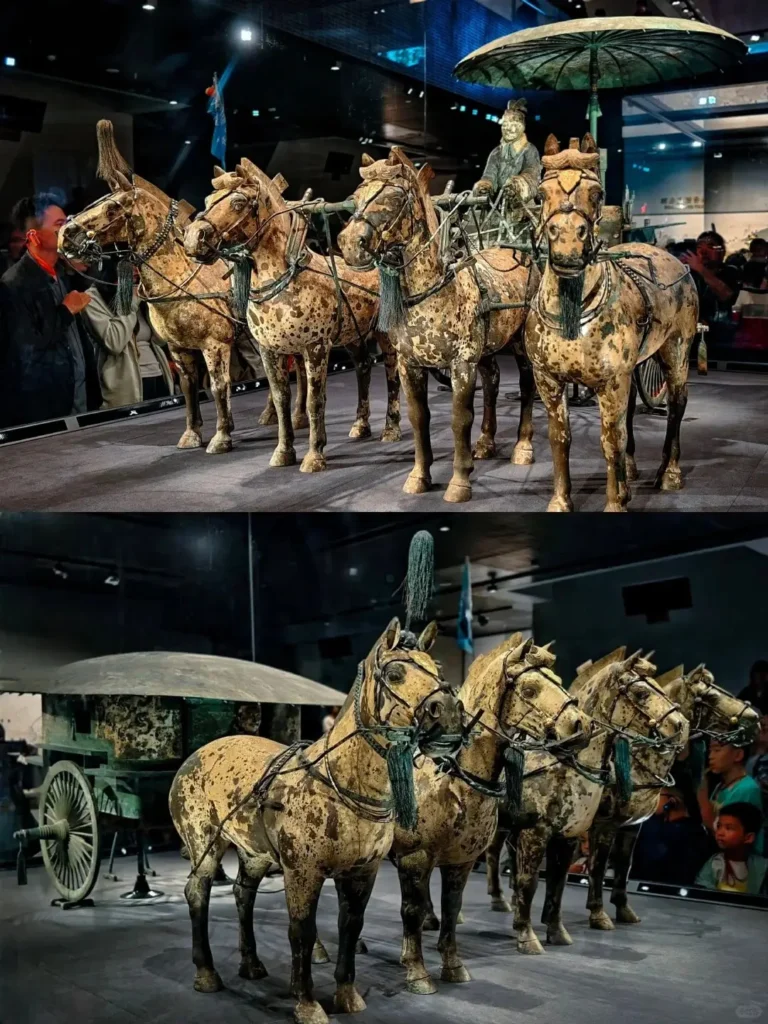
Pit 3 is the smallest, but historically, it was the most important. This was the command headquarters for the entire army. Here you will see high-ranking officers and a beautifully crafted bronze chariot. It feels incredibly intimate and gives you a sense of the strict military hierarchy of the Qin Dynasty.
💡 FAQs for International Travelers
Here are some of the most common questions my foreign friends ask when planning their trip to this historic site:
1. How do I get to the Terracotta Army from the Xi’an city center?
It’s surprisingly easy! You can take Metro Line 9 from the city center straight to Huaqing Pool station. From there, hop on a quick tourist bus or take a short taxi ride directly to the museum entrance. Alternatively, many hotels in Xi’an offer affordable shuttle services or guided day tours.
2. How much time should I allocate for visiting the museum?
To fully appreciate the history without rushing, plan to spend at least 3 to 4 hours exploring the three main pits and the exhibition halls. If you are deeply passionate about ancient Chinese history, you might easily spend half a day here soaking in the details.
3. Are there English guides available on-site?
Yes, absolutely! The museum provides official audio guides in multiple languages, including excellent English commentary. However, hiring a local, licensed English-speaking tour guide at the entrance is highly recommended. They can tell you captivating stories about Emperor Qin Shi Huang that you simply won’t get from an audio device.
4. What else is there to do near the museum?
Don’t just head straight back to your hotel! Right near the museum is the gorgeous Huaqing Palace, a historical hot spring retreat famously loved by emperors of the Tang Dynasty. Also, the actual burial mound of Emperor Qin Shi Huang is a short shuttle ride away from the pits and is included in your ticket!
Stepping into the presence of the Terracotta Army is more than just sightseeing; it is a profound connection to humanity’s shared past. It is a bridge spanning thousands of years, waiting for you to cross it.
To all our international friends packing their bags: Have a safe and wonderful trip! The rich history, delicious food, and friendly faces of China are waiting for you. The Chinese people welcome you with open arms! 🇨🇳❤️