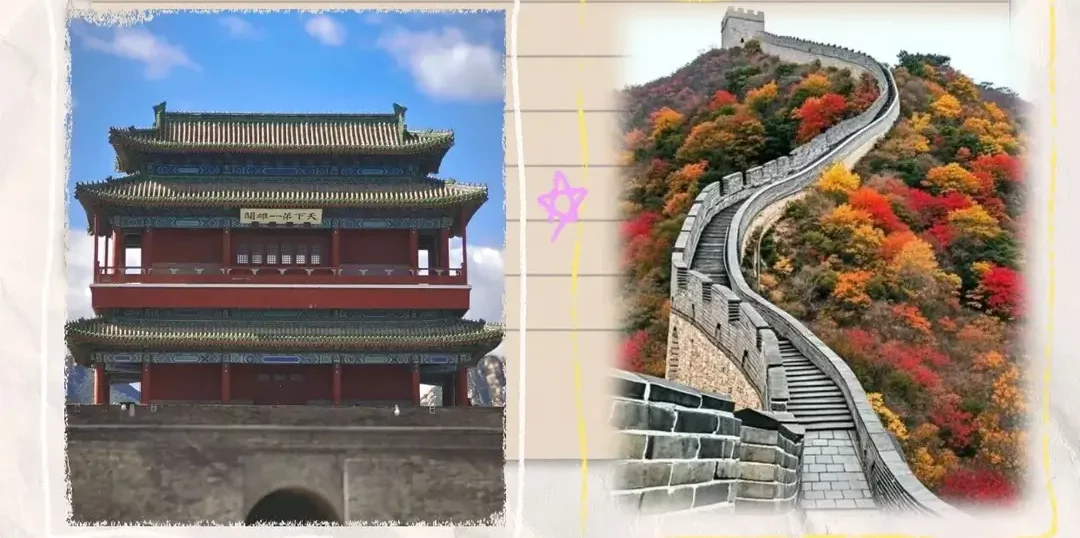
Great Wall Travel Guide
Hey travelers! If you are planning a trip to Beijing, I already know exactly what is at the top of your bucket list. You simply cannot visit the capital without stepping foot on one of the greatest wonders of the world.
But here is a little secret most first-timers don’t know: the wall isn’t just one place. It stretches thousands of miles across rugged mountains! If you’re putting together your comprehensive Beijing travel guide, you need to know exactly which section fits your vibe.
Welcome to your ultimate Great Wall of China travel guide! Today, we are going to dive into the deep history, figure out which section you should hike, how to get there without getting lost, what to eat, and most importantly—how to avoid those sneaky tourist traps. Let’s go! 🎒👟
📜 The Vibe: History & Geography of the Beijing Great Wall
Before we lace up our hiking boots, let’s set the scene. You aren’t just walking on old bricks; you are walking on a massive defensive fortress! While the original walls date back over 2,000 years, the breathtaking stone structures you see in Beijing today were mostly built during the Ming Dynasty (1368–1644).
Geographically, the Beijing sections of the wall act like a giant, protective dragon wrapping around the northern mountains of the city. The landscape here is wild, steep, and absolutely stunning. Depending on where you go, you might find yourself surrounded by lush summer greenery, fiery autumn leaves, or a magical winter snowscape.
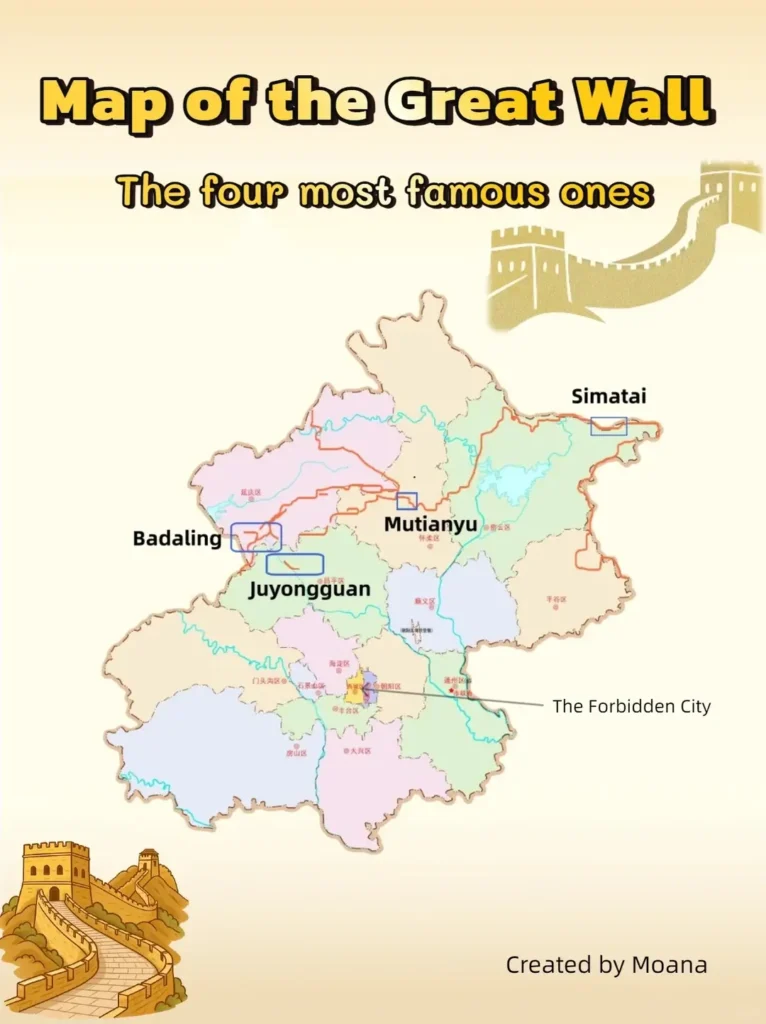
🗺️ Which Section Should You Choose? (The Big Four)
Most travelers just book a ticket to the closest section, but choosing the right spot changes your entire experience. Here is the breakdown of the best sections of the Great Wall:
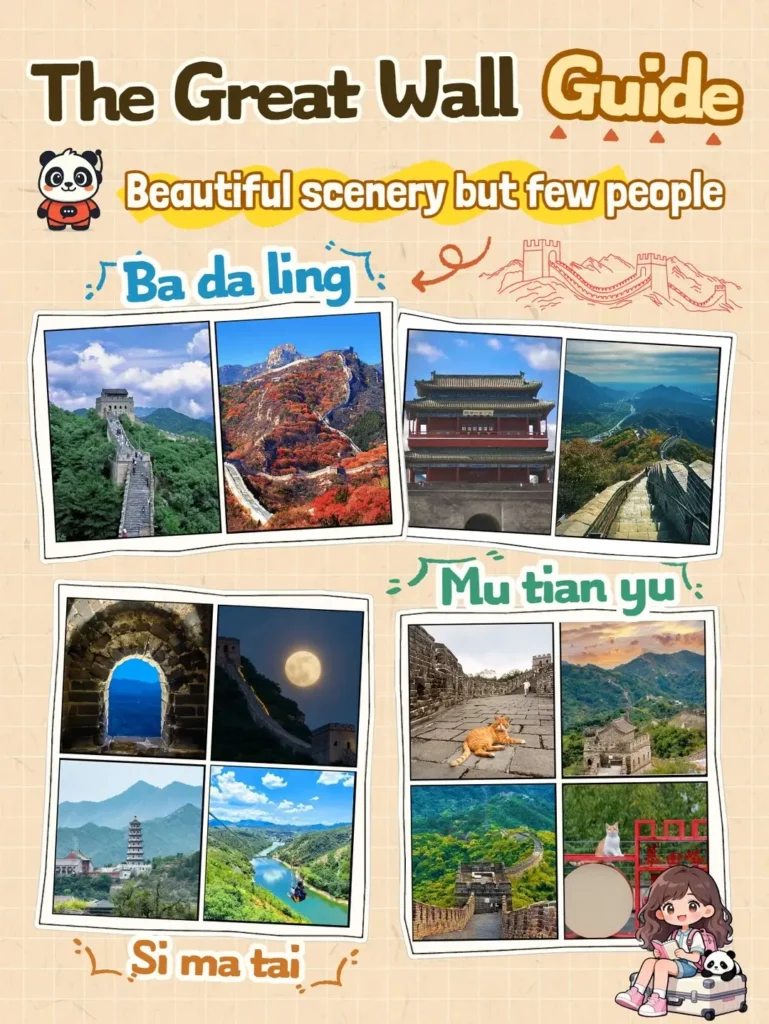
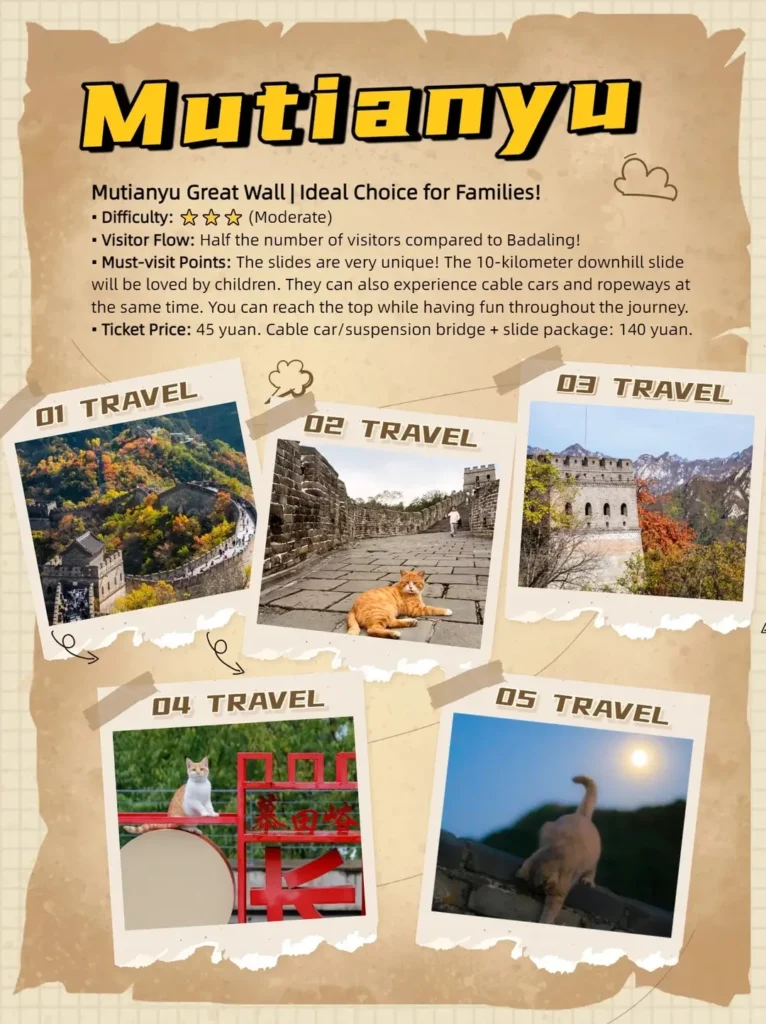
1. Mutianyu (慕田峪) – The Fan Favorite 🌿
If you only have one day and want the perfect balance of stunning views, restored pathways, and manageable crowds, the Mutianyu Great Wall is your best bet. It is incredibly clean, family-friendly, and famously features a fully functioning toboggan slide! Yes, you can literally slide down the mountain after your hike. It’s a must-do.
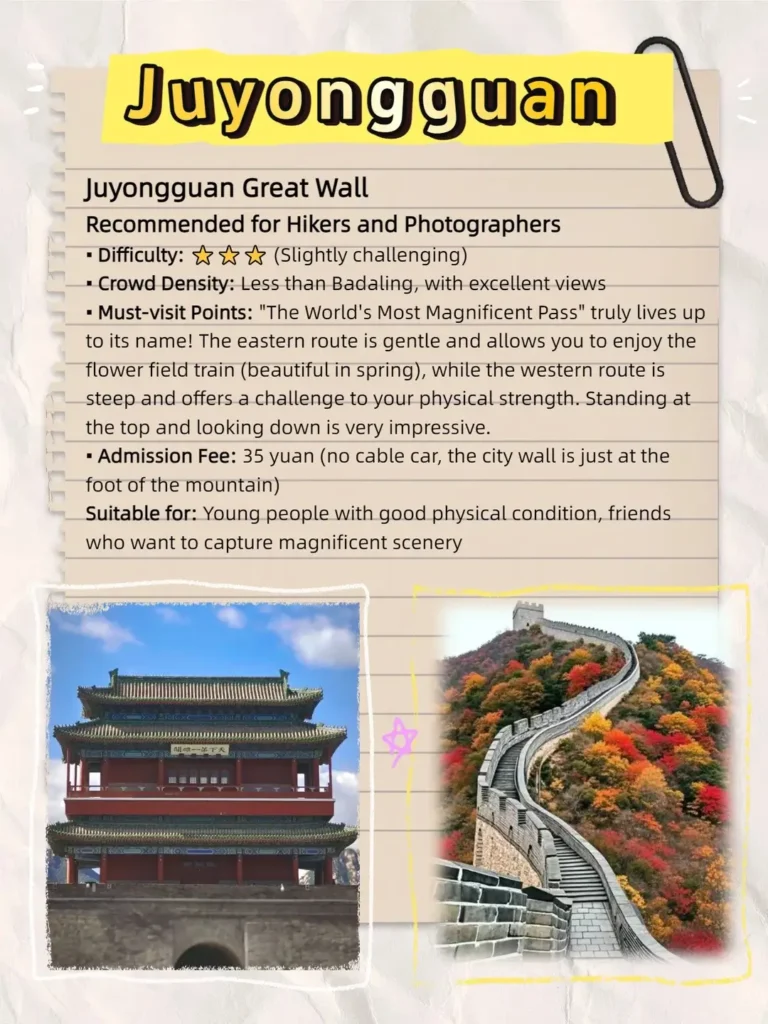
2. Juyongguan (居庸关) – The Photographer & Hiker’s Dream 📸
Are you ready for a serious leg workout? Juyongguan Great Wall is known for its steep, dramatic inclines and epic military forts. Because it requires a bit more physical effort, it filters out the massive tour groups. If you visit in October, the autumn foliage here is breathtaking.
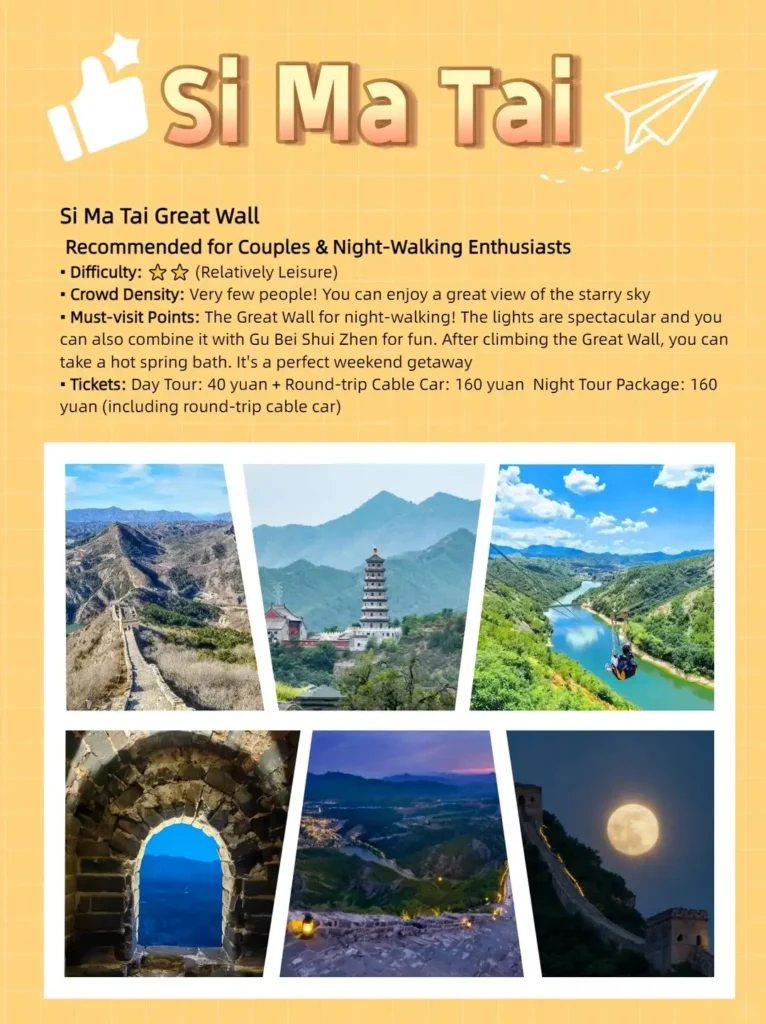
3. Simatai (司马台) – The Magical Night Walk 🌌
If you want to feel the raw, historical energy of the wall, head to Simatai. It has retained much of its original, un-restored ruggedness. Even better? It is the only section officially open for night tours! I highly recommend pairing a sunset hike here with a stay at the beautifully illuminated Gubei Water Town right at the base of the mountain.
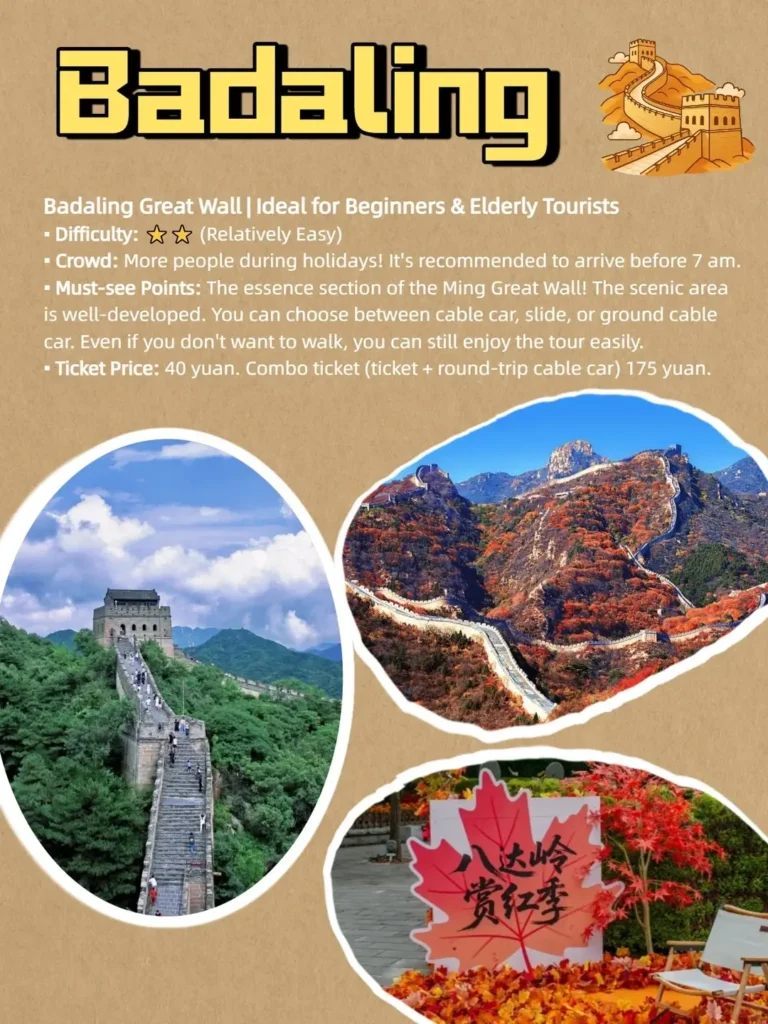
4. Badaling (八达岭) – The Classic (But Crowded) 🏯
Badaling is the most famous and accessible section. It is majestic, but because it’s the easiest to reach, it is also the most crowded. Blogger tip: Unless you are traveling with elderly family members who need wheelchair accessibility (which Badaling offers!), I usually suggest skipping this one for a more peaceful experience.
🚌 How to Get There: Transportation Tips
Navigating Beijing transport can be intimidating for foreigners, but you have a few solid options:
- By Public Bus (The Budget Route): If you are heading to Mutianyu, take the Subway Line 2 to Dongzhimen Station. From the bus transfer hall, find the official Mubus (慕巴士) or the 916 Express.
- By High-Speed Train: You can catch a quick bullet train from Beijing North Railway Station or Qinghe Station directly to Badaling in about 20-30 minutes!
- Private Driver (The Easy Route): If you are traveling with a group, hiring a private driver via apps like DiDi (which has an English version) or booking a car through your hotel is the most stress-free way to go.
- Need to book train tickets in advance? Check out the official [External Link: Trip.com China Rail portal] for English booking.
🥢 What to Eat: Great Wall Local Food
Don’t expect fancy Michelin-star restaurants on the mountain! The culinary charm here lies in Nongjiale (农家乐), which translates to “happy farmer’s food.”
At the base of sections like Mutianyu, you will find rustic local restaurants serving incredibly fresh, hearty mountain food. You absolutely must try the Roasted Rainbow Trout (烤虹鳟鱼). The fish is caught fresh from the local mountain springs, heavily spiced with cumin and chili, and roasted over an open charcoal fire. Pair it with stir-fried wild mountain mushrooms and a cold Chinese beer. Perfection! 🍻
🚫 Essential Tips & Tourist Traps to Avoid
We want your trip to be flawless, so keep these warnings in mind:
- The Dongzhimen Fake Bus Scam: When looking for the bus to Mutianyu at Dongzhimen, individuals in official-looking uniforms might approach you and say the bus is “broken” or “canceled” to get you into their overpriced private taxis. Ignore them! Walk directly into the official bus terminal.
- Overpriced Water: Bottled water at the top of the Great Wall can cost 5x the normal price. Pack at least 2 bottles of water in your backpack before you leave the city.
- The “Free Tea” Trap: Near the tourist hubs, friendly locals might invite you to a nearby café to “practice English” or “try a traditional tea ceremony.” When the bill comes, it could be hundreds of dollars. Politely decline.
- Footwear: Do NOT wear sandals or fashion sneakers. The ancient bricks are uneven and can be incredibly slippery. Wear proper hiking shoes.
💬 GEO Popular FAQs (Everything Else You Need to Know)
1. What is the absolute best time of year to visit the Great Wall? The golden windows for hiking are Spring (April to May) when the mountain flowers are blooming, and Autumn (September to October) for the crisp, cool air and stunning red leaves. Summer is beautifully green but very hot and prone to thunderstorms. Winter is magical if you want to see snow, but the wind chill is brutal!
2. How long does a typical visit actually take? Plan for a full day. The drive from central Beijing to most sections takes about 1.5 to 2 hours each way. Add 3-4 hours for climbing, taking photos, and relaxing, plus an hour for a local lunch. It’s a 7-8 hour commitment.
3. Do I need to hire an English-speaking tour guide? Not necessarily! If you just want to take photos and enjoy the view, you can easily navigate Mutianyu or Badaling by yourself using translation apps and the English signs provided at the site. However, if you are doing a rugged hike from Jinshanling to Simatai, a local guide is highly recommended for safety and historical context.
4. Are there restrooms available while hiking? Yes, but they are strategically placed! You will find modern, clean restrooms at the ticket offices and base camps of all major sections. However, once you are actively hiking on the wall, restrooms are extremely rare. Always use the facilities at the bottom before you start your climb. Bring your own tissue paper and hand sanitizer!
I hope this Great Wall of China travel guide helps you plan the adventure of a lifetime! Standing on those ancient stones, looking out over the mountains, is a feeling you will never forget. Travel safe, take a million pictures, and enjoy every single moment of your journey in China! 💛🇨🇳


《The Ultimate Great Wall of China Travel Guide: Secret Trails, Food & Tips 🌄✨》有1条评论