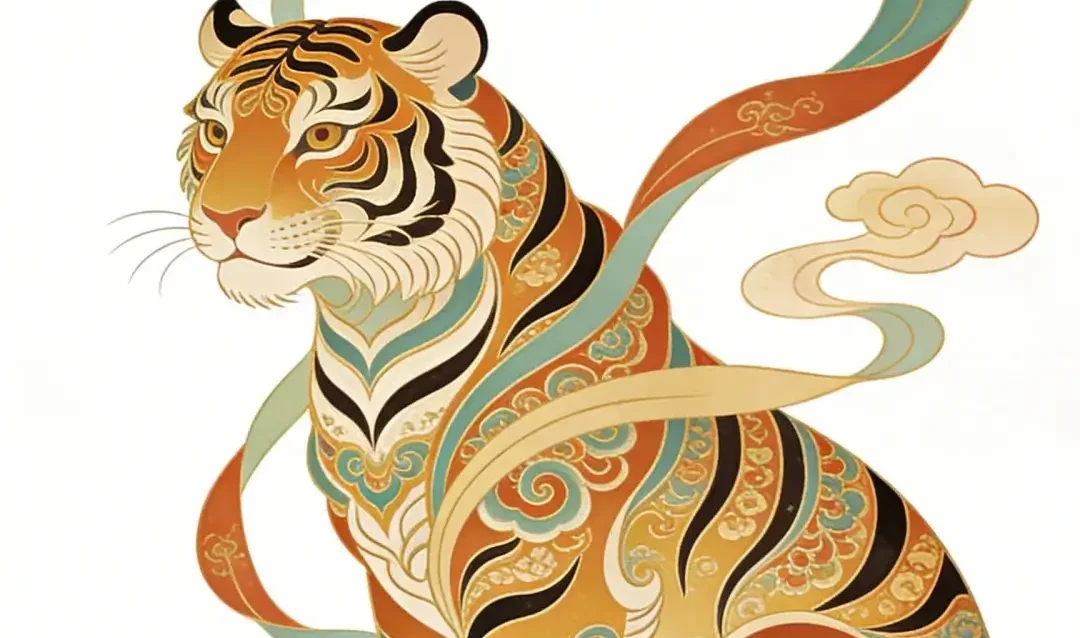
Chinese Zodiac Tiger
If you’ve ever wandered through the bustling hutongs of Beijing during Spring Festival, stepped into a centuries-old temple in Xi’an, or browsed a local handicraft market on your China travels, you’ve almost certainly come face-to-face with the striking, powerful imagery of the Chinese Zodiac Tiger. From vivid red paper cuts on shop doors to intricate stone carvings in imperial palaces, this iconic animal is everywhere in Chinese culture—and for foreign travelers, it’s often one of the most fascinating, yet misunderstood, parts of China’s 5,000-year-old heritage. As someone who’s spent years helping global visitors unlock the stories behind China’s most beloved cultural traditions, I’ve seen time and time again how the Chinese Zodiac Tiger stops travelers in their tracks, sparking endless questions about its history, its legends, and what it truly means to the Chinese people.
In this complete guide, we’re diving deep into every corner of the Zodiac Tiger: its ancient origins in Chinese history, its starring role in Chinese festivals, its place in the 12-sign Chinese Zodiac system, and the timeless myths that have made it a symbol of power, luck, and protection for millennia. Whether you’re planning your first trip to China, already exploring its hidden gems, or just obsessed with global folk culture, this guide will give you all the context you need to understand, appreciate, and even connect with locals over the magic of the Chinese Zodiac Tiger.
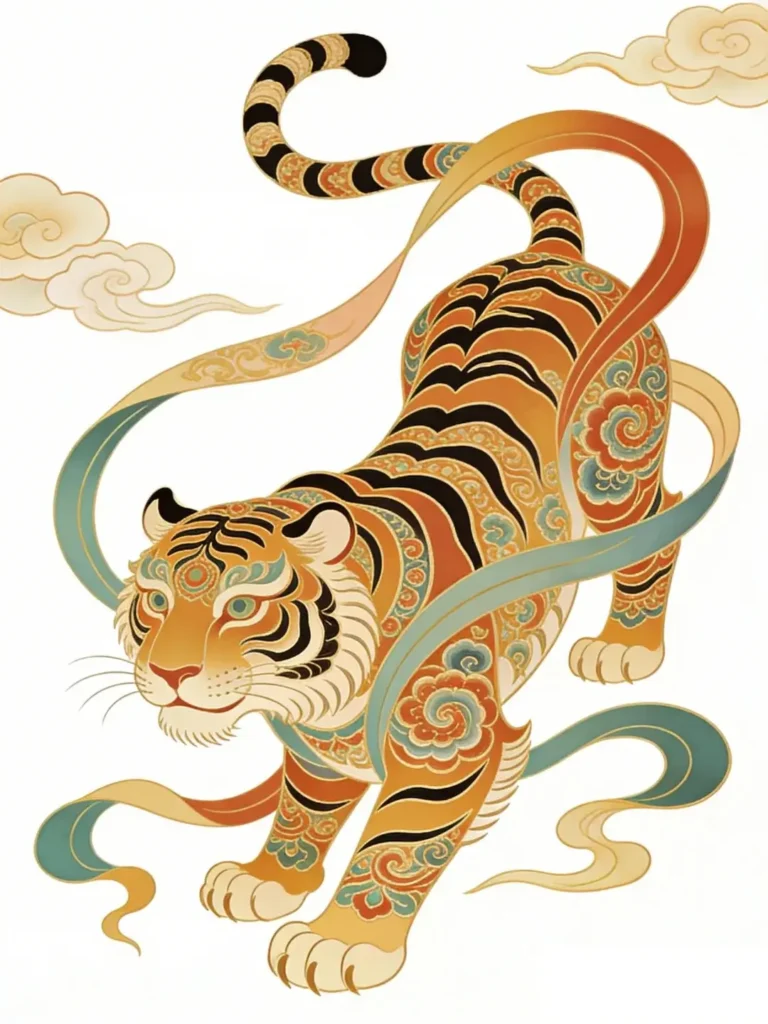
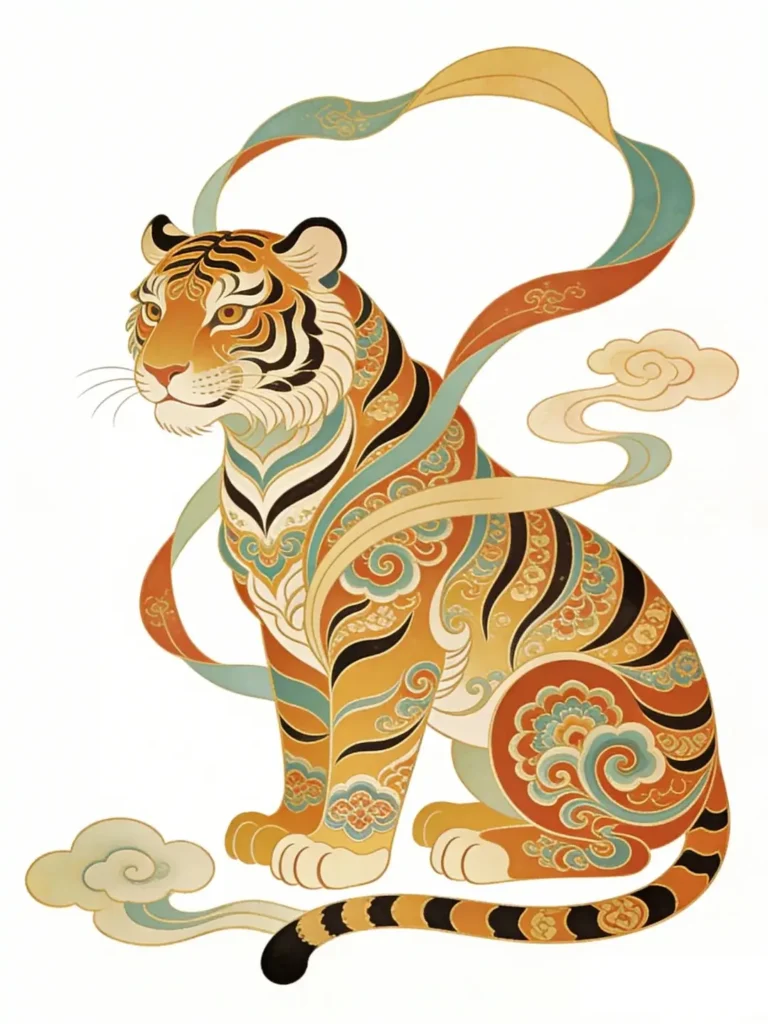
What Is the Chinese Zodiac Tiger in Chinese Culture?
Before we dive into the legends and history, let’s start with the basics for travelers new to China’s zodiac system. The Chinese Zodiac, also known as Shengxiao, is a 12-year cycle rooted in both lunar astronomy and ancient Chinese folk religion, with each year represented by a unique animal with distinct traits, myths, and cultural meaning. Unlike Western astrology, which is tied to birth months, the Chinese Zodiac is tied to birth years, and it shapes everything from holiday traditions to gift-giving, to even how locals interact with one another across China. For a full breakdown of all 12 signs, you can explore our complete guide to the Chinese Zodiac system [internal link: /12-chinese-zodiac-signs-full-explained-for-travelers].
The Chinese Zodiac Tiger is the 3rd animal in the 12-sign cycle, sitting between the Ox (2nd) and the Rabbit (4th). It is inextricably tied to the Earthly Branch Yin, and the 3-5am window in the 24-hour day—known as Yin Shi, the time when tigers are historically at their most active, hunting in the mountains with unmatched power and focus. In Chinese culture, the tiger is universally known as the King of All Beasts, a title it has held for over 3,000 years, far predating its place in the formal zodiac system. Unlike some Western narratives that frame tigers as symbols of unbridled danger, the Zodiac Tiger is almost exclusively a positive, auspicious symbol in China: it represents courage, leadership, protection, good fortune, and the ability to ward off evil spirits and misfortune.
Core Traits of the Zodiac Tiger in Chinese Astrology
For travelers who meet locals born in the Year of the Tiger during your China trip, understanding these core traits will help you connect and share meaningful conversations. Those born under the Chinese Zodiac Tiger are widely believed to be:
- Confident, natural-born leaders who are unafraid to take risks and stand up for what they believe in
- Brave and loyal, with a fierce sense of justice and protection for their loved ones
- Charismatic and energetic, with a magnetic personality that draws people in
- Passionate and ambitious, with a drive to succeed in every goal they set
- Generous and warm-hearted, with a deep love for their family and community
Like all zodiac signs, the Tiger also has its challenges: those born under the sign are often seen as impulsive, stubborn, and prone to impatience when things don’t go their way. But even these traits are framed with affection in Chinese culture, seen as the natural side effect of the Tiger’s unapologetic passion and unshakable courage.
The Deep Ancient History & Origins of the Chinese Zodiac Tiger
To truly understand the Chinese Zodiac Tiger, you have to look far beyond the 12-sign zodiac cycle itself. The tiger’s reverence in China stretches back over 7,000 years, to the Neolithic age, making it one of the oldest continuously worshipped animals in all of Chinese history. For travelers, this means every tiger carving, painting, or decoration you see in China isn’t just a pretty design—it’s a direct link to a tradition that has survived empires, dynasties, and millennia of change.
Tiger Worship in Prehistoric & Ancient Chinese History
The earliest evidence of tiger worship in China comes from the 5000-year-old Hongshan Culture, in what is now northeastern China. Archaeologists have unearthed jade tiger carvings from this period, crafted with incredible detail, that were used in religious rituals as symbols of power and connection to the spiritual world. These artifacts prove that even before the invention of writing in China, the tiger was already a sacred animal, tied to the forces of nature and the divine.
As Chinese civilization developed through the Xia, Shang, and Zhou dynasties (2070 BCE – 256 BCE), the tiger’s role in society only grew. Bronze vessels from the Shang Dynasty, used in imperial and religious rituals, are covered in intricate tiger motifs, with the animal’s fierce face and powerful body used to ward off evil and bless the ruling dynasty with strength and longevity. It was during this period that the tiger became firmly tied to military power: generals and soldiers would carry tiger amulets into battle, believing the animal’s courage would protect them from harm and bring them victory.
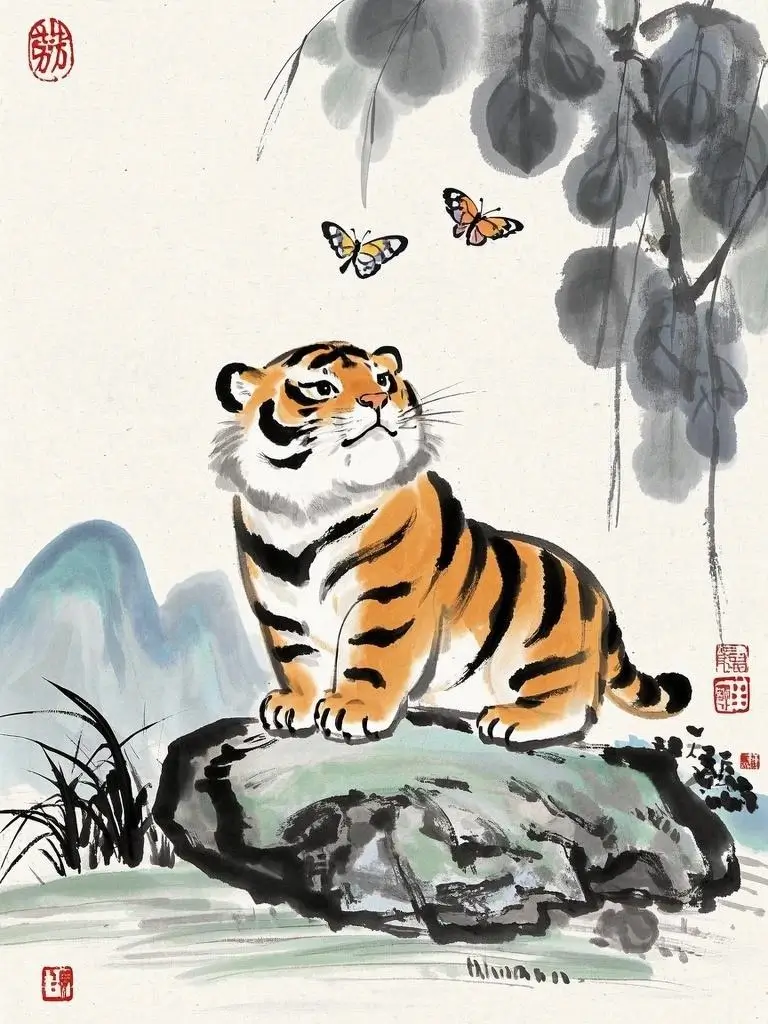

The Tiger in Chinese Mythology: From Shanhaijing to the Four Symbols
No deep dive into the Chinese Zodiac Tiger is complete without exploring the ancient myths that shaped its place in Chinese culture. The most famous early collection of Chinese mythology, the Shanhaijing (Classic of Mountains and Seas), written over 2,200 years ago, is filled with tiger imagery that has shaped Chinese folk religion to this day. The most iconic figure from the text is Xi Wangmu, the Queen Mother of the West, the supreme goddess of Chinese mythology, who is described as having a human body with a tiger’s tail and tiger’s teeth—proof of the tiger’s sacred, divine status in ancient China. Xi Wangmu was believed to control life, death, and immortality, and her tiger features were a symbol of her unchallenged power and ability to protect her followers from evil.
The tiger’s most enduring mythological role, however, is as one of the Four Symbols of Chinese cosmology, a system that dates back to the Warring States period (475 BCE – 221 BCE) and is still widely recognized across China today. The Four Symbols are four divine animals that represent the four cardinal directions, the four seasons, and the four major constellations in Chinese astronomy: the Azure Dragon of the East (Spring), the Vermilion Bird of the South (Summer), the Black Tortoise of the North (Winter), and the White Tiger of the West (Autumn).
The White Tiger is not just a symbol of the west—it is the god of war, protection, and righteousness in Chinese mythology. For thousands of years, Chinese emperors built White Tiger temples on the western side of imperial cities to protect the capital from invasion and evil spirits. Even today, when you visit the Forbidden City in Beijing, you’ll see White Tiger carvings on the western gates and halls, a 600-year-old reminder of the tiger’s sacred role in protecting China’s imperial heart. You can learn more about the Four Symbols and their role in Chinese imperial architecture on the official website of the Ministry of Culture and Tourism of the People’s Republic of China.
The Tiger Talisman: How the Tiger Shaped Ancient Chinese Military & Governance
One of the most fascinating pieces of Chinese history tied to the Zodiac Tiger is the hufu, or Tiger Talisman, a symbol that shaped the fate of Chinese empires for over 2,000 years. Invented during the Warring States period, the Tiger Talisman was a bronze tiger figurine split into two halves: one half was kept by the emperor, and the other was given to a general commanding an army. No military order, no matter how big or small, could be carried out unless the two halves of the talisman were perfectly matched together.
This simple, brilliant invention made the tiger the ultimate symbol of imperial authority and military power in China. The most famous surviving Tiger Talisman is the Yangling Tiger Talisman, from the Qin Dynasty (221 BCE – 207 BCE), the dynasty that unified China for the first time. It is inscribed with 40 characters of ancient Chinese script, detailing the rules for using the talisman to mobilize troops, and it is now one of the most precious artifacts in the National Museum of China in Beijing. For travelers visiting the museum, seeing the Yangling Tiger Talisman in person is a breathtaking moment: it’s a direct link between the ancient tiger worship of prehistoric China, the imperial power of the Qin Dynasty, and the Chinese Zodiac Tiger that is still celebrated across the country today.
The Legend of How the Tiger Earned Its Place in the Chinese Zodiac
Now that we’ve explored the deep history of the tiger in China, let’s dive into the beloved folk legend that explains how the Chinese Zodiac Tiger earned its spot as the 3rd animal in the 12-sign cycle. This is the story you’ll hear from locals across China, from street vendors in Shanghai to elders in rural villages, and it’s the perfect tale to share with new friends you meet on your travels.
The legend begins with the Jade Emperor, the supreme ruler of heaven in Chinese folk religion, who decided to create the 12-sign Chinese Zodiac to help humans track time and understand the world. He announced that he would hold a grand race: the first 12 animals to cross the finish line at the Heavenly Gate would earn a permanent spot in the zodiac, with their order decided by their finish in the race.
At the time, the tiger was already known as the King of All Beasts, with unmatched speed and strength. He was confident he would win the race, and he set out at dawn on the day of the competition, running faster than any other animal in the forest. But as he neared the Heavenly Gate, he was shocked to see two animals already ahead of him: the Ox, who had walked through the night without stopping, and the Rat, who had hitched a ride on the Ox’s back and jumped off at the last second to cross the finish line first.
The tiger was furious at first, convinced he had been cheated. But the Jade Emperor smiled and told the tiger that even though he had finished 3rd, he was still the most powerful animal in the race, and his place in the zodiac would be one of the most revered. The Jade Emperor also tied the tiger to the Yin hour, the time of day when he was at his most powerful, ensuring that his strength and courage would be honored every single day, not just once every 12 years.
There’s another beloved twist to the tale, too: before the race, the tiger had already earned the Jade Emperor’s favor by ridding the human world of three terrible monsters that had been terrorizing villages across China. The monsters were a wild boar that destroyed crops, a great eagle that stole livestock, and a sea monster that flooded villages. The tiger defeated all three single-handedly, and the Jade Emperor marked his forehead with three horizontal lines to honor his three victories. Later, when the tiger defeated a fourth monster that was threatening the Jade Emperor’s own palace, the emperor added a vertical line through the three horizontal ones, creating the Chinese character Wang (王), which means “King”. To this day, every tiger in the world has this character on its forehead, a permanent reminder of its title as the King of All Beasts, and its place in the Chinese Zodiac.
The Year of the Tiger in Chinese Festivals & Daily Life (What You’ll See Traveling China)
For travelers to China, the best way to experience the Chinese Zodiac Tiger is to see how it comes to life in Chinese festivals and daily folk traditions across the country. Everywhere you go, from the biggest cities to the smallest rural villages, you’ll see tiger imagery woven into the fabric of everyday life, and understanding these traditions will make your travels infinitely more meaningful.
Spring Festival: Tiger Decorations & Traditions You Can’t Miss
Spring Festival, also known as Chinese Lunar New Year, is the biggest, most important holiday in China, and it’s where the Year of the Tiger truly shines. During every Spring Festival, but especially in the Year of the Tiger, you’ll see tiger-themed decorations everywhere: red paper cuts of tigers on windows and doors, tiger paintings on the walls of homes and shops, tiger lanterns hanging in the streets, and even tiger-shaped dumplings served at family reunion dinners.
In Chinese culture, these decorations aren’t just for celebration—they’re a form of protection. Chinese families hang tiger imagery during Spring Festival to ward off evil spirits, bad luck, and illness for the coming year. It’s believed that the tiger’s fierce gaze and powerful presence will keep anything harmful from entering the home, and bring good fortune and prosperity to the family for the 12 months ahead. For a full guide to Spring Festival traditions and how to celebrate like a local, check out our ultimate Lunar New Year guide for foreign travelers.
One of the most heartwarming tiger traditions you’ll see during Spring Festival is the custom of dressing small children in tiger head hats, tiger head shoes, and tiger-themed clothing. These handmade garments are often stitched by grandparents for their grandchildren, and they’re believed to protect the child from illness, harm, and bad luck, wrapping them in the tiger’s courage and protection from the moment they’re born. I still remember a reader who emailed me after a trip to Chengdu, saying she’d bought a hand-embroidered tiger hat from a local artisan, and later gave it to her sister’s newborn baby—only to learn that the gift was one of the most meaningful, thoughtful things she could have given, rooted in thousands of years of Chinese culture.
Dragon Boat Festival: Tiger Talismans & Folk Customs
Spring Festival isn’t the only time you’ll see the Chinese Zodiac Tiger celebrated in Chinese festivals. The Dragon Boat Festival, held every year on the 5th day of the 5th lunar month, is another major holiday where tiger traditions take center stage. The Dragon Boat Festival is traditionally a time to ward off disease and evil, as the 5th lunar month is seen as the hottest, most dangerous month of the year in traditional Chinese medicine. And who better to ward off harm than the King of All Beasts?
During the Dragon Boat Festival, you’ll see locals across China making ai hu (mugwort tigers), small tiger figurines made from dried mugwort, a plant believed to have purifying and protective properties in Chinese culture. These mugwort tigers are hung on doors and windows, or worn as amulets around the neck, to protect the wearer from illness and evil spirits. Locals also draw tigers on the foreheads of children with realgar wine, using the same Wang character that marks the tiger’s forehead, to bless the child with health and protection for the year ahead. You can learn more about the Dragon Boat Festival and its tiger traditions from the British Museum’s expert guide to Chinese folk customs [dofollow external link: https://www.britishmuseum.org/learn/topics/chinese-zodiac].
Tiger Culture in Chinese Folk Art You’ll Find in Local Markets
As you travel across China, you’ll find that every region has its own unique take on Zodiac Tiger folk art, and these pieces make some of the most meaningful souvenirs you can bring home. In Yangzhou, Jiangsu province, you’ll find intricate paper cuts of tigers, crafted by master artisans with just a pair of scissors and a single sheet of red paper, a tradition that dates back over 1,500 years. In Mianzhu, Sichuan province, you’ll find vibrant woodblock prints of tigers, made using traditional techniques from the Qing Dynasty, that are hung in homes during Spring Festival to bring good luck. In Huaiyang, Henan province, you’ll find clay tiger figurines, hand-painted in bright colors, that have been made by local families for over 1,000 years.
Each of these pieces is more than just a souvenir: it’s a living piece of Chinese history, a tradition that has been passed down from generation to generation, and a tangible connection to the Chinese Zodiac Tiger that has been cherished in China for millennia.
FAQ: About the Chinese Zodiac Tiger
1. What years are the Year of the Tiger in the Chinese Zodiac?
The Year of the Tiger repeats every 12 years in the Chinese lunar calendar, aligning with the 12-year cycle of the Chinese Zodiac. The most recent Tiger years include 1926, 1938, 1950, 1962, 1974, 1986, 1998, 2010, and 2022. The next Year of the Tiger will arrive in 2034. It’s critical to note that the Chinese lunar calendar does not align with the Gregorian calendar: each Tiger year begins on the Lunar New Year (Spring Festival), which falls between late January and mid-February each year. For example, the 2022 Year of the Tiger began on February 1, 2022, and ended on January 21, 2023. If you were born in January or early February, you’ll want to double-check your birth date against the lunar calendar to confirm if you fall under the Tiger sign.
2. What are the lucky colors, numbers, and symbols for the Chinese Zodiac Tiger?
In Chinese culture, every zodiac sign has a set of lucky and unlucky elements, rooted in traditional Chinese Five Element (Wuxing) philosophy. For the Chinese Zodiac Tiger, which is aligned with the Wood element in most cycles, lucky colors include forest green, bright red, and royal blue—colors that mirror the tiger’s natural habitat and its association with power and good fortune. Lucky numbers for Tiger signs are 1, 3, and 4, while numbers to avoid include 6 and 7. Lucky symbols beyond the tiger itself include pine trees, cypress trees, and the White Tiger from the Four Symbols of Chinese mythology. When you’re shopping for souvenirs in China, you’ll often see these lucky elements paired with Zodiac Tiger imagery, making them perfect meaningful gifts for yourself or loved ones born in the Year of the Tiger.
3. Is the Tiger a lucky sign in Chinese culture?
Absolutely—unlike in some Western cultures where tigers can be seen as a symbol of danger or aggression, the tiger is universally regarded as one of the most auspicious, powerful, and lucky signs in Chinese culture. For thousands of years, the tiger has been known as the “King of All Beasts” in China, a symbol of courage, strength, leadership, and protection against evil spirits, bad luck, and harm. It’s so revered that it’s one of the Four Symbols of Chinese cosmology, alongside the Azure Dragon, Vermilion Bird, and Black Tortoise. Even today, Chinese families hang tiger-themed decorations during Chinese festivals to bring good luck to the home, dress children in tiger head shoes and hats to protect them from illness, and gift tiger-themed items to new parents to bless their baby with health and strength. For travelers, seeing tiger imagery in China almost always means you’re looking at a symbol of good fortune, not danger.
4. What should I know about Tiger-themed souvenirs when traveling in China?
Tiger-themed souvenirs are some of the most popular, meaningful items you can bring home from your China trip, but it helps to understand their cultural context before you buy. First, the most authentic Zodiac Tiger souvenirs are handcrafted folk art pieces, like paper cuts from Yangzhou, embroidered tiger pillows from Sichuan, clay tiger figurines from Henan, or woodblock prints from Tianjin. Each of these pieces carries centuries of folk tradition, and buying them directly from local artisans supports small, family-run businesses across China. Second, pay attention to the imagery: a tiger with its mouth open is a symbol of warding off evil, while a tiger with a cub represents family blessings and fertility. Third, avoid mass-produced items with generic tiger prints, and opt for pieces that tie back to traditional Chinese festivals or history—like a tiger talisman for the Dragon Boat Festival, or a woodblock print for the Lunar New Year.
Closing Blessing
As you continue your journey through China’s ancient cities, bustling markets, and timeless cultural sites, I hope this guide has given you a new lens through which to see the Chinese Zodiac Tiger—not just a beautiful image, but a living, breathing piece of Chinese history and Chinese culture that has been cherished for thousands of years.
May your travels through China be filled with moments of wonder, as you uncover the stories behind every carving, every paper cut, every folk tradition you encounter. May you connect with local people over the shared joy of these timeless myths, and may the courage, protection, and good fortune of the Chinese Zodiac Tiger walk with you every step of the way. Whether you’re exploring the imperial halls of the Forbidden City, wandering the ancient city walls of Xi’an, or sharing a meal with a local family in a small village, may you always feel the warmth of China’s rich cultural heritage, and may your heart be open to all the magic and beauty this incredible country has to offer.
Learn more about travel guides for Chinese cities:(https://chinatravelbites.com)