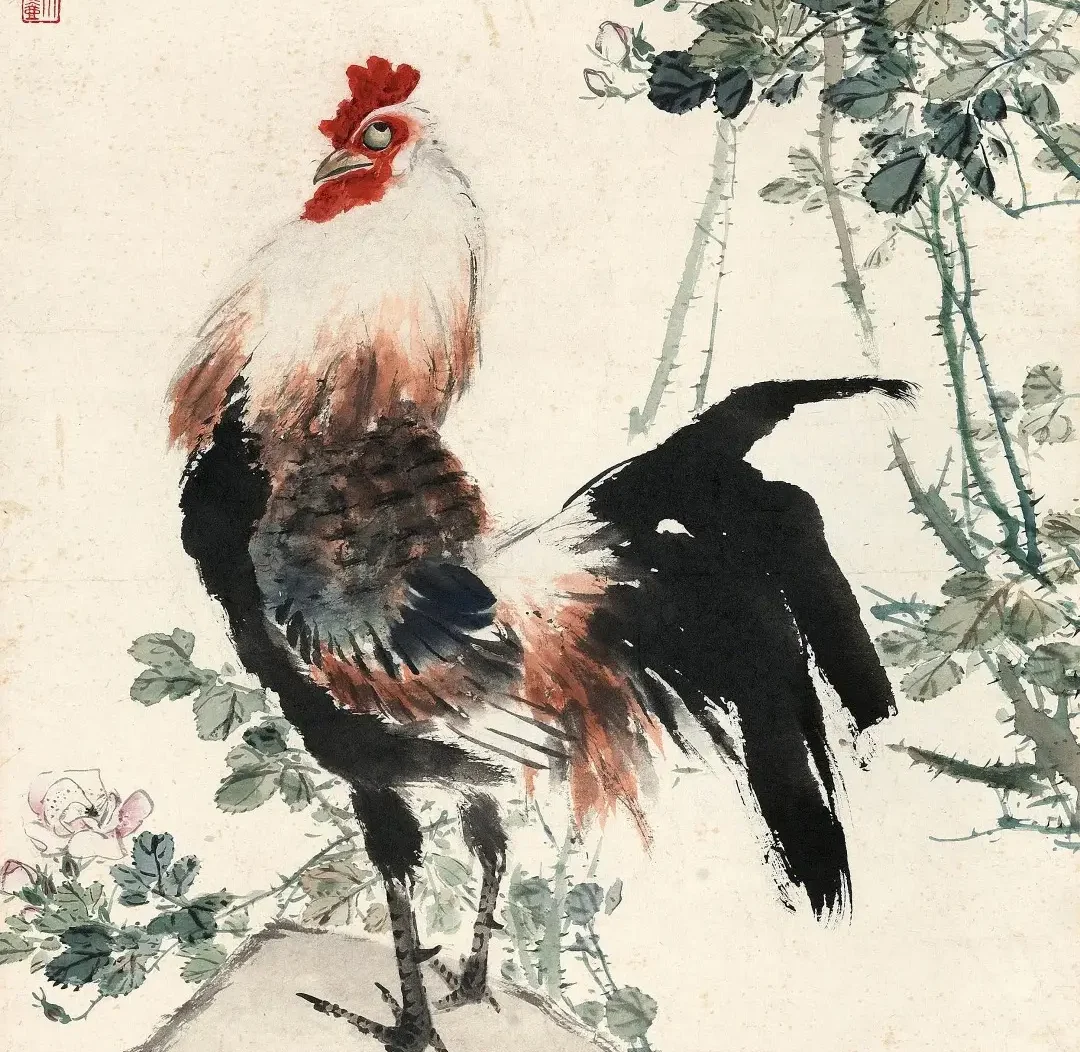
Chinese Zodiac
Hey fellow China travelers! If you’ve ever wandered through a bustling night market in Chengdu, flipped through a traditional New Year painting in a Beijing hutong, or stopped to admire the intricate zodiac carvings at a local temple, you’ve definitely noticed the striking, vibrant figure of the rooster popping up everywhere. For many of us visiting China from abroad, the 12 Chinese Zodiac signs are one of the most fascinating, yet often misunderstood, parts of Chinese culture – and the Chinese Zodiac Rooster is easily one of the most symbol-rich, historically deep signs of them all.
Unlike the common domestic rooster many of us know from the West, the rooster in Chinese tradition is far more than a farm animal. It’s a sacred symbol of virtue, luck, and resilience, woven into 8,000 years of Chinese history, mythology, and daily life. Whether you’re born in the Year of the Rooster, curious about China’s ancient zodiac system, or eager to unlock the hidden cultural meanings behind the art and traditions you’ll see on your trip, this guide will break down everything you need to know. We’ll dive into its ancient origins, timeless myths, profound symbolism, and even how you can experience rooster zodiac culture firsthand as you travel across China.
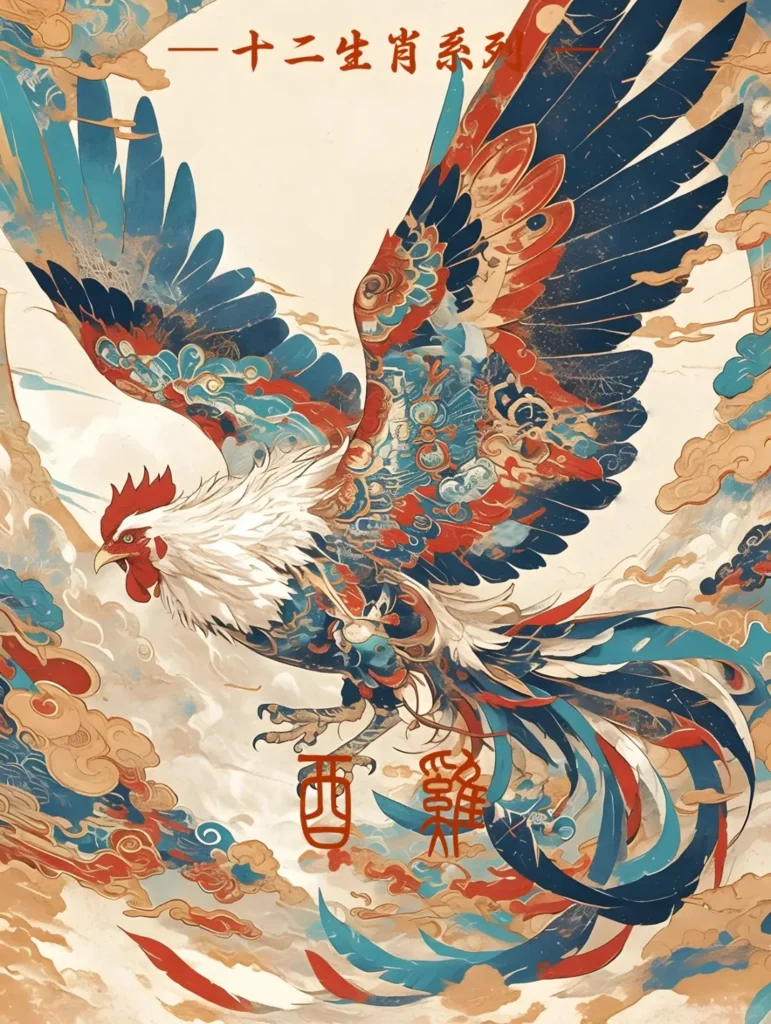
What Is the Chinese Zodiac Rooster & Its Place in the 12 Zodiac Cycle
To understand the Chinese Zodiac Rooster, we first need to ground ourselves in the basics of the Chinese zodiac system. Unlike Western astrology, which is tied to the month of your birth, the Chinese zodiac is a 12-year cycle, with each year represented by a unique animal, linked to the ancient Chinese 12 Earthly Branches – a calendar system that dates back over 2,000 years.
The rooster holds the 10th position in the 12-zodiac cycle, paired with the 10th Earthly Branch, “You” (酉). In the traditional Chinese daily timekeeping system, the You period refers to the 2-hour window from 5:00 PM to 7:00 PM – the time of day when wild roosters return to their coops at dusk, settling in for the night, perfectly aligning the animal’s natural behavior with the calendar system. This deep alignment with nature is what makes the rooster such a core part of the zodiac, rather than a random addition.
The Year of the Rooster repeats every 12 years, following the Chinese lunar calendar. Recent and upcoming Rooster years include 1933, 1945, 1957, 1969, 1981, 1993, 2005, 2017, and the next one will arrive in 2029. A critical note for travelers: the Chinese lunar year starts on Chinese New Year, which falls between January 21 and February 20 each year, not January 1. If you were born in January or early February, you’ll want to double-check your lunar birth year to confirm if you fall under the Rooster sign.
For over two millennia, the Chinese zodiac has been more than just a fun personality guide – it’s a core part of how Chinese people understand the world, connect to their history, and mark important life moments. And the rooster, more than almost any other zodiac animal, is tied to the daily life, values, and spiritual beliefs of ordinary Chinese people, from ancient farmers to modern city dwellers.
The Ancient Origins & Historical Background of the Zodiac Rooster
To truly appreciate the Chinese Zodiac Rooster, we have to go back to its roots – not just in zodiac legend, but in the real archaeological and historical record of China. The story of the rooster in Chinese culture begins long before the zodiac system was formalized, with the domestication of the chicken in Southeast Asia and China over 8,000 years ago. Unlike in many other ancient cultures, where chickens were first kept for cockfighting or food, in China, the rooster was revered for its spiritual and symbolic power from the very beginning.
The Roots of the Chinese Zodiac System
The earliest written records of the 12 zodiac animals date back to the Warring States Period (475-221 BCE), in bamboo slips unearthed from the Shuihudi and Shuihudi Qin tombs in Hubei Province. These slips, written over 2,200 years ago, list a nearly complete version of the 12 zodiac animals, with the rooster firmly included in the lineup. The system was fully formalized in the Eastern Han Dynasty (25-220 CE), in the classic text Lunheng (Discourses Weighed in the Balance) by philosopher Wang Chong, who wrote the first definitive account of the 12 zodiac animals and their pairing with the Earthly Branches – including the rooster’s link to the You branch.
What’s remarkable about the rooster’s inclusion in the zodiac is that it’s one of the only domesticated birds in the system, and one of the few animals that was a daily presence in every Chinese household, from imperial palaces to rural farmsteads. While dragons, tigers, and snakes were mythical or wild creatures associated with power, the rooster was the people’s animal – a symbol of the values that ordinary Chinese people cherished, and a constant companion in daily life.
Why the Rooster Earned Its Spot in the Chinese Zodiac
There are two beloved stories that explain how the rooster earned its 10th place in the zodiac, one a timeless folk legend, the other rooted in historical reality.
The most famous story is the Jade Emperor’s Zodiac Race. Legend has it that the Jade Emperor, the supreme ruler of heaven in Chinese mythology, announced a great race: the first 12 animals to reach the finish line at the heavenly gate would earn a spot in the zodiac, with their order determined by their finish. The rooster, who had strong wings and could fly faster than most land animals, was an early favorite. But as it flew over a small village, it saw that the farmers were suffering from a terrible drought, with no water to drink or water their crops. Without hesitation, the rooster landed and spent hours helping the farmers dig a well, using its claws to break through the hard earth. By the time it finished and reached the heavenly gate, it was the 10th animal to arrive. Though it lost its chance at a higher spot, the Jade Emperor was so moved by the rooster’s kindness and selflessness that he honored it with a permanent place in the zodiac, and praised its noble heart to all of heaven.
The historical explanation is even more profound. In ancient China, before clocks or electricity, the rooster was the only reliable timekeeper for the entire nation. Every single morning, without fail, the rooster would crow at the first light of dawn, waking farmers to tend to their crops, scholars to study, soldiers to train, and families to start their day. In a society built on agriculture, the rooster’s crow was the foundation of the entire daily rhythm of life. It was a symbol of reliability, consistency, and dedication to the community – values that were at the very heart of ancient Chinese culture. Beyond timekeeping, the rooster was also a symbol of protection, fertility, and good fortune, making it an indispensable part of Chinese spiritual life. It was only natural that such a deeply meaningful animal would earn a place in the zodiac system that defined Chinese life for millennia.
The Rooster in Ancient Chinese Texts & Classic Mythology
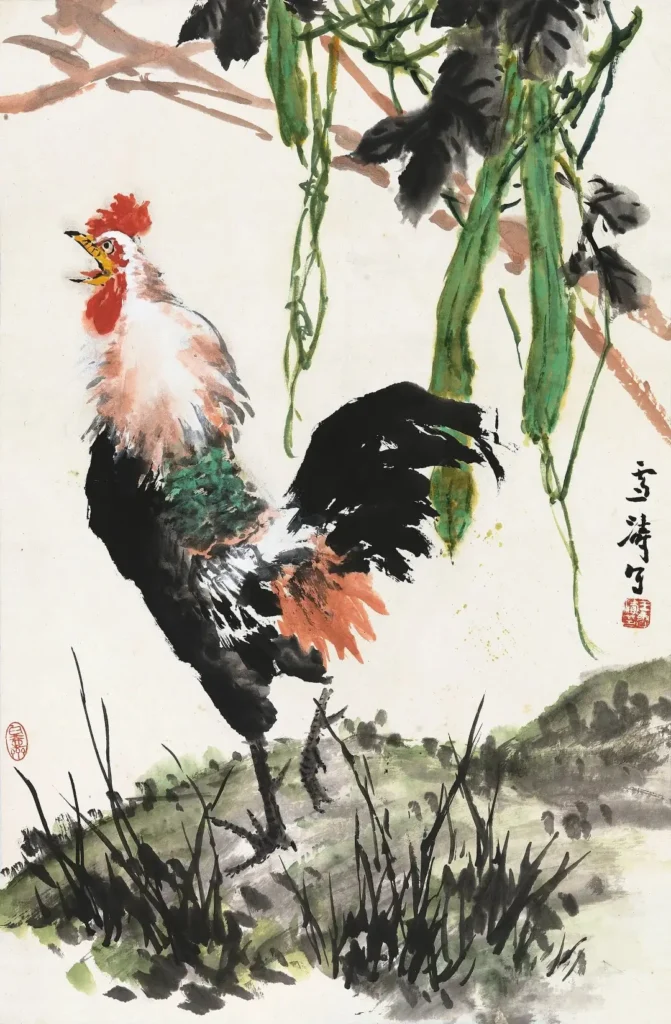
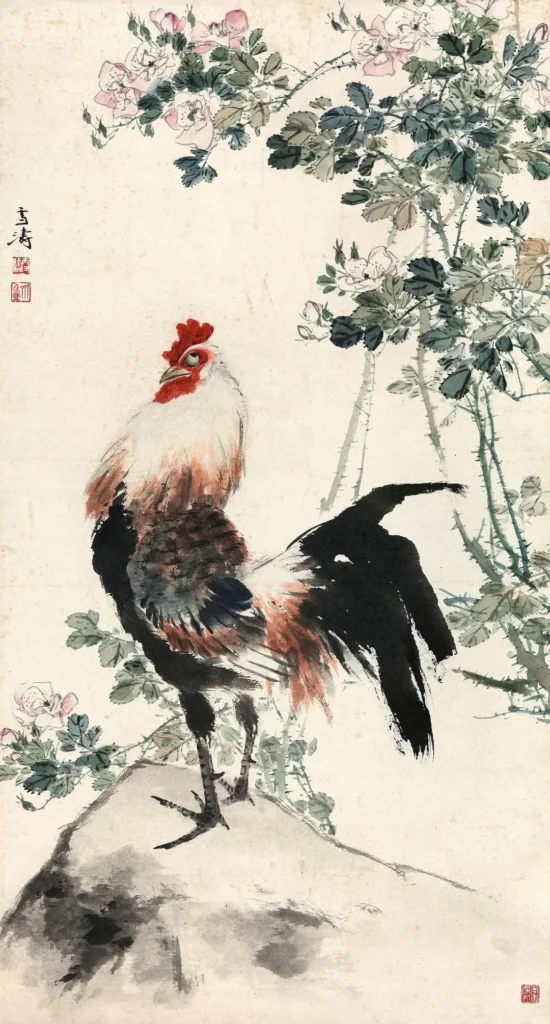
The rooster’s place in Chinese culture is cemented in some of the oldest and most revered texts in Chinese history. The earliest myth of the rooster comes from the Shan Hai Jing (Classic of Mountains and Seas), an ancient Chinese text of geography and mythology written over 2,200 years ago. The text tells the story of the Heavenly Rooster of Mount Taodu, a giant sacred peach tree that stretched 3,000 li (over 1,000 miles) across the East China Sea. At the top of the tree lived the Heavenly Rooster, the very first rooster in the world. Every morning, when the first ray of sunlight touched the leaves of the sacred peach tree, the Heavenly Rooster would let out a loud, clear crow. In an instant, every rooster in the world would join in, their calls echoing across the land, waking the world from the darkness of night. This myth tied the rooster to the sun, to light, and to the triumph of good over evil – a theme that would define its symbolism for thousands of years.
The rooster also appears in the Shi Jing (Book of Songs), the oldest collection of Chinese poetry, dating back to the 11th century BCE. In the famous poem “Wind and Rain”, the line “The wind and rain are gloomy, and the rooster crows without end” uses the rooster’s unwavering crow in the middle of a storm as a symbol of unshakable integrity and hope in difficult times. This poem is still taught in Chinese schools today, a testament to the rooster’s enduring place in Chinese literature and values.
But the most definitive text for the rooster’s cultural status is the Han Shi Wai Zhuan (Han Dynasty Commentary on the Book of Songs), written in the 2nd century BCE. It was here that the rooster was first named the “Virtuous Bird”, with five core virtues that define its character in Chinese culture to this day. This text elevated the rooster from a farm animal to a symbol of the highest moral ideals in Chinese society, and it’s the foundation of everything the Chinese Zodiac Rooster represents.
The Profound Symbolism of the Rooster in Traditional Chinese Culture
Unlike many other zodiac animals, whose symbolism shifts between positive and negative depending on the context, the rooster in Chinese culture is almost universally a symbol of good fortune, virtue, and protection. Its symbolism is layered, profound, and deeply tied to the core values of Chinese society, and you’ll see it reflected in art, architecture, festivals, and daily life everywhere you travel in China.
The Five Virtues of the Rooster: China’s Noble “Virtuous Bird”
The single most important part of the rooster’s symbolism is its five core virtues, first defined over 2,000 years ago. In Chinese tradition, the rooster is the only domestic animal to be honored with five noble virtues, placing it alongside mythical creatures like the dragon and phoenix as a symbol of moral perfection. For travelers, understanding these five virtues will unlock the meaning behind almost every rooster image you see in China:
- Civil Virtue (Wen): The rooster’s bright red comb on top of its head is seen as a symbol of the ceremonial hat worn by scholars and officials in ancient China. This virtue represents wisdom, education, self-respect, and respect for tradition – core values in Chinese society for millennia. A rooster with a full, bright comb is a symbol of academic success and career advancement, which is why you’ll often see rooster paintings in the homes of students and scholars.
- Martial Virtue (Wu): The rooster has sharp, spurred claws on its feet, which it uses to defend itself and its flock. This virtue represents courage, strength, and integrity – the spirit of a warrior who stands up for what is right. In ancient China, soldiers would often carry rooster amulets into battle, believing the rooster’s martial virtue would give them courage and protect them from harm.
- Courage Virtue (Yong): The rooster will never back down from a fight, even when facing a much larger or stronger opponent. This virtue represents bravery, resilience, and unshakable resolve. It’s this virtue that is celebrated in the famous “Rising at Cockcrow to Practice the Sword” allusion, which we’ll explore in detail later.
- Benevolence Virtue (Ren): When a rooster finds food, it will never eat it alone. It will call out to the hens and chicks in its flock, inviting them to share the meal first. This virtue represents kindness, selflessness, and care for the community – the highest moral ideal in Confucianism, the dominant philosophy in Chinese history. This is why the rooster is seen as a symbol of family unity and generosity, a core part of Chinese family culture.
- Trustworthiness Virtue (Xin): Every single morning, without fail, the rooster crows at dawn. It never misses a day, never breaks its promise, even in the coldest winter or the heaviest rain. This virtue represents reliability, honesty, and integrity – the foundation of all relationships in Chinese culture. For thousands of years, the rooster was the only timekeeper that Chinese people could trust, and this unwavering consistency made it the ultimate symbol of keeping one’s word.
These five virtues are the heart of the Chinese Zodiac Rooster. When you see a rooster painting, paper cut, or carving in China, it’s not just a pretty image – it’s a celebration of these five virtues, and a wish for the person who owns it to embody these noble qualities.
The Rooster as a Symbol of Good Fortune & Protection
Beyond its five virtues, the rooster is one of the most powerful symbols of good luck in Chinese culture, thanks to a simple but meaningful pun. In Mandarin Chinese, the word for rooster (鸡,jī) sounds exactly the same as the word for “auspicious” or “lucky” (吉,jí). This phonetic link has made the rooster the ultimate symbol of good fortune for over 2,000 years. Everywhere you go in China, you’ll see rooster imagery used to invite luck, wealth, and happiness into the home.
The rooster is also a powerful symbol of protection against evil spirits and bad luck. In ancient Chinese belief, evil spirits and ghosts are only active in the dark, and they flee at the first light of dawn. Since the rooster’s crow is the first sound that announces the arrival of the sun, it was believed that the rooster’s call could scare away even the most powerful evil spirits. For this reason, ancient Chinese families would hang rooster paintings or paper cuts on their doors and windows during festivals, to protect their home from negative energy. Even today, many rural families in China still keep roosters for this very reason, believing their crow keeps the home safe.
The rooster’s red comb also adds to its lucky symbolism. In Chinese culture, the color red is the ultimate symbol of good luck, joy, and prosperity, used for weddings, festivals, and all important life events. A rooster’s bright red comb and wattle are a natural embodiment of this lucky color, making it even more auspicious. The comb also has a second pun: the word for “comb” (冠,guān) sounds exactly the same as the word for “official” or “rank” (官,guān). For this reason, a rooster with a tall, bright comb is a symbol of career success, promotion, and high social status – a popular gift for business people and officials in China.
The Rooster in Chinese festivals and zodiac culture
The rooster is a central part of nearly every major traditional Chinese festival, and as a traveler, you’ll see its imagery everywhere during these celebrations. Understanding its role in these festivals will help you fully immerse yourself in the culture, and appreciate the traditions you’re witnessing:
- Chinese New Year (Spring Festival): This is the biggest festival in China, and the rooster is everywhere during the celebrations. Families paste rooster-themed paper cuts and New Year paintings on their doors and windows, to invite good luck and ward off evil spirits for the coming year. A whole chicken is almost always served at the family reunion dinner on New Year’s Eve, as a symbol of “great luck and prosperity” for the entire family. In the Year of the Rooster, the entire country is filled with rooster decorations, from giant lanterns in city squares to small trinkets in street markets, making it an incredible time to experience rooster zodiac culture firsthand.
- Lantern Festival: Held on the 15th day of the Lunar New Year, the Lantern Festival marks the end of the Spring Festival celebrations. Rooster-shaped lanterns are a staple of lantern displays across China, with giant, illuminated rooster lanterns drawing millions of visitors every year, especially in Rooster years. Cities like Nanjing, Shanghai, and Guangzhou are famous for their elaborate rooster lanterns, and as a traveler, this is one of the most magical ways to see the rooster’s cultural symbolism come to life.
- Beginning of Spring (Lichun): The first solar term of the Chinese calendar, marking the start of spring. For thousands of years, Chinese families have sewn small, colorful fabric “spring roosters” to pin on their children’s clothes. These tiny roosters are believed to bless the children with health, growth, and protection from illness in the coming spring, a beautiful tradition that you’ll still see in rural areas across China today.
- Dragon Boat Festival: Held on the 5th day of the 5th lunar month, this festival honors the ancient poet Qu Yuan and is focused on warding off plague and evil spirits. Along with wormwood, calamus, and zongzi (sticky rice dumplings), rooster imagery is a key part of the festival. Many families hang rooster paper cuts or feathers on their doors, believing the rooster’s protective power will keep the home safe from disease and bad luck for the rest of the year.
Classic Chinese Allusions & Myths About the Rooster
The Chinese Zodiac Rooster is not just a symbol – it’s the star of some of the most famous allusions and myths in Chinese history, stories that have been told for thousands of years and are still a core part of Chinese culture today. As a traveler, knowing these stories will help you connect with the art, literature, and conversations you’ll have during your trip, and give you a deeper understanding of Chinese values.
“Rising at Cockcrow to Practice the Sword”: The Timeless Allusion of Diligence
The most famous allusion about the rooster is “Wen Ji Qi Wu” (闻鸡起舞), which translates to “Rising at Cockcrow to Practice the Sword”. This is a true story from the Eastern Jin Dynasty (317-420 CE), about two young men named Zu Ti and Liu Kun, who would go on to become two of the most beloved heroes in Chinese history.
Zu Ti and Liu Kun were both young, ambitious scholars who dreamed of protecting their country from invasion and bringing peace to the people. They lived together, studied together, and shared the same vision for their nation. One night, Zu Ti was woken up by the sound of a rooster crowing in the middle of the night. Instead of going back to sleep, he woke up Liu Kun, and said: “Listen to this rooster’s crow. It is not an annoying sound – it is a call to action, to wake up and chase our dreams.”
From that day forward, every single time they heard the rooster’s crow, no matter how early in the morning, no matter how cold or rainy it was, they would get up, grab their swords, and practice martial arts until the sun came up. They did this every day for years, never missing a single morning. Eventually, their hard work paid off: they both became skilled generals, leading their armies to protect their country, and became symbols of diligence, perseverance, and patriotism for generations of Chinese people.
Today, this allusion is one of the most commonly used phrases in Chinese, used to encourage people to work hard, stay dedicated to their goals, and never give up on their dreams. You’ll see it written in calligraphy in schools, offices, and museums across China, and it’s the perfect example of how the rooster’s symbolism is woven into the very fabric of Chinese identity.
The Heavenly Rooster & the Fight Against Evil
Another enduring myth about the rooster comes from Chinese folk religion, building on the Shan Hai Jing story of the Heavenly Rooster. Legend has it that in ancient times, the world was plagued by evil spirits and monsters that roamed the earth at night, terrorizing villagers and bringing illness and misfortune. The only thing that could scare these spirits away was the light of the sun – but the sun only rose once a day, and the spirits would vanish before the first light hit the ground.
The Heavenly Rooster, seeing the suffering of the people, decided to help. It flew down from Mount Taodu to the mortal world, and every morning, it would crow at the very first hint of sunlight, long before the sun crested the horizon. Its crow was so loud, so clear, and so full of the power of the sun, that the evil spirits would panic and flee back to the darkness, terrified of the coming light. To this day, the rooster’s crow is believed to carry the power of the Heavenly Rooster, able to ward off evil and protect the innocent.
This myth is why you’ll see rooster statues at the entrance of many Chinese temples, and why rooster imagery is used in so many protective rituals in Chinese folk religion. For travelers visiting temples in China, taking a moment to look for the rooster statues and carvings will give you a window into this ancient spiritual belief, and the rooster’s role as a protector of the people.
Personality Traits & Fortune for People Born in the Year of the Rooster
For many travelers to China, one of the most exciting parts of the zodiac is learning about the personality traits and fortune of their own zodiac sign. People born in the Year of the Rooster are deeply influenced by the rooster’s five virtues, and their personalities are a reflection of the noble qualities that the rooster has represented for thousands of years.
Core Personality Traits of Rooster People
Rooster people are known for their unwavering integrity, exceptional diligence, and natural charisma. They are the most reliable, punctual people you’ll ever meet – just like the rooster’s daily dawn crow, they never break a promise, never miss a deadline, and always show up for the people they care about. They have a strong sense of justice, and will always speak up when they see something unfair, even if it puts them at risk – a reflection of the rooster’s courage virtue.
Rooster people are also incredibly detail-oriented and organized, with a natural gift for planning and leadership. They are perfectionists, who take great pride in doing everything to the best of their ability, whether it’s a work project, a family gathering, or a personal goal. They are also gifted communicators, with sharp minds and a great sense of humor, making them incredibly popular in social settings. They are deeply loyal to their friends and family, and will go to great lengths to take care of the people they love – a reflection of the rooster’s benevolence virtue.
Like all zodiac signs, Rooster people have their challenges. Their perfectionism can sometimes lead to high self-criticism, and they can be hard on themselves when things don’t go as planned. Their direct, honest communication style can sometimes come across as blunt to others, even when they have the best of intentions. They also have a strong sense of pride and a competitive streak, which drives their success but can sometimes lead to unnecessary stress if not balanced.
Love, Career & Fortune for Rooster People
In love and relationships, Rooster people are incredibly loyal and devoted partners. They take relationships seriously, and will always be honest and open with their significant other. They are thoughtful, caring partners, who go out of their way to make their loved ones feel special and supported. They are most compatible with people born in the Year of the Ox, Dragon, and Snake, whose personalities complement the Rooster’s strengths and balance their challenges. They are least compatible with people born in the Year of the Rabbit, Rooster, and Dog.
In their careers, Rooster people thrive in roles that allow them to use their leadership skills, attention to detail, and gift for communication. They make excellent managers, teachers, public speakers, entrepreneurs, and designers. They are hardworking, dedicated employees, who always go above and beyond to get the job done right, and they are often recognized for their integrity and work ethic by their colleagues and superiors. Their natural confidence and charisma also make them great at networking and building relationships, which helps them advance in their careers.
When it comes to wealth and fortune, Rooster people are naturally careful with their money, with a gift for budgeting and financial planning. They are not impulsive spenders, and they always plan for the future, which means they usually have stable finances throughout their lives. They are also willing to take calculated risks when it comes to investments, and their attention to detail means they usually make smart financial decisions. Their biggest financial challenge is their tendency to splurge on the people they love, but their careful planning means they can usually afford it without issue.
How Travelers to China Can Experience the Chinese Zodiac Rooster Culture Firsthand
Now that you know the history, symbolism, and stories behind the Chinese Zodiac Rooster, you’re probably eager to experience this incredible culture for yourself during your trip to China. Here are our top tips for immersing yourself in rooster zodiac culture, from visiting iconic cultural sites to trying your hand at traditional handicrafts:
Visit Top Cultural Sites to See Zodiac Rooster Relics
Some of the best places to see the rooster’s place in Chinese history are in China’s top museums and cultural sites, where you can see ancient rooster relics and art up close:
- The Palace Museum (Forbidden City), Beijing: The imperial palace of the Ming and Qing dynasties is home to an incredible collection of rooster-themed relics, including porcelain, jade, calligraphy, and paintings. The most famous is the Chenghua Chicken Cup, a tiny porcelain cup from the Ming Dynasty that’s considered one of the most valuable pieces of Chinese art in the world. It’s decorated with roosters, hens, and chicks, symbolizing family unity and good fortune, and it’s a must-see for anyone interested in rooster culture. <a href=”https://en.chnmuseum.cn/” rel=”dofollow”>National Museum of China</a> also has a comprehensive exhibit on the Chinese zodiac, including rare rooster artifacts from across Chinese history.
- Xi’an Beilin Museum, Xi’an: This museum is home to the largest collection of ancient stone steles in China, with thousands of pieces of calligraphy and carving dating back over 2,000 years. Here, you can see ancient steles carved with the 12 zodiac animals, including the rooster, as well as calligraphy of the famous “Rising at Cockcrow to Practice the Sword” allusion, written by some of China’s most famous calligraphers.
- Longmen Grottoes, Luoyang: One of China’s four great grottoes, a UNESCO World Heritage Site, with thousands of Buddhist carvings dating back to the Northern Wei Dynasty. Here, you can find carvings of the 12 zodiac animals, including the rooster, carved into the cave walls, showing how the zodiac was integrated into Chinese Buddhist culture over 1,500 years ago.
Experience Local Folk Culture & Handicrafts
One of the best ways to connect with rooster zodiac culture is to experience traditional Chinese handicrafts, many of which feature the rooster as a central theme. You can even try your hand at making your own rooster-themed handicraft, to take home as a unique souvenir:
- Taohuawu New Year Paintings, Suzhou: Taohuawu New Year paintings are a national intangible cultural heritage, with a history of over 400 years. Rooster-themed paintings are one of the most popular designs, symbolizing good fortune and protection for the new year. In Suzhou, you can visit the Taohuawu New Year Painting Museum, watch master artisans create the paintings by hand, and even try making your own rooster painting to take home.
- Shaanxi Paper Cutting, Xi’an: Paper cutting is one of the oldest folk arts in China, with a history of over 1,500 years. Shaanxi paper cutting is famous for its bold, vibrant designs, and rooster paper cuts are a staple of the art form. In Xi’an, you can visit the Yongxingfang Folk Culture Village, where local artisans will teach you how to cut your own Chinese Zodiac Rooster paper cut, a perfect souvenir to bring home.
- Hunan Embroidery, Changsha: Hunan embroidery is one of China’s four great embroidery styles, famous for its incredible detail and lifelike designs. Rooster-themed embroidery is one of the most popular subjects, with artisans creating stunning pieces that capture the rooster’s noble spirit and vibrant colors. You can visit the Hunan Embroidery Museum in Changsha, watch master artisans at work, and even take home a small rooster embroidery piece as a luxury souvenir.
Join Chinese Festivals to See Rooster Culture in Action
The best time to experience rooster zodiac culture is during a traditional Chinese festival, when the entire country comes alive with rooster imagery, traditions, and celebrations. If you can plan your trip to coincide with one of these festivals, you’ll get an unforgettable glimpse into living Chinese culture:
- Chinese New Year: If you’re in China during the Spring Festival, don’t miss the local temple fairs. Beijing’s Ditan Temple Fair, Shanghai’s Yu Garden Temple Fair, and Guangzhou’s Spring Festival Flower Fair are all filled with rooster-themed handicrafts, performances, and decorations. You can buy rooster paper cuts, New Year paintings, and souvenirs, watch traditional lion dances and folk performances, and even try your hand at writing rooster-themed calligraphy with local masters.
- Lantern Festival: The Lantern Festival is the perfect time to see the rooster’s symbolism come to life in light. Nanjing’s Qinhuai Lantern Fair, Chengdu’s Jinli Lantern Festival, and Guangzhou’s Yuexiu Park Lantern Show all feature incredible rooster-shaped lanterns, from small handheld lanterns to giant, multi-story illuminated rooster lanterns. You can walk through the lantern displays, guess lantern riddles about the zodiac and the rooster, and even make your own rooster lantern to take home.
For more tips on celebrating Chinese festivals like a local, check out our full guide to Chinese festivals and zodiac culture for travelers, which has everything you need to know to make the most of your festival experience.
Frequently Asked Questions (FAQs) About the Chinese Zodiac Rooster
FAQ 1: What years are the Year of the Rooster in the Chinese Zodiac?
The Year of the Rooster follows the Chinese lunar calendar, repeating every 12 years. Recent and upcoming Rooster years include 1933, 1945, 1957, 1969, 1981, 1993, 2005, 2017, and the next one will be 2029. It’s critical to note that the Chinese lunar year starts on Chinese New Year, which falls between January 21 and February 20 each year, not January 1. If you were born in January or early February, you should double-check your lunar birth year to confirm your zodiac sign, as you may fall under the previous year’s animal.
FAQ 2: Why is the rooster the 10th animal in the Chinese Zodiac cycle?
There are two core explanations for the rooster’s 10th place in the zodiac. The first is the beloved Jade Emperor’s Zodiac Race legend: the Jade Emperor held a race to select the 12 zodiac animals, with order determined by finish time. The rooster, a strong flier and early favorite, stopped mid-race to help a drought-stricken village dig a well, delaying its arrival and landing it in 10th place. The Jade Emperor honored its selflessness with a permanent spot in the zodiac. The second, historically rooted explanation, is the rooster’s alignment with the 12 Earthly Branches. The rooster corresponds to the 10th branch, “You” (酉), which represents 5:00-7:00 PM, when roosters return to their coops at dusk. This alignment with the ancient Chinese calendar system solidified its 10th place over 2,000 years ago.
FAQ 3: What are the key personality traits of people born in the Year of the Rooster?
People born in the Year of the Rooster are deeply shaped by the animal’s symbolic virtues in Chinese culture. Core positive traits include unwavering reliability, exceptional diligence, strong integrity, and natural courage. They are famously punctual (echoing the rooster’s daily dawn crow), detail-oriented, and have a fierce sense of justice, always speaking up for what is right. Roosters are gifted communicators, with sharp minds and natural leadership skills, making them popular and respected in both personal and professional settings. Their key challenges include a tendency toward perfectionism (which can lead to self-criticism), overly direct communication that can come across as blunt, and a strong competitive streak that can cause unnecessary stress if unbalanced.
FAQ 4: What is the rooster’s role in traditional Chinese festivals?
The rooster is a central symbol in nearly all major Chinese festivals and zodiac culture, tied to its meaning of good fortune, protection, and new beginnings. During Chinese New Year, rooster paper cuts and paintings are pasted on doors to invite luck and ward off evil, and a whole chicken is served at the reunion dinner to symbolize “great auspiciousness”. During the Lantern Festival, rooster-shaped lanterns are a staple of light displays across China, especially in Rooster years. For the Beginning of Spring, families sew small fabric “spring roosters” to pin on children’s clothes to bless them with health and growth. Even during the Dragon Boat Festival, rooster imagery is used alongside wormwood to ward off plague and negative energy, protecting the home for the year ahead.
Closing Wishes for Your Chinese Cultural Journey
As you embark on your journey through China, we hope this guide has unlocked the rich, 8,000-year history and profound cultural meaning behind the Chinese Zodiac Rooster. China’s culture is not just found in grand imperial palaces or ancient relics – it lives in the small, meaningful symbols that have been passed down through generations: the rooster’s crow at dawn over a rural village, the red paper cut on a grandmother’s window, the timeless story of two young men rising at cockcrow to chase their dreams.
May your travels through China be filled with wonder, deep connections to local culture, and endless moments of joy and good fortune. Whether you were born in the Year of the Rooster or simply captivated by its noble virtues, may the spirit of the rooster – of diligence, integrity, kindness, and unwavering hope – accompany you every step of the way. May you leave China not just with photos and souvenirs, but with a deeper understanding of the heart and soul of Chinese culture, and the timeless wisdom of the 12 Chinese Zodiac signs. Safe travels, and may every day of your journey be filled with good luck and great happiness.