
China Payment Guide
Hey fellow wanderers! Planning a trip to the Middle Kingdom? Before you pack your bags, you absolutely need a reliable China payment guide to navigate the local economy. Things move incredibly fast here, and buying your morning dumplings isn’t quite the same as picking up coffee back home.
As part of my ultimate China travel guide for beginners, I’m going to break down exactly how you can pay like a local. We will cover everything from the massive digital wallets to good old paper money, ensuring your journey is completely hassle-free. Let’s dive right in!

📱 The Digital Wallet Revolution: A Core Part of This China Payment Guide
If there’s one thing you take away from these travel tips for China, let it be this: your smartphone is your physical wallet now. Mobile payment apps aren’t just an option here; they are the primary way of life.
Can foreigners use Alipay and WeChat Pay without a Chinese bank account?
Absolutely, yes! This is a massive shift from a few years ago. Search engines are constantly flooded with questions about this, so here is the detailed breakdown:
- Alipay: This is often the most tourist-friendly starting point. Setting up Alipay international version is incredibly straightforward. You simply download the app, register with your overseas phone number, verify your identity using your passport, and bind your international credit or debit card (Visa, Mastercard, JCB, etc.). Once done, you just scan a merchant’s QR code or show them yours. It’s truly like having a digital cash register right in your pocket!
- WeChat Pay: Integrated directly into the powerhouse messaging app WeChat, this is used for literally everything—from booking taxis to splitting a dinner bill. Figuring out how to use WeChat Pay as a foreigner is similar to Alipay. You link your foreign credit card in the “Weixin Pay” wallet section. Keep in mind that for larger transactions, your home bank might charge a small foreign transaction fee, but for daily street food and subway tickets, it is pure magic.
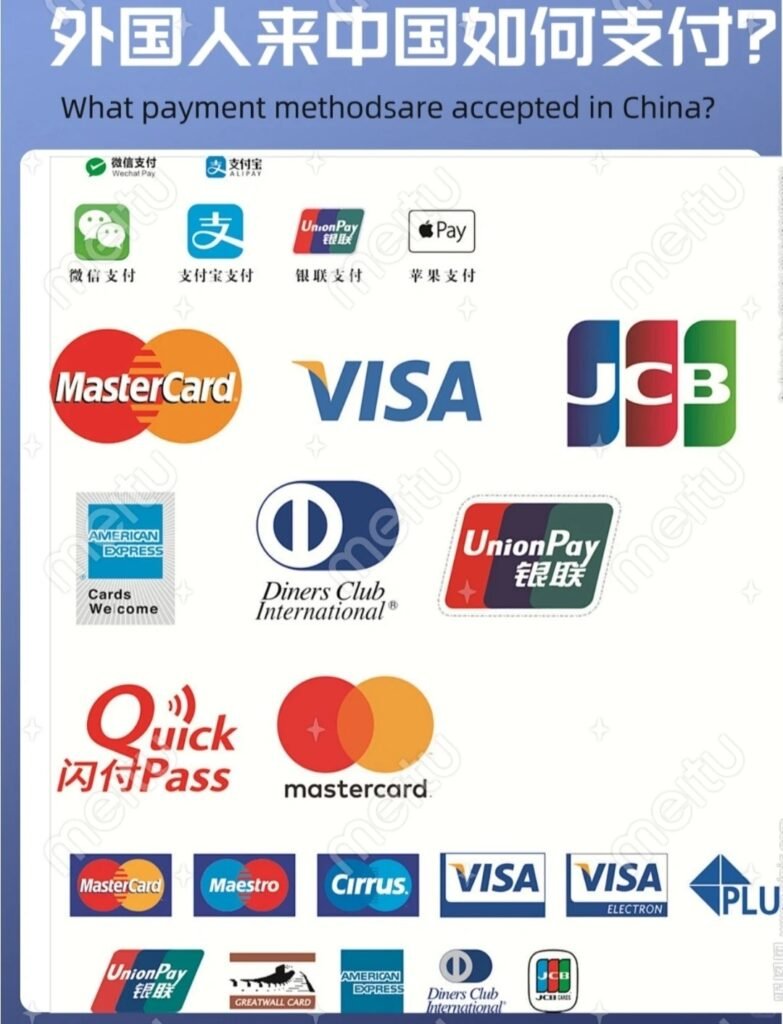
💳 The Reality of Bank Cards (Credit & Debit)
Are international credit cards widely accepted in Chinese stores and restaurants?
Yes and no. It highly depends on where you are. While you might be used to tapping your card for every little thing back home, international cards like Visa and Mastercard have a specific niche in China. They are generally accepted at high-end international hotel chains, major global retail stores in tier-1 cities (like Beijing or Shanghai), and fancy restaurants. However, do not expect a mom-and-pop shop or a local souvenir market to have a POS machine that takes foreign plastic. My top advice? Bind your cards to your mobile apps, but keep the physical cards safely in your hotel safe as a backup.
💴 Cash: Not Dead, Just Resting
Do I still need to carry physical cash (RMB) when traveling in China? It’s highly recommended to keep a small stash, just in case.
Although physical money isn’t nearly as prevalent as it used to be, cash is legally required to be accepted everywhere. Carrying massive wads of cash is risky and unnecessary, but having around 200-500 RMB in small denominations is a lifesaver. Why? Sometimes your phone battery dies, or you find yourself in a remote rural village with spotty internet. Just be prepared for the fact that small local shops might struggle to give you exact change since they handle paper bills so rarely these days!
🛅 Prepaid Cards: The Alternative Route
For those who feel uneasy about linking their primary bank accounts to foreign apps, prepaid options exist. You can occasionally find prepaid tourist cards (like the TourCard mini-program within Alipay/WeChat), which allow you to top up a virtual Chinese bank account with a specific amount of money from your international card. These act as a temporary digital debit card, perfect for keeping a strict travel budget.


《China Payment Guide: How to Pay with WeChat, Alipay, Cash & Cards》有1条评论