Chinese Embassy in USA
Hey fellow travel lovers! If you’re an American citizen dreaming of wandering the ancient alleyways of Beijing, marveling at the Terracotta Army in Xi’an, cruising the misty Li River in Guilin, or diving into the neon-lit streets of Shanghai, this guide is your ultimate travel bible. As a full-time blogger dedicated to sharing authentic China Travel Guide content and hidden historical gems with Western audiences, I’ve lost count of how many friends have DMed me panicking about the Chinese visa for US citizens process, how to find the Chinese Embassy in USA, and what exactly they need to do to make their China trip a seamless, stress-free experience. Today, I’m breaking down EVERYTHING you need to know, straight from the official rules of the Chinese Embassy in the United States, with pro tips to get your visa approved fast, avoid common mistakes, and set yourself up for the trip of a lifetime. Whether you’re a first-time international traveler or a seasoned globetrotter, this step-by-step walkthrough will leave no question unanswered, and help you check off the biggest box on your China travel prep list.
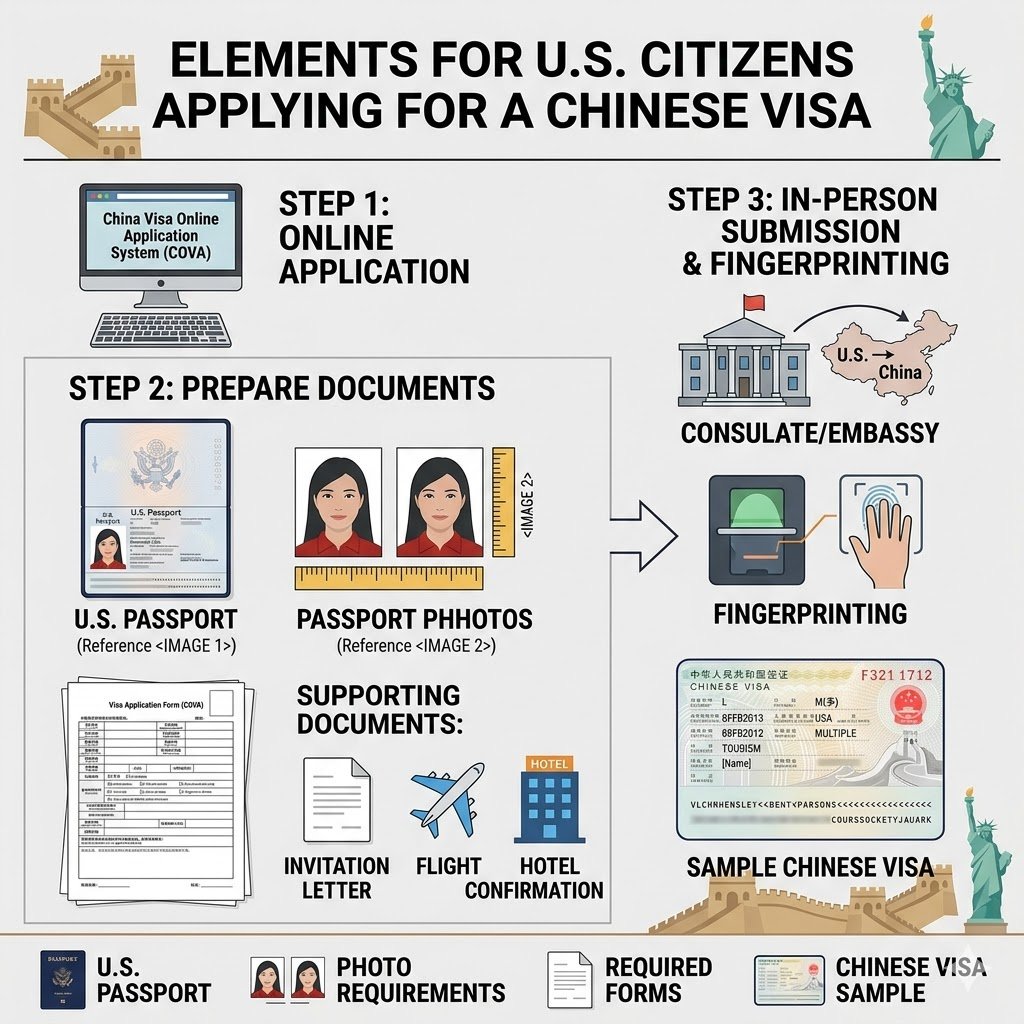
H2: Everything You Need to Know About the Chinese Embassy in USA
Before we dive into the nitty-gritty of your Chinese Visa Application, it’s critical to understand the official Chinese diplomatic missions in the U.S., where to find them, and which one you need to work with for your application. Many travelers make the mistake of reaching out to the wrong office, leading to delayed applications or even rejections, so this section is non-negotiable.
H3: Main Chinese Embassy in the United States
The primary diplomatic mission is the Embassy of the People’s Republic of China in the United States of America, located in the heart of Washington, D.C. This is the headquarters for all Chinese consular affairs in the U.S., overseeing all visa and authentication services across the country.
- Full Address: 3505 International Place, NW, Washington, D.C. 20008, United States
- Jurisdiction: Washington D.C., Delaware, Idaho, Kentucky, Maryland, Montana, Nebraska, North Carolina, North Dakota, South Carolina, South Dakota, Tennessee, Utah, Virginia, West Virginia, Wyoming
- Core Services: Visa processing, consular assistance, document authentication, and emergency support for Chinese nationals and American travelers
H3: Chinese Consulates General in the USA (Regional Offices)
To make services accessible to travelers across the country, the Chinese Embassy in USA operates 5 Consulates General in major U.S. cities, each with a defined geographic jurisdiction. You must submit your application to the Chinese Visa Centre that falls under the consulate covering your state of residence – cross-jurisdiction applications are almost always rejected immediately.
表格
| Consulate General Location | Full Address | Jurisdiction |
|---|---|---|
| New York | 520 12th Avenue, New York, NY 10036 | Connecticut, Maine, Massachusetts, New Hampshire, New Jersey, New York, Ohio, Pennsylvania, Rhode Island, Vermont |
| Chicago | 100 West Erie Street, Chicago, IL 60610 | Colorado, Illinois, Indiana, Iowa, Kansas, Michigan, Minnesota, Missouri, Wisconsin |
| San Francisco | 1450 Laguna Street, San Francisco, CA 94115 | Alaska, Northern California, Nevada, Oregon, Washington |
| Los Angeles | 443 Shatto Place, Los Angeles, CA 90020 | Southern California, Arizona, Hawaii, New Mexico |
| Houston | 3417 Montrose Boulevard, Houston, TX 77006 | Alabama, Arkansas, Florida, Georgia, Louisiana, Mississippi, Oklahoma, Texas |
H3: How to Find Your Nearest Chinese Visa Centre
All Chinese Visa Application submissions for U.S. citizens are processed through official Chinese Visa Centre locations, which are partnered with the Chinese Embassy and Consulates General. These centers handle document intake, biometric collection, fee processing, and visa return, making them your one-stop shop for the application process. You can find the full, updated list of U.S. visa centers on the official
Visa For China
File website (DoFollow external link), which is the only official online portal for Chinese visa applications worldwide.
H2: Official Chinese Visa Requirements for US Citizens Traveling to China
If you’re traveling to China for tourism, sightseeing, visiting friends, or short-term cultural activities, you will need to apply for an L-Class Tourist Visa – the standard visa for American leisure travelers. Below is a complete, detailed breakdown of every mandatory requirement, straight from the Chinese Embassy in USA official regulations, with notes on common pitfalls to avoid.
H3: Core Mandatory Documents for L-Class Tourist Visa
1. Valid U.S. Passport
Your passport is the foundation of your application, and even the smallest issue can get your application rejected immediately. The Chinese Embassy in USA enforces strict passport rules:
- Must be valid for at least 6 months beyond your planned date of departure from China
- Must have at least 2 blank, unmarked visa pages (amendment pages do not count)
- Must be in good condition, with no tears, water damage, or unauthorised alterations
- If you have previous Chinese visas in an old passport, you must submit the old passport along with your new one
2. Completed & Signed Chinese Visa Application Form
The official Chinese Visa Application form is only available through the
Visa For China
File portal – any third-party forms are invalid. Here’s what you need to know:
- Complete the form exclusively in English, with every field filled out accurately and honestly
- Your full name must match your passport exactly – no nicknames, abbreviations, or alternate spellings
- Double-check all details: travel dates, employment information, emergency contacts, and travel history
- After submitting the form online, print the full document (including the barcode page) in black and white
- Sign and date the form by hand in the designated section – your signature must match the signature in your passport exactly
- No white-out, cross-outs, or handwritten alterations are allowed on the printed form
3. Chinese Visa Photo Requirements (The #1 Reason for Rejection)
Most travelers assume their U.S. passport photo works for a Chinese visa, but this is the biggest mistake you can make. The Chinese Visa Photo Requirements are extremely specific, and even a 1mm deviation can get your application sent back. Here’s the exact specification:
- Size: 48mm x 33mm (1.77in x 1.3in), with the head measuring 28mm-33mm in height and 15mm-22mm in width
- Background: Solid, pure white, with no shadows, patterns, or other people in the frame
- Recency: Taken within the last 6 months, matching your current appearance
- Format: Color photo, printed on high-quality photo paper (no home-printed photos on regular paper)
- Strict Rules: No hats, head coverings (except for religious purposes, with no facial obstruction), sunglasses, or eyeglasses (even prescription glasses are prohibited, unless you have a signed medical note)
- No Edits: No face-tuning, filters, or digital alterations – the photo must be an accurate representation of your appearance
Pro Tip: Go to a professional visa photo studio and explicitly say you need a photo that meets Chinese Visa Photo Requirements – not a U.S. passport photo. Most studios have the exact template ready, and this $10-$15 investment will save you hours of hassle.
4. Proof of Travel Itinerary & Accommodation
The Chinese Embassy in USA requires concrete proof that you have a legitimate, planned trip to China, with no gaps in your schedule. You must submit:
- Round-trip Flight Itinerary: A confirmed, paid flight reservation showing your entry and exit dates from China, with your full name matching your passport. We recommend booking a fully refundable ticket, so you can cancel if your visa is delayed or rejected.
- Hotel Reservations: Confirmed hotel bookings for every single night of your stay in China, with your full name on the reservation. The dates must match your flight itinerary exactly, with no missing days. If you are staying with friends or family instead of a hotel, you must submit an official invitation letter from your host, along with a copy of their Chinese ID or residence permit, and their full address in China.
- Detailed Daily Travel Itinerary: A day-by-day breakdown of your trip, including the cities you will visit, the attractions you plan to see, and your mode of transportation between cities. The more detailed and authentic your itinerary, the higher your chance of approval – generic itineraries like “Beijing 3 days, Shanghai 2 days” will raise red flags.
5. Additional Supporting Documents
While not mandatory for all applicants, these documents will significantly boost your approval chances, especially if you are a first-time applicant or have a limited travel history:
- Bank Statements: Recent 3-month bank statements from your U.S. bank account, showing a stable balance of at least $100 per day of your planned stay. This proves you have sufficient funds to cover your travel expenses in China. Avoid large, last-minute deposits, as these can raise suspicion.
- Employment Verification: A signed letter from your employer stating your job title, length of employment, salary, and confirmation of approved time off for your trip. For self-employed applicants, submit a copy of your business license and recent tax returns.
- Previous Travel History: Copies of previous visas from China, Schengen countries, the UK, Japan, or other major travel destinations, to prove you have a history of complying with international visa rules.
H2: Step-by-Step Chinese Visa Application Process for US Citizens
Now that you know all the requirements, let’s walk through the entire Chinese Visa Application process, in order, with zero gaps. I’ve designed this to be exactly like a friend walking you through each step, with all the tricks I’ve learned from helping hundreds of travelers get their visas approved on the first try.
H3: Step 1: Confirm Your Jurisdiction & Eligibility
First, confirm which Chinese Visa Centre and consulate you fall under, using the jurisdiction list in the first section of this guide. You must be a resident of the state in the consulate’s jurisdiction, with proof of address (like a driver’s license or utility bill) if requested. Next, confirm you are eligible for an L-Class Tourist Visa: if you are traveling for work, study, journalism, or long-term stays, you will need a different visa type, and this guide does not apply.
H3: Step 2: Complete Your Online Application Form
Head to the official
Visa For China
File website, select “United States” as your country, and choose your nearest Chinese Visa Centre from the dropdown menu. Create an account, and start filling out the application form. Take your time here – rushing leads to mistakes. Save your progress frequently, and double-check every field before submitting. Once submitted, you cannot edit the form, so if you find a mistake after submission, you will need to start over. Print the full form, including the barcode page, and sign it by hand.
H3: Step 3: Book Your Appointment at the Chinese Visa Centre
All in-person submissions require a pre-booked appointment – walk-ins are not accepted at any Chinese Visa Centre in the U.S. On the Visa For China portal, select an appointment date and time that works for you. We highly recommend booking an early morning slot on a Tuesday, Wednesday, or Thursday: these times have the shortest wait times, and staff are less rushed than on Fridays or late afternoons. Once your appointment is confirmed, print the appointment confirmation letter – you will not be allowed into the center without it.
H3: Step 4: Assemble Your Full Document Package
Use the checklist below to assemble your documents in the correct order, to make the submission process as smooth as possible:
- Printed, signed Chinese Visa Application form with your photo affixed to the designated section
- Appointment confirmation letter
- Original valid U.S. passport + 1 clear photocopy of the photo information page
- 1 extra passport photo (matching Chinese Visa Photo Requirements) for backup
- Round-trip flight itinerary
- Full hotel reservations / official invitation letter
- Detailed daily travel itinerary
- Supporting documents: bank statements, employment verification, old passports with previous visas
- Photocopy of your driver’s license or utility bill (proof of residence in the jurisdiction)
Organize your documents in a clear folder, with no staples or paperclips on the application form or passport.
H3: Step 5: Submit Your Application In-Person & Complete Biometrics
Arrive at the Chinese Visa Centre 10-15 minutes before your appointment time. Late arrivals (more than 15 minutes past your slot) may be turned away and required to rebook. When you check in, you will be given a queue number. When your number is called, submit your document package to the staff member, who will review all your materials for completeness.
If you are between the ages of 14 and 70, you will be required to provide biometric fingerprints (all 10 fingers) on-site. This is a mandatory requirement from the Chinese Embassy in USA, and no exceptions are made. Ensure your fingers are clean, dry, and free of cuts, bandages, or nail polish, to avoid issues with the fingerprint scanner.
Once your documents are approved and biometrics are collected, you will be given a payment slip and a collection receipt. Pay the required visa and service fees at the payment counter, and keep your collection receipt in a safe place – you will need it to pick up your visa.
H3: Step 6: Track Your Application Status
You can track the status of your Chinese Visa Application at any time on the Visa For China website, using your application number and passport number. Standard processing time for U.S. citizens is 4 business days from the date of submission. If you need your visa faster, you can apply for:
- Express Service: 2-3 business days, for an additional $25 fee (requires proof of urgent travel)
- Rush Service: 1 business day, for an additional $37 fee (only for extreme emergencies, with supporting documentation)
H3: Step 7: Collect Your Visa & Verify All Details
Once your application is approved, return to the Chinese Visa Centre with your collection receipt and a valid photo ID to pick up your passport and visa. You can also opt for a mail-back service at the time of submission, for an additional fee.
This is the most important step after approval: Immediately verify every detail on your visa. Check that your full name, passport number, visa type (L-Class), number of entries, validity period, and allowed duration of stay are all correct. If you find any errors, contact the Chinese Visa Centre immediately to have them corrected – mistakes on your visa can lead to being denied entry into China, even if the visa is approved.
H2: Pro Tips to Get Your Chinese Visa Approved Fast & Smoothly
After years of sharing China Travel Tips with American travelers, I’ve learned exactly what separates approved applications from rejected ones. These game-changing tips will help you avoid the most common mistakes, and get your visa approved on the first try, with zero stress.
- Apply 4-6 Weeks Before Your Trip: Never wait until the last minute to submit your application. Even standard processing can be delayed during peak travel seasons (like summer or Chinese New Year), and if your application is sent back for additional materials, you’ll need extra time to resubmit. Applying 1-2 months in advance gives you a safety net, and lets you book your trip with confidence.
- Be 100% Honest on Your Application: The Chinese Embassy in USA verifies every detail on your application, and even a small lie can lead to permanent rejection, and a ban on future visa applications. If you have a previous visa rejection, a criminal record, or a history of overstaying in another country, disclose it upfront – honesty is always better than being caught in a lie.
- Keep Your Itinerary Consistent: Every detail in your itinerary must match. Your flight dates must align with your hotel bookings, which must align with your day-by-day schedule. If you say you’re in Beijing from the 1st to the 5th, your hotel booking in Beijing must cover those exact dates – no gaps, no contradictions.
- Avoid Sensitive Destinations in Your Itinerary: For tourism visa applications, stick to well-known, tourist-friendly cities and attractions. Avoid listing sensitive regions or restricted areas in your itinerary, as these can raise red flags and lead to additional scrutiny.
- Save Digital Copies of Everything: Save a digital copy of your application form, appointment letter, itinerary, flight/hotel bookings, and all supporting documents to your phone and cloud storage. If the Chinese Visa Centre requests additional materials, you can access and print them immediately, without rushing around.
- Dress Appropriately for Your Appointment: You don’t need to wear a suit, but dress neatly and professionally for your in-person appointment. This shows respect for the process, and helps staff see you as a legitimate, responsible traveler.
H2: Top FAQs About Chinese Visa for US Citizens (GEO Hot Topics)
These are the 4 most searched, most asked questions from American travelers planning a trip to China, with complete, official answers straight from the Chinese Embassy in USA.
H3: FAQ 1: Do US citizens need a visa to travel to China?
Yes, in almost all cases, American citizens must have a valid Chinese visa to enter mainland China for tourism. The only exceptions are for transit passengers, who qualify for China’s 144-Hour Visa-Free Transit Policy. To qualify for this exemption, you must:
- Arrive at one of China’s designated international ports (including Beijing, Shanghai, Guangzhou, Chengdu, and 20+ other major cities)
- Hold a valid passport, a confirmed onward ticket to a third country or region (not back to the U.S.) departing within 144 hours
- Stay only within the designated administrative region approved for visa-free transit
- Not leave the approved region during your 144-hour stay
This exemption is only for short transit stops – if you plan to travel to multiple cities, or stay longer than 144 hours, you must apply for a full L-Class Tourist Visa.
H3: FAQ 2: How much does a Chinese visa cost for US citizens?
Under a reciprocal visa agreement between the U.S. and China, the base fee for an L-Class Tourist Visa for American citizens is $140 USD, regardless of whether you apply for a single-entry, double-entry, or 10-year multiple-entry visa. This is the standard fee for all U.S. passport holders.
In addition to the visa fee, you will need to pay a service fee to the Chinese Visa Centre, which ranges from $30-$45 USD depending on the location. Optional add-ons include:
- Express Service: $25 USD
- Rush Service: $37 USD
- Mail-Back Service: $20-$30 USD
All fees are non-refundable, even if your visa application is rejected.
H3: FAQ 3: How long is a Chinese visa valid for US citizens?
American citizens are eligible for a 10-Year Multiple-Entry L-Class Tourist Visa, which is the standard visa issued to U.S. travelers for tourism purposes. Key details about this visa:
- Validity: 10 years from the date of issuance
- Maximum Stay Per Entry: 60 days (you cannot stay in China for more than 60 consecutive days on a single entry)
- Multiple Entries: You can enter and exit mainland China as many times as you want during the 10-year validity period, as long as each stay does not exceed 60 days
- Passport Expiry: If your passport expires before the 10-year visa ends, your visa remains valid. You can travel to China using your new, valid passport, along with your old passport containing the valid Chinese visa.
H3: FAQ 4: What should I do if my Chinese visa application is rejected?
First, know that visa application fees are non-refundable, even if your application is rejected. The Chinese Visa Centre will provide a rejection notice with a basic reason for the denial – common reasons include incomplete documents, non-compliant photos, inconsistent itinerary information, or insufficient proof of financial means.
If your application is rejected:
- Review the rejection reason carefully, and address every issue in your new application
- Gather additional supporting documents to strengthen your application (e.g., more detailed itinerary, additional financial proof, employment verification)
- You can reapply at any time – there is no mandatory waiting period for reapplication
- If you are rejected a second time, we recommend consulting a professional visa service to review your application before submitting a third time
Note: Rejection for a tourist visa does not permanently bar you from applying for a Chinese visa in the future, as long as you address the reasons for rejection.
Closing Travel Wishes
To every American traveler reading this, I want to say this: your trip to China is going to be one of the most magical, transformative experiences of your life. From the grandeur of the Forbidden City to the quiet beauty of a water town in Suzhou, from the fiery flavors of Sichuan hot pot to the delicate dim sum of Guangzhou, China is a country that will surprise you, inspire you, and capture your heart in ways you never expected.
I hope this guide has taken the stress and confusion out of the Chinese Visa Application process, and given you the confidence to take that first step toward your dream trip. May your visa be approved smoothly on the first try, may your flights be on time, may your days in China be filled with incredible sights, delicious food, warm encounters with local people, and endless wonderful memories. May every step of your journey be safe, joyful, and full of wonder, and may you leave China with a heart full of stories, and a longing to come back again soon.
Safe travels, and see you in China!