Chinese Zodiac
From my years of helping foreign travelers unlock the hidden gems of Chinese culture during their trips across China, I’ve lost count of how many times visitors have pulled me aside, pointing to a vibrant painting, a carved temple relief, or a festive red lantern, and asked: “What’s the story behind that clever, lively monkey?” Whether you’re wandering the hutongs of Beijing, exploring the ancient city walls of Xi’an, browsing the bustling streets of Chengdu’s Jinli Ancient Street, or marveling at the lanterns of Shanghai’s Yu Garden, the Chinese Zodiac Monkey is everywhere. It’s one of the most recognizable, beloved, and deeply symbolic figures in the entire Chinese Zodiac system, and for good reason: it carries thousands of years of history, legendary tales, and profound cultural meaning that ties directly to the heart of what makes Chinese traditions so special.
If you’re a traveler curious about China’s history and folk culture, or if you were born in the Year of the Monkey, this complete guide will break down everything you need to know. We’ll dive into its ancient historical origins, the iconic legends that shaped its place in the zodiac, its role in Chinese festivals, its hidden symbolic meanings, and even where you can find the most incredible Zodiac Monkey relics and souvenirs during your trip. By the end of this guide, you’ll not only understand the Chinese Zodiac Monkey—you’ll be able to spot its stories and significance everywhere you go in China, connecting with locals on a deeper level than ever before.
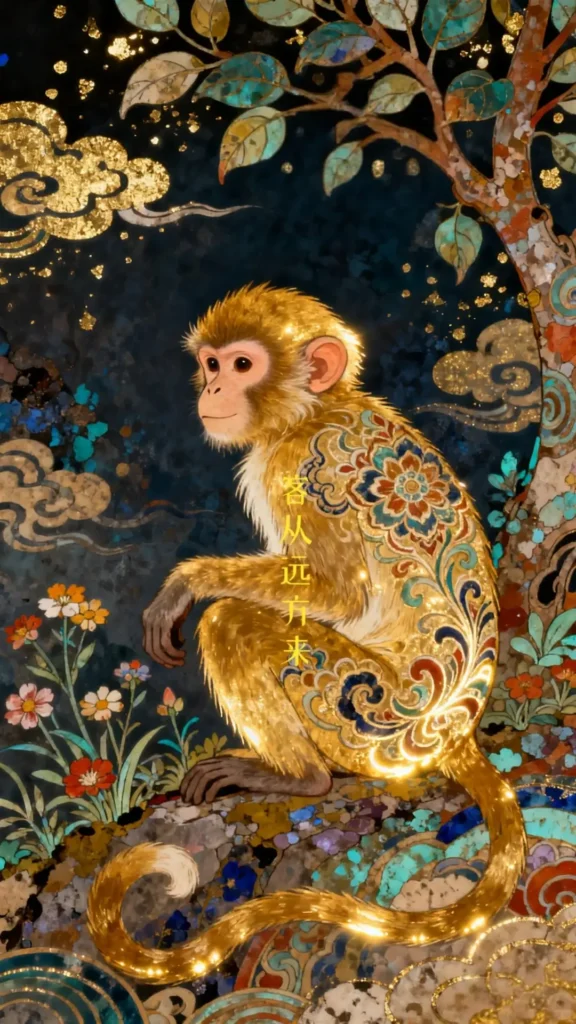
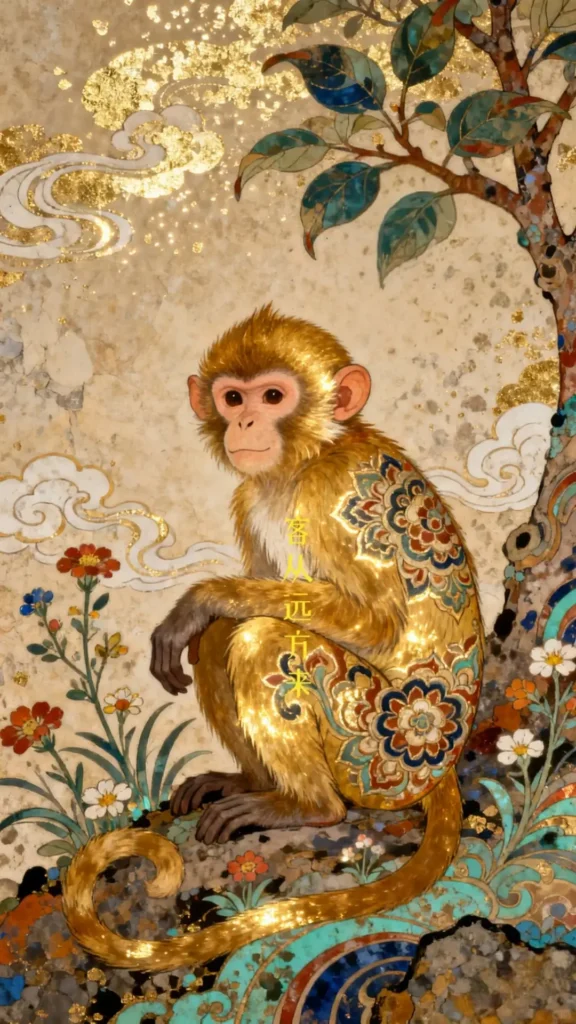
What Is the Chinese Zodiac, and Where Does the Monkey Fit In?
Before we dive into the monkey itself, let’s start with the basics for travelers new to China’s zodiac system. Unlike Western astrology, which is based on 12 monthly star signs, the Chinese Zodiac is a 12-year cyclical calendar system deeply tied to China’s ancient astronomy, lunar calendar, and the Twelve Earthly Branches (a core component of traditional Chinese timekeeping that dates back over 2,000 years). Each year in the 12-year cycle is represented by a unique animal, each with its own distinct personality traits, symbolic meanings, and cultural stories.
The 12 zodiac animals follow a fixed order that has remained unchanged for nearly two millennia: Rat, Ox, Tiger, Rabbit, Dragon, Snake, Horse, Chinese Goat, Monkey, Rooster, Dog, and Pig. The Chinese Zodiac Monkey sits in the ninth position of the cycle, paired with the ninth Earthly Branch: Shen (申). This placement is not random; it’s deeply tied to ancient Chinese astronomy, timekeeping, and observations of the natural world—we’ll dive into that historical detail shortly. For travelers, it’s helpful to know that the most recent Year of the Monkey years are 1932, 1944, 1956, 1968, 1980, 1992, 2004, and 2016, with the next one arriving in 2028.
The Ancient Legend: How the Chinese Zodiac Monkey Earned Its Place in the 12-Year Cycle
No guide to the Zodiac Monkey would be complete without the iconic folk legend that every Chinese child grows up hearing: the Great Zodiac Race. This tale, passed down orally for over a thousand years before being written down in classical texts, is the most beloved explanation for the zodiac’s order, and it perfectly captures the core traits that define the monkey in Chinese culture.
The legend goes like this: Thousands of years ago, the Jade Emperor—the supreme ruler of heaven in Chinese mythology—announced that he would select 12 animals to serve as the guardians of the 12-year calendar cycle. The first 12 animals to cross the finish line at his heavenly palace would earn a spot in the zodiac, with their place in the order determined by their arrival time. Animals from across the mortal world traveled far and wide to join the race, each using their unique strengths to reach the palace first.
The monkey, known for its unmatched agility, cleverness, and ability to climb and leap through forests and over rivers, was an early favorite to win. It bounded ahead of most of the other animals early in the race, easily crossing rivers by jumping from rock to rock, and climbing over mountains that slowed down larger animals. But the monkey’s greatest strength was also its downfall: it was easily distracted by the world around it. When it passed a grove of fruit trees heavy with ripe peaches, it stopped to feast. When it saw a group of fish jumping in a sparkling river, it stopped to play. It was so busy enjoying the journey that it lost track of time, and by the time it remembered the race and rushed to the heavenly palace, 8 other animals had already crossed the finish line—including the hardworking Chinese Goat, which had stayed focused on the goal the entire time, arriving just ahead of the monkey. The monkey crossed the line in ninth place, earning its permanent spot as the ninth animal in the Chinese Zodiac.
This legend is more than just a fun folk tale for travelers to learn; it’s a window into core Chinese values. For thousands of years, Chinese families have told this story to their children to teach them that while cleverness and talent are wonderful gifts, they mean nothing without focus, discipline, and dedication. It’s also the first time the monkey’s core traits—curiosity, adaptability, playfulness, and a tendency to get distracted by joy—were cemented in Chinese cultural consciousness, traits that still define the Chinese Zodiac Monkey today.
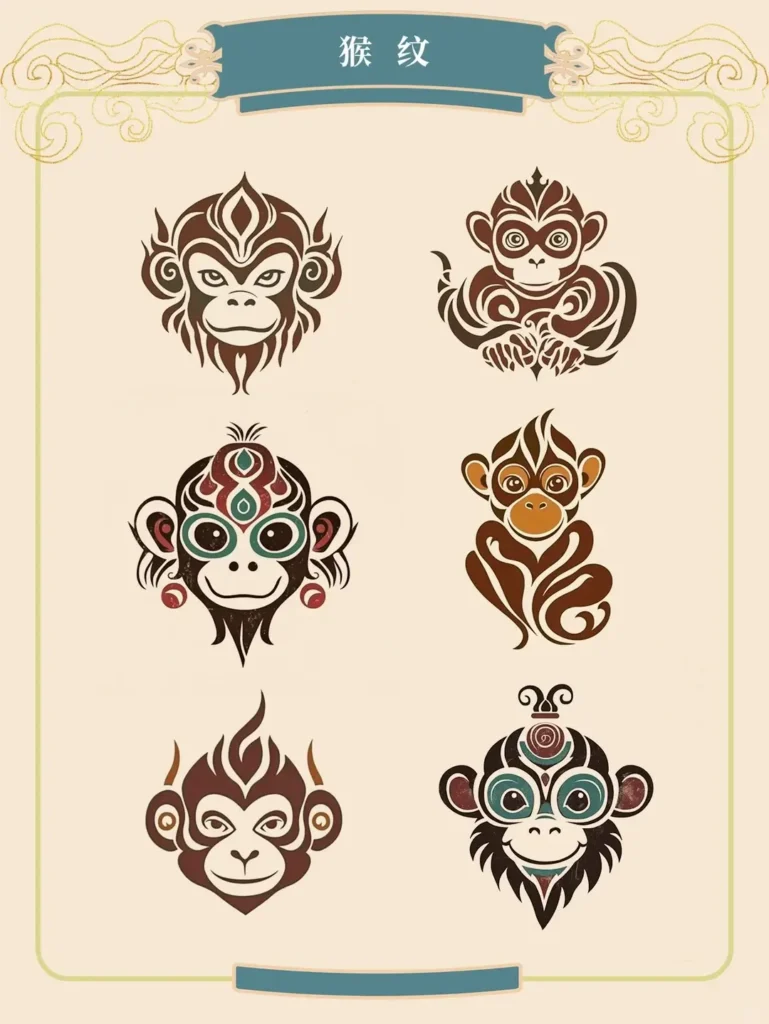
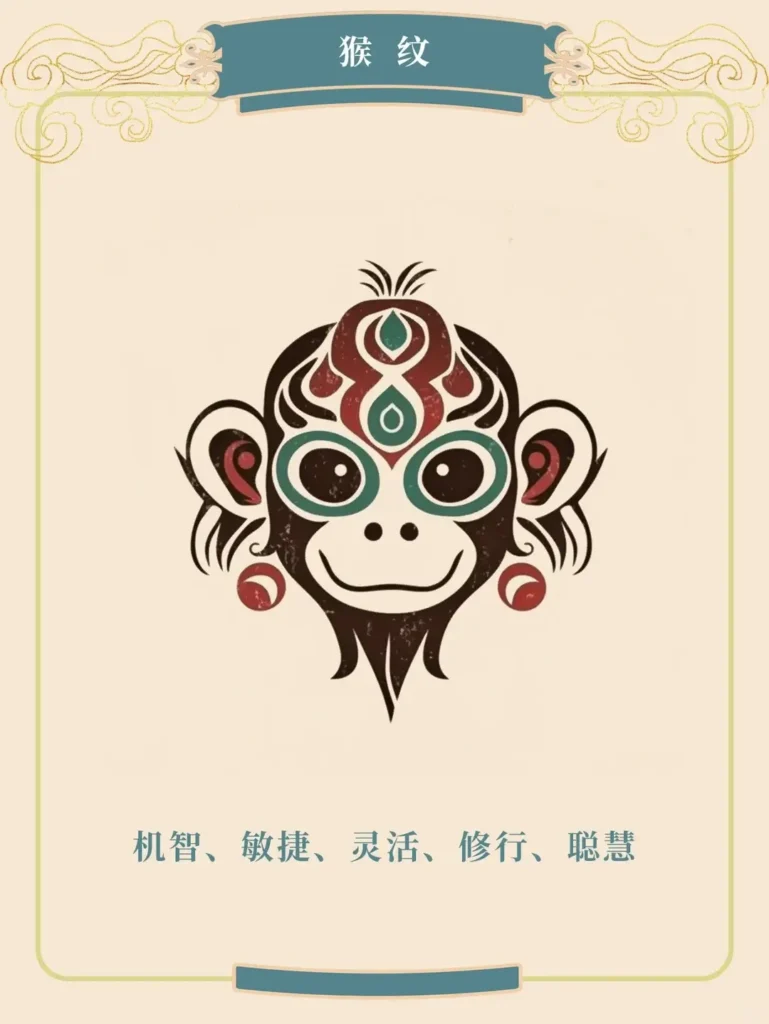
The Deep Historical Roots of the Chinese Zodiac Monkey in Ancient China
While the zodiac race legend is beloved, the real history of the Chinese Zodiac Monkey is even more fascinating, with roots stretching back to China’s Warring States Period (475–221 BCE). For travelers who love digging into the real history behind China’s traditions, this is where the story gets truly remarkable: the link between the monkey and the Shen (申) Earthly Branch is not just myth—it’s documented in some of China’s oldest surviving archaeological texts.
The earliest physical evidence of the monkey’s place in the zodiac system was discovered in 1975, in the famous Shuihudi Qin Bamboo Slips, unearthed from a tomb in Hubei Province that dates back to the late Warring States Period. These slips, which contain ancient Chinese divination texts called the Rishu (Day Book), include the earliest known written record of the 12 Earthly Branches paired with animals. For the Shen branch, the text describes a creature called huan (环), which scholars have confirmed is an ancient term for ape or monkey. This means that as early as 2,200 years ago, Chinese astronomers and diviners had already linked the Shen branch to the monkey—centuries before the zodiac system was fully standardized.
The link between Shen and the monkey was officially cemented in the Eastern Han Dynasty (25–220 CE), in the writing of Wang Chong, one of ancient China’s greatest philosophers. In his iconic text Lunheng (Balanced Inquiries), Wang Chong wrote explicitly: “Shen, hou ye” (申,猴也)—translated, “Shen is the monkey.” This was the first time in Chinese history that the pairing of the Shen Earthly Branch and the monkey was formally recorded in a mainstream philosophical text, and from that moment on, the monkey’s place in the Chinese Zodiac was fixed, remaining unchanged for nearly 2,000 years.
But why was the monkey paired with Shen, specifically? The answer lies in ancient Chinese timekeeping and observations of the natural world. In traditional Chinese culture, the 12 Earthly Branches don’t just correspond to years—they also correspond to the 12 two-hour periods that make up a single day. The Shen period, or Shen Shi, is the time between 3 PM and 5 PM every day. Ancient Chinese farmers and naturalists observed that this window is when monkeys are most active: they leap through the trees, call out to each other with loud, distinctive cries, and forage for food with unmatched energy. Their activity peaks exactly during the Shen period, so ancient astronomers paired the branch with the animal that embodied its energy perfectly. This is the real, historical origin of the Chinese Zodiac Monkey—not just a myth, but a product of thousands of years of careful observation of the natural world, woven into the fabric of Chinese timekeeping.
The Most Iconic Legend of the Monkey in Chinese culture: Sun Wukong, the Monkey King
No discussion of the Chinese Zodiac Monkey would be complete without talking about the most famous monkey in all of Chinese literature and culture: Sun Wukong, the Monkey King. For many foreign travelers, Sun Wukong is the first Chinese monkey character they ever encounter—whether through the iconic 1986 Journey to the West TV series (which is still played on Chinese TV every single year), Hollywood adaptations, or temple statues across China. What many travelers don’t know, however, is that Sun Wukong’s character is inextricably linked to the Chinese Zodiac Monkey, and he has shaped how Chinese people see the zodiac sign for over 400 years.
Sun Wukong is the protagonist of Journey to the West, one of China’s Four Great Classical Novels, written by Wu Cheng’en in the Ming Dynasty (1368–1644 CE). The novel tells the story of a magical monkey born from a stone on the mythical Flower Fruit Mountain, who gains supernatural powers through decades of Taoist training: he can transform into 72 different forms, fly 108,000 li (54,000 kilometers) on a single somersault cloud, and wield a magical golden staff that can shrink to the size of a needle or grow to fill the sky. After rebelling against the Jade Emperor and the heavens themselves, earning the title “Great Sage Equal to Heaven,” he is imprisoned under a mountain by the Buddha, only to be released 500 years later to serve as the protector of the Buddhist monk Tang Sanzang on his epic journey to India to retrieve sacred Buddhist scriptures. After a 14-year journey filled with monsters, trials, and growth, Sun Wukong achieves enlightenment and is named the Victorious Fighting Buddha.
So why is this story so tied to the Chinese Zodiac Monkey? Because Sun Wukong embodies every single trait that the Chinese Zodiac Monkey represents: unmatched cleverness, endless curiosity, fearless bravery, playful mischief, adaptability, and an unbreakable spirit. For centuries, Chinese people have looked at Sun Wukong and seen the best of what the Zodiac Monkey can be: a creature that uses its wits to overcome any obstacle, that stands up for what it believes in, and that turns every challenge into an adventure.
For travelers in China, you’ll find Sun Wukong everywhere you go. You’ll see his image painted on the long corridor of Beijing’s Summer Palace, carved into the stone walls of temples in Quanzhou, performed in Sichuan opera shows in Chengdu, and featured in endless souvenirs and festive decorations across the country. In fact, the oldest surviving statue of Sun Wukong in China, found in Quanzhou’s Kaiyuan Temple, dates back to the Southern Song Dynasty (1127–1279 CE)—over 200 years before Journey to the West was even written. This means that the worship and love of the magical monkey in Chinese culture predates the novel itself, and is deeply woven into the same folk traditions that gave us the Chinese Zodiac.
Year of the Monkey: Traits, Fortune, and Cultural Meaning for Those Born Under the Sign
One of the most common questions I get from travelers who discover they were born in the Year of the Monkey is: “What does this mean for me in Chinese culture?” Just like Western star signs, the Chinese Zodiac is used by Chinese people to understand personality traits, compatibility, fortune, and even career paths—and the Zodiac Monkey has one of the most vibrant, well-defined personalities in the entire system.
Core Personality Traits of the Chinese Zodiac Monkey
For those born in the Year of the Monkey, these traits are believed to define your core character, and they’re exactly the traits you’ll see reflected in the zodiac’s legends and history:
- Unmatched Intelligence & Wit: Monkeys are known as the cleverest of the 12 zodiac animals. Those born under this sign are quick thinkers, problem-solvers, and natural learners who pick up new skills, languages, and ideas with ease—perfect for travelers exploring a new country and culture!
- Endless Curiosity & Adaptability: Just like the monkey in the zodiac race, those born under this sign are endlessly curious about the world around them. They thrive in new environments, adapt quickly to change, and love exploring new places, ideas, and experiences.
- Charisma & Social Skill: Zodiac Monkeys are natural social butterflies. They’re outgoing, funny, and charming, and they can make friends with anyone, anywhere—something that will serve you incredibly well when interacting with locals during your trip to China.
- Creativity & Innovation: Those born in the Year of the Monkey are natural innovators. They think outside the box, come up with creative solutions to problems, and excel in creative fields like art, music, writing, and entrepreneurship.
Of course, the legends also remind us of the monkey’s challenges: those born under this sign can sometimes struggle with impatience, a lack of focus, and a tendency to get distracted by new adventures before finishing what they started. But in Chinese culture, these flaws are seen as part of the monkey’s charm—they’re the tradeoff for its boundless energy and creativity.
In traditional Chinese astrology, the Zodiac Monkey is also paired with the Five Elements (Wood, Fire, Earth, Metal, Water), which add nuance to its traits. Each Year of the Monkey is linked to an element: for example, 2016 was the Year of the Fire Monkey, 2004 was the Wood Monkey, and 2028 will be the Year of the Earth Monkey. Each element shapes the monkey’s personality slightly: Fire Monkeys are more passionate and ambitious, Wood Monkeys are more compassionate and collaborative, and so on.
The Chinese Zodiac Monkey in Chinese festivals and Daily Life Across China
For travelers, the best way to experience the Chinese Zodiac Monkey is to see how it’s woven into the daily life and festive traditions of people across China. From the biggest national holidays to small family rituals, the monkey is a constant presence, carrying deep symbolic meaning that many travelers miss at first glance.
The Zodiac Monkey in Chinese Festivals
Unsurprisingly, the Year of the Monkey brings the monkey to the center of China’s biggest festival: the Spring Festival (Chinese New Year). During a Monkey Year, the entire country is covered in Zodiac Monkey imagery: red envelopes (hongbao) printed with clever monkey designs, Spring Festival couplets with monkey-themed blessings, massive lanterns shaped like Sun Wukong, and temple fairs with non-stop Monkey King opera and acrobatic performances. If you’re lucky enough to travel to China during a Year of the Monkey, you’ll see the zodiac come to life everywhere you go—especially at iconic events like the Zigong International Lantern Festival in Sichuan, which creates massive, breathtaking Zodiac Monkey lantern displays that draw visitors from all over the world.
But the monkey isn’t just for Monkey Years. It features prominently in other Chinese festivals year-round:
- Lantern Festival: Held on the 15th day of the Lunar New Year, the Lantern Festival is filled with monkey-themed lanterns and riddles (called dengmi) that challenge visitors to solve clever puzzles about the monkey and the zodiac.
- Mid-Autumn Festival: The classic Chinese folk tale of “The Monkeys Fishing for the Moon” is told to children across the country during the Mid-Autumn Festival, and many mooncake designs feature monkey imagery to honor the story.
- Lunar March 3rd: Many folk traditions across southern China celebrate this day as the birthday of Sun Wukong, with temple fairs, opera performances, and offerings to the Monkey King at temples across Fujian, Guangdong, and Sichuan.
The Zodiac Monkey in Daily Life and Symbolism
Beyond festivals, the Chinese Zodiac Monkey is a staple of daily Chinese life, thanks to a clever linguistic pun that has made it a symbol of good fortune for over 2,000 years. In Mandarin Chinese, the word for “monkey” (hou, 猴) sounds exactly the same as the word for “marquis” (hou, 侯)—a high-ranking noble title in ancient China. This pun has turned the monkey into a powerful symbol of career success, promotion, and prosperity.
The most iconic example of this is the traditional Chinese auspicious design Ma Shang Feng Hou (马上封侯), which translates to “Immediately Be Granted a Marquis Title.” The design features a monkey riding on the back of a horse, and it’s one of the most common decorative motifs in Chinese art and architecture. For travelers, you’ll find this design everywhere: carved into the wooden beams of the Forbidden City in Beijing, etched into the stone windows of Suzhou’s classical gardens, painted on porcelain in the Shanghai Museum, and even featured on modern souvenirs and jewelry across the country.
Chinese people also use the Zodiac Monkey as a symbol of protection and good luck. Many families give their children jade pendants carved in the shape of a monkey, to keep them safe and bring them good fortune as they grow up. Many adults wear monkey-themed jewelry or carry monkey charms, especially if they were born in the Year of the Monkey, to honor their zodiac sign and attract good luck.
Travel Tips for Finding the Zodiac Monkey Across China’s Top Tourist Destinations
As a traveler, you don’t have to look hard to find the Chinese Zodiac Monkey in China—but there are some hidden gems and iconic spots that will let you experience its history and culture in a truly unforgettable way. Here are my top tips for finding the best Zodiac Monkey sites across China’s most popular travel destinations:
- Beijing: The Forbidden City (Palace Museum) is home to hundreds of Zodiac Monkey relics, from Ma Shang Feng Hou jade carvings to Qing Dynasty clocks decorated with monkey motifs. The Summer Palace’s 728-meter Long Corridor features dozens of paintings depicting Sun Wukong’s adventures from Journey to the West, and the Panjiayuan Antique Market is the perfect place to hunt for vintage Zodiac Monkey souvenirs and antiques.
- Xi’an: The Huaqing Palace, near the Terracotta Army, features well-preserved Tang Dynasty stone carvings of the 12 zodiac animals, including the Shen Monkey. The Xi’an City Wall hosts massive Zodiac Monkey lantern displays during the Spring Festival, and the Shaanxi History Museum has a collection of ancient zodiac relics dating back to the Han Dynasty.
- Chengdu: Jinli Ancient Street is filled with shops selling handcrafted Zodiac Monkey souvenirs, from Sichuan embroidery to clay figurines. Wuhou Shrine hosts Sun Wukong Sichuan opera performances during temple fairs, and Mount Qingcheng—one of China’s most sacred Taoist mountains—features ancient statues of the Monkey King that predate Journey to the West.
- Quanzhou: Kaiyuan Temple, one of China’s oldest Buddhist temples, is home to the oldest surviving Sun Wukong statue in China, dating back to the Southern Song Dynasty. It’s a hidden gem that most foreign travelers miss, and it’s the perfect place to see how the monkey has been revered in Chinese culture for nearly 1,000 years.
FAQs: About the Chinese Zodiac Monkey for Travelers in China
1. What does it mean if I was born in the Year of the Monkey when interacting with Chinese locals?
If you tell a Chinese local that you were born in the Year of the Monkey, you’ll almost always be met with a warm smile and an enthusiastic response. In Chinese culture, the Zodiac Monkey is seen as a sign of intelligence, charm, and friendliness, so locals will immediately feel a positive connection to you. It’s an incredible conversation starter: many locals will want to talk to you about your zodiac traits, share their own zodiac sign with you, and even give you tips for your trip based on your monkey personality (like recommending scenic spots with beautiful nature, which monkeys are believed to love). It’s not just small talk—it’s a way for locals to welcome you into their culture, so lean into it!
2. Where can I buy authentic Chinese Zodiac Monkey souvenirs during my trip to China?
For authentic, high-quality Zodiac Monkey souvenirs that honor Chinese culture (not cheap mass-produced trinkets), stick to these trusted spots:
- Museum 文创 stores (Wen Chuang Stores): The Palace Museum (Forbidden City) in Beijing, Shanghai Museum, and Shaanxi History Museum all have official 文创 stores that sell beautifully designed, culturally accurate Zodiac Monkey souvenirs, from bookmarks and jade pendants to tea sets and stationery. These are designed by professional artists, and many are limited-edition pieces that make perfect gifts.
- Intangible Cultural Heritage Workshops: Across China, you’ll find workshops run by master craftspeople who create handcrafted Zodiac Monkey pieces: Suzhou embroidery in Suzhou, clay figurines in Wuxi, wood carvings in Dongyang, and paper-cuts in Yangzhou. These pieces are one-of-a-kind, and they support local artisans and traditional Chinese crafts.
- Temple Gift Shops: Many well-known Buddhist and Taoist temples sell blessed Zodiac Monkey pendants and charms, which are seen as extra auspicious by Chinese locals.
Avoid buying expensive “antique” Zodiac Monkey pieces from unlicensed street vendors, as these are almost always fake, and never buy any products made from endangered animal parts, which are illegal in China.
3. Are there any taboos related to the Chinese Zodiac Monkey I should know about in China?
While the Zodiac Monkey is almost universally beloved in China, there are a few small taboos to be aware of to avoid accidentally offending locals:
- Don’t disrespect the Monkey King or the zodiac sign: For many Chinese people, especially those born in the Year of the Monkey, the zodiac sign and Sun Wukong are deeply meaningful. Avoid making mean jokes about monkeys, mocking the Monkey King, or dismissing the zodiac as “silly superstition”—it’s a core part of Chinese culture, and it’s important to treat it with respect.
- Be mindful of zodiac compatibility: In traditional Chinese culture, the Zodiac Monkey is believed to clash with the Tiger (the third zodiac sign). Avoid giving Tiger-themed gifts to someone born in the Year of the Monkey, and vice versa, as it’s seen as inauspicious.
- Respect wild monkeys: In scenic spots with wild macaques (like Mount Emei in Sichuan), never tease or harm the monkeys. Locals see them as spiritual, intelligent creatures, and they’re protected by Chinese law. Always follow the park rules for interacting with wild monkeys.
4. What Chinese festivals have the most prominent Zodiac Monkey celebrations?
The biggest and most vibrant Zodiac Monkey celebrations happen during the Spring Festival (Chinese New Year), especially during a Year of the Monkey. During this time, every city in China hosts temple fairs, lantern shows, and performances dedicated to the Zodiac Monkey and the Monkey King. The most iconic events include the Beijing Ditan Temple Fair, Shanghai Yu Garden Lantern Festival, and Zigong International Lantern Festival, all of which feature massive Zodiac Monkey displays and non-stop cultural performances.
Beyond the Spring Festival, the Lantern Festival (15 days after the Lunar New Year) features endless monkey-themed lanterns and riddles, and Lunar March 3rd is celebrated as Sun Wukong’s birthday in southern China, with temple fairs and opera performances dedicated to the Monkey King. The Mid-Autumn Festival also features monkey-themed stories and decorations, thanks to the classic “Monkeys Fishing for the Moon” folk tale.
Closing Blessing for Your Journey Through Chinese Culture
As you wander through the ancient cities, breathtaking landscapes, and vibrant communities of China, may the curious, brave, and adaptable spirit of the Chinese Zodiac Monkey guide you every step of your journey. May you have the courage to explore hidden corners, the wit to connect with locals from all walks of life, and the endless curiosity to unlock the thousands of years of history and culture that make China such a magical place to visit.
May your travels be filled with wonder, joy, and unexpected adventures, just like the Monkey King’s epic journey to the west. May you find beauty in the small details: the Ma Shang Feng Hou carving hidden in a temple wall, the warm smile of a local who shares their zodiac story with you, the vibrant red of a Zodiac Monkey lantern lighting up a festival night. And may you leave China with not just photos and souvenirs, but a deep, heartfelt understanding of the rich history and culture that has shaped this incredible country—and a little piece of the Zodiac Monkey’s magic to carry with you, wherever your travels take you next.