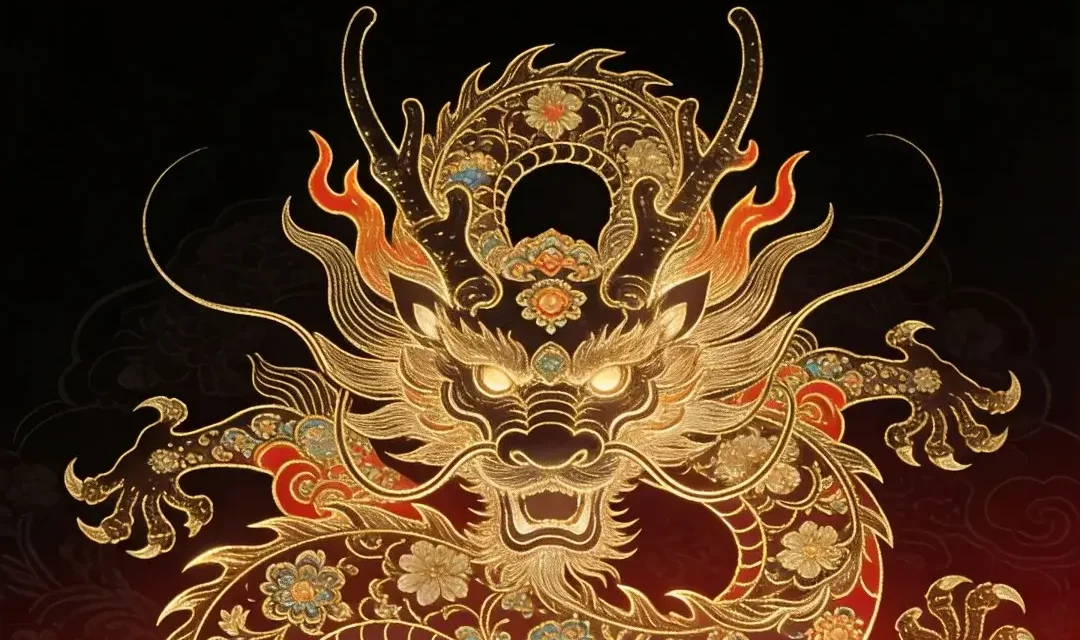
Chinese Zodiac Dragon
As someone who’s spent the last 5 years guiding international travelers across every corner of China, I can tell you this with absolute certainty: there is no single symbol of Chinese traditional culture that sparks more wonder, curiosity, and endless questions from foreign visitors than the Chinese Zodiac Dragon. I’ll never forget the first time I brought a group of American friends to the Forbidden City in Beijing. We’d just walked past the giant bronze lions at the Meridian Gate, and within 60 seconds, every single one of them was pointing up at the intricately carved dragon figures on the roof ridges, leaning in to ask: “Wait, that’s a dragon? It’s nothing like the ones we know from stories back home. Why is it everywhere? And why is it the most famous sign in the Chinese Zodiac?”
That moment is one I’ve relived hundreds of times, with travelers from every corner of the globe. Whether you’re planning your first trip to China, wandering through a local Chinatown during Lunar New Year, or just fascinated by ancient Eastern culture, the Chinese Zodiac Dragon is impossible to miss. It’s the only mythical creature in the entire 12-sign Chinese Zodiac system, and it carries more weight, history, and sacred meaning than any other animal in the cycle. In this guide, I’m going to break down everything you need to know: its 8,000-year history, the ancient legends that shaped its image, its one-of-a-kind role in Chinese society, how it’s completely different from Western dragons, and exactly where you can experience the most incredible dragon culture during your trip to China. By the end, you’ll not only understand why this creature is the heart of Chinese cultural identity—you’ll be able to spot its stories and symbolism everywhere you go in China.
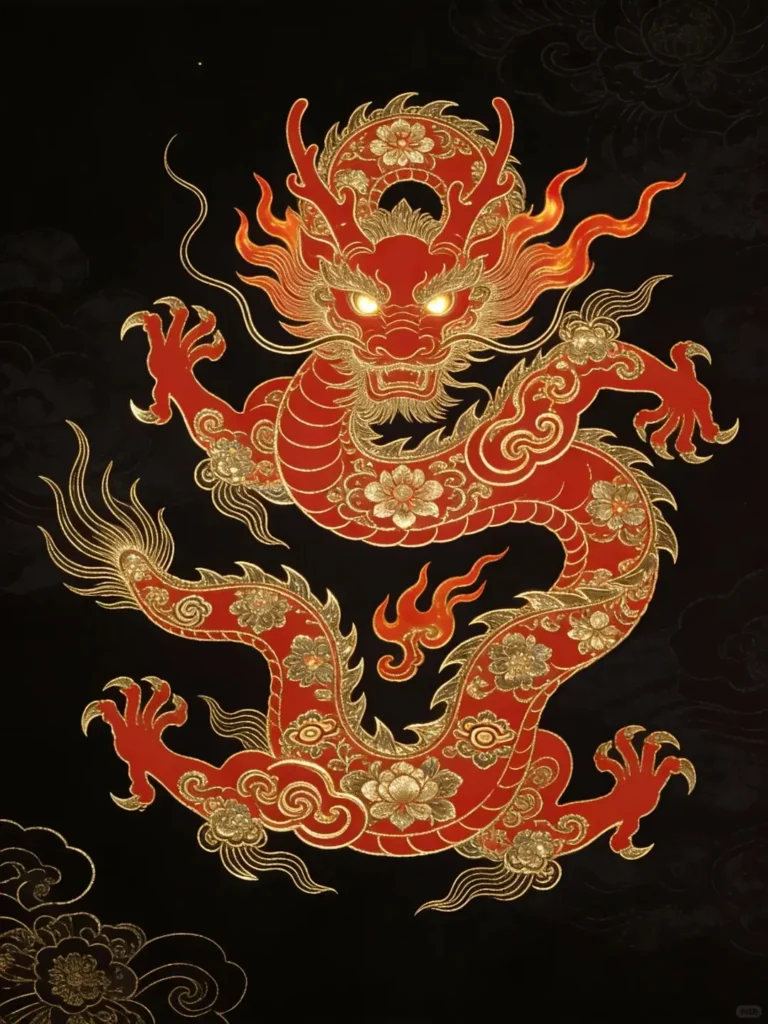
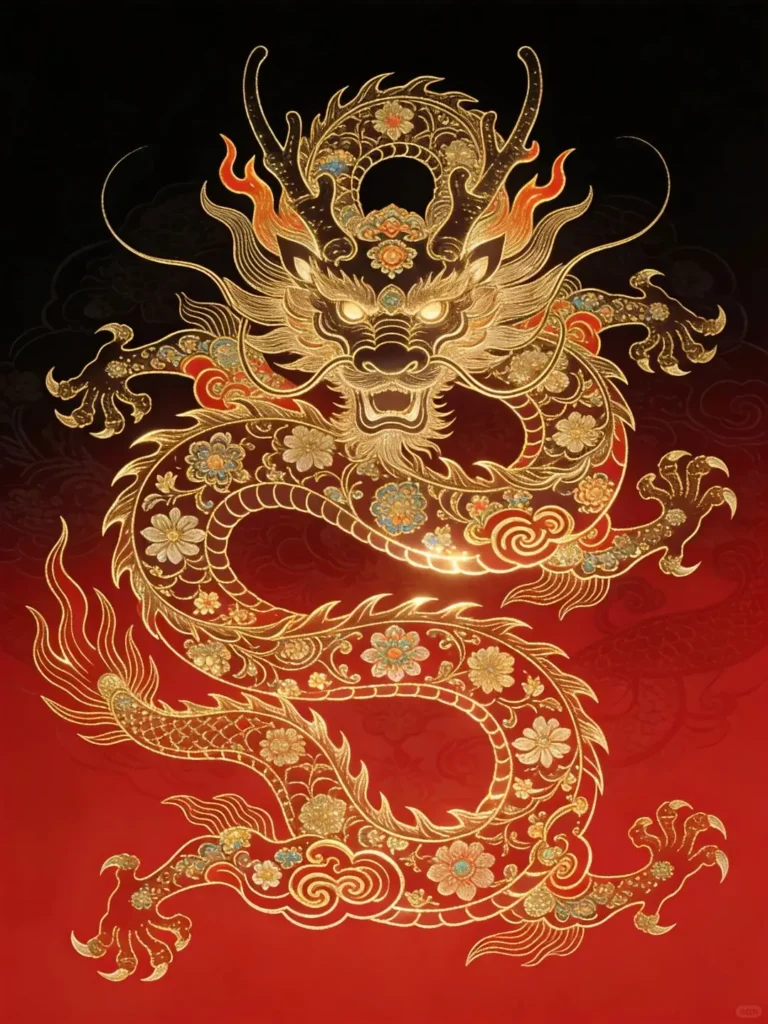
First Things First: What Is the Chinese Zodiac Dragon?
Before we dive into the thousands of years of history, let’s start with the basics that every traveler to China should know. The Chinese Zodiac Dragon is the fifth sign in the 12-year cycle of the Chinese Zodiac, paired with the fifth earthly branch, Chen (辰). In the Chinese calendar, every year corresponds to a zodiac animal, and the Year of Dragon comes around once every 12 years—the most recent was 2024, and the next will be 2036.
What makes this sign so unique? Unlike the other 11 zodiac animals (the rat, ox, tiger, rabbit, snake, horse, goat, monkey, rooster, dog, and pig), the dragon is not a real, living animal. It is a mythical, sacred creature that has been at the core of Chinese civilization for longer than almost any other cultural symbol. While Western dragons are almost always portrayed as evil, fire-breathing monsters to be defeated, the Chinese Zodiac Dragon is the exact opposite: it is a benevolent, wise, and powerful deity that brings good fortune, prosperity, rain for harvests, and protection to the Chinese people.
In the Chinese Zodiac system, the dragon is universally regarded as the most auspicious, noble, and powerful sign of all. It is linked to the element of earth, the season of spring, and the hours of the morning between 7 am and 9 am—traditionally the time when farmers head out to their fields, and when the morning mist rises, which the ancient Chinese believed was the dragon moving through the sky.
The Ancient Origins & History of the Chinese Zodiac Dragon (Legends You’ve Never Heard Before)
To understand why the dragon means so much to Chinese people, you have to go back to the very beginning of Chinese civilization. This is not a symbol that was invented a few hundred years ago; its roots stretch back over 8,000 years, to the very first Neolithic cultures that settled along the Yellow River, the cradle of Chinese civilization.
The Earliest Archaeological Records of the Dragon
The oldest confirmed dragon image ever discovered in China comes from the Chahai Site in Liaoning Province, part of the 8,000-year-old Xinglongwa Culture. There, archaeologists unearthed a giant dragon figure made entirely of stacked stones, measuring 19.7 meters long and 2 meters wide. Its shape is a simple, sinuous serpentine form, with a clear head and tail—proof that dragon worship was already a core part of Chinese life long before written language even existed.
Another groundbreaking find came from the Yangshao Culture site in Puyang, Henan Province, dating back 6,000 years. In a Neolithic tomb, archaeologists found a dragon figure made entirely of white clam shells, laid out next to a tiger figure on the other side of the tomb. This clam-shell dragon has a long, snake-like body, four legs, and a distinct head with horns—almost identical to the dragon form we recognize today. What makes this find so incredible is that it confirms the ancient Chinese belief that the dragon is linked to the east, and the tiger to the west, a core concept of Chinese cosmology that is still used today in feng shui and traditional culture.
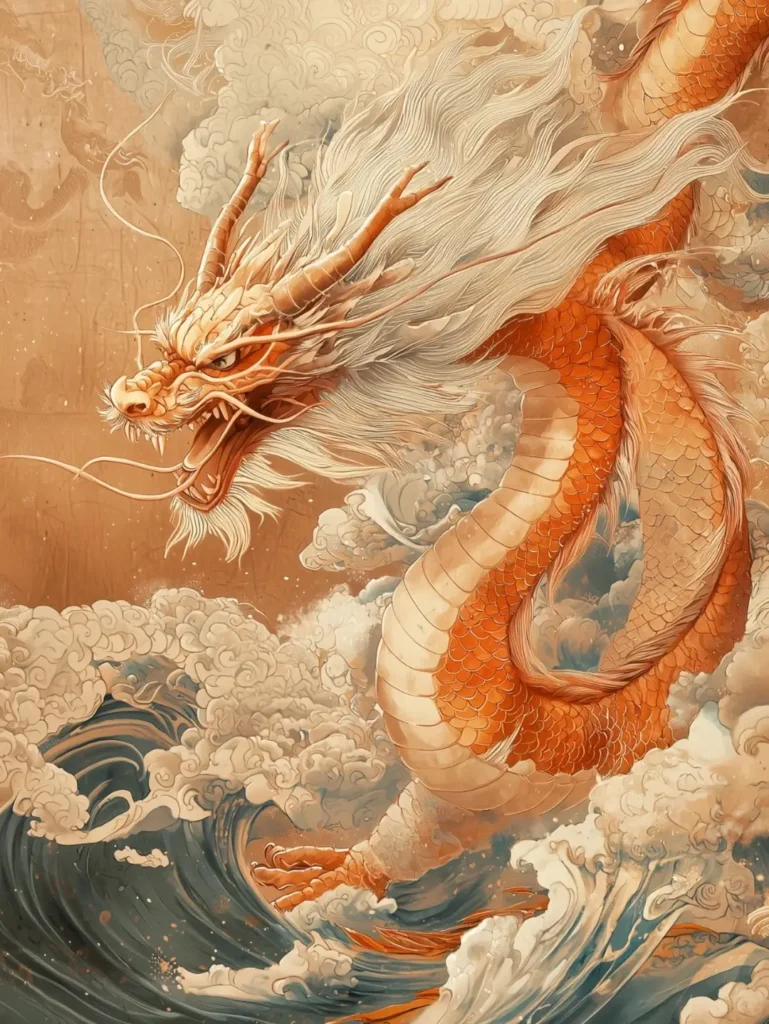
Over the thousands of years that followed, the dragon’s image evolved and became more detailed, until it was formalized into the classic “nine resemblances” form that defines the Chinese Zodiac Dragon today. This form, finalized during the Han Dynasty (202 BCE – 220 CE), describes the dragon as having:
- Horns like a deer
- A head like a camel
- Eyes like a rabbit
- A neck like a snake
- A belly like a giant clam
- Scales like a carp
- Claws like an eagle
- Paws like a tiger
- Ears like a cow
Every single part of this form has a meaning. The deer horns symbolize longevity and peace; the eagle claws represent power and authority; the carp scales stand for prosperity and good fortune. Even the number of scales has significance: a traditional Chinese dragon has 117 scales, 81 of which are yang (positive, masculine) and 36 yin (negative, feminine), balancing the two core forces of the universe in Chinese philosophy.
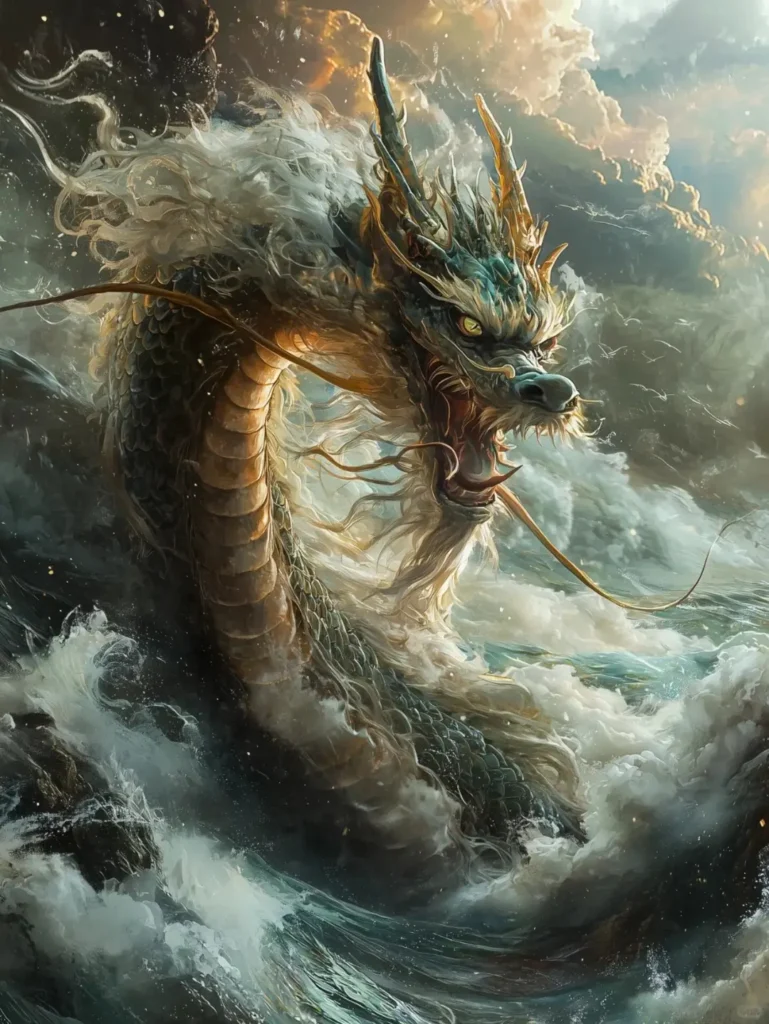
How the Dragon Joined the Chinese Zodiac System
Many travelers ask me: if the dragon is so powerful, why is it only the fifth sign in the Chinese Zodiac? The answer lies in one of the most beloved folk tales in Chinese traditional culture, a story that every Chinese child grows up hearing.
The legend goes that the Jade Emperor, the supreme ruler of heaven in Chinese mythology, announced that he would select 12 animals to be the guardians of the calendar, with the order decided by a race across a wide river. The first 12 animals to reach the finish line would earn a spot in the zodiac cycle.
On the day of the race, all the animals gathered at the riverbank. The ox, strong and steady, was the first to enter the water, plodding steadily through the current. The clever rat, too small to swim on its own, snuck onto the ox’s back, and jumped off just as they reached the shore, claiming first place. The ox came second, followed by the tiger, who used its strength to fight through the strong currents.
But what about the dragon? It was the fastest, most powerful creature in the race—it could fly, after all. It should have won easily. But halfway to the finish line, the dragon looked down and saw a small village below, suffering from a terrible drought. The crops were dying, the rivers were drying up, and the villagers were praying for rain. Without a second thought, the dragon stopped, breathed out clouds, and brought a heavy rainstorm to the village, saving the crops and the people. By the time it finished helping the villagers and continued to the finish line, it had fallen behind. To make things even more heartwarming, as it flew over the river, it saw the rabbit struggling in the water, clinging to a floating log. The dragon picked the rabbit up, set it on its horn, and carried it safely to the shore.
Because of its kindness and selflessness, the dragon only finished in fifth place. But even so, it became the most beloved and respected sign in the entire zodiac. This story tells you everything you need to know about the Chinese Zodiac Dragon: it is not just a symbol of power, but of generosity, compassion, and duty to the people.
Beyond the folk tale, there is solid historical evidence for the dragon’s place in the Chinese Zodiac. The earliest complete written record of the 12 zodiac animals comes from the Shuihudi Qin Bamboo Slips, discovered in Hubei Province and dating back to the Warring States Period (475 – 221 BCE). These slips clearly state: “Chen, the dragon, is the fifth.” The link between the Chen earthly branch and the dragon was further cemented in the Han Dynasty, when the philosopher Wang Chong wrote in his famous text Lunheng (Balanced Inquiries): “The earthly branch Chen is associated with the dragon. The branch Si is associated with the snake.” This means that the Chinese Zodiac Dragon has been a formal part of the Chinese calendar system for over 2,200 years.
The Legendary Stories That Shaped the Zodiac Dragon’s Image
The dragon’s place in Chinese traditional culture isn’t just from the zodiac race. Three ancient, foundational legends have shaped its identity for thousands of years, and you’ll see references to these stories everywhere you travel in China.
The first is the legend of Yinglong, the Winged Dragon, who helped Yu the Great tame the great flood. This story comes from the Shan Hai Jing (Classic of Mountains and Seas), the ancient Chinese text of mythology and geography, written over 2,200 years ago. When the Yellow River flooded, destroying villages and farmland across China, Yu the Great was tasked with stopping the flood. Yinglong, a powerful dragon with wings, came down from heaven to help him. It used its tail to carve deep channels into the earth, redirecting the floodwaters into the sea, and defeated the evil water monsters that were causing the floods. After the flood was tamed, Yinglong chose to stay in the mountains of southern China, to watch over the people. To this day, the Chinese people say that southern China gets more rain than the north because Yinglong still lives there, bringing water to the land.
The second foundational legend is the story of the Yellow Emperor ascending to heaven on a dragon. The Yellow Emperor is the legendary ancestor of all Chinese people, who unified the Chinese tribes 5,000 years ago, invented writing, medicine, agriculture, and silk, and created the foundation of Chinese civilization. According to the Records of the Grand Historian (Shiji), written by Sima Qian in the Han Dynasty, after the Yellow Emperor ruled for over 100 years, a giant golden dragon descended from heaven, its scales shining like the sun. The dragon had come to take the Yellow Emperor back to heaven, to reward him for his service to the people. The Yellow Emperor climbed onto the dragon’s back, and 70 of his loyal ministers and family members climbed on with him. As the dragon flew up into the sky, many other people tried to grab on, but they fell off as the dragon rose higher. Those who fell were left weeping, holding onto the Yellow Emperor’s bow and hat that had fallen off during the ascent. This is why, for over 2,000 years, Chinese emperors have called themselves Zhen Long Tian Zi (True Dragon Son of Heaven). They believed that they were the descendants of the Yellow Emperor, and that the dragon was their sacred symbol, linking them to heaven and giving them the right to rule.
The third legend is the story of the Dragon Kings of the Four Seas. In Chinese mythology, there are four Dragon Kings, each ruling over one of the four seas that surround China: the East Sea, South Sea, West Sea, and North Sea. Each Dragon King lives in a magnificent underwater palace, and they control the rain, the tides, the rivers, and the oceans. This belief became so deeply rooted in Chinese traditional culture that, for thousands of years, every village in China had a Dragon King Temple. Farmers would go to the temple to pray for rain during droughts, and fishermen would pray for calm seas and a good catch before they set sail. Even today, you can still find hundreds of Dragon King Temples across China, from the Black Dragon Pool in Beijing to the Dragon King Temple on the banks of West Lake in Hangzhou. When you visit these temples during your trip, you’ll see locals burning incense and making offerings to the Dragon Kings, keeping this 2,000-year-old tradition alive.
What Makes the Chinese Zodiac Dragon So Special in Chinese Traditional Culture
For Western travelers, it can be hard to grasp just how central the dragon is to Chinese identity. It’s not just a fun symbol on a zodiac calendar—it’s woven into every part of Chinese life, from the highest imperial power to the smallest folk traditions. Here’s what you need to understand to truly appreciate it when you travel in China.
The Dragon as the Ultimate Symbol of Imperial Power
After the Han Dynasty, the dragon quickly became the exclusive symbol of the Chinese emperor. For over 2,000 years, no one else in China was allowed to use the dragon’s image without the emperor’s permission—on pain of death. The emperor wore a Long Pao (Dragon Robe), embroidered with 9 five-clawed dragons, the only person in the empire allowed to wear five-clawed dragon designs. Princes and nobles could only wear four-clawed dragons, called Mang (python), and ordinary people were forbidden from wearing any dragon designs at all. The emperor sat on a Dragon Throne, slept in a Dragon Bed, lived in a Dragon Palace, and even called his children Dragon Sons and Dragon Daughters.
There is no better place to see this imperial dragon culture than the Forbidden City in Beijing, the home of 24 Chinese emperors across the Ming and Qing Dynasties. When you visit, you’ll see the dragon everywhere you look: carved into the stone pillars, painted on the ceilings, embroidered on the silk curtains, molded into the roof tiles, and even engraved on the dishes and cups the emperor used. The Hall of Supreme Harmony, the most important building in the Forbidden City, where the emperor held his grand ceremonies, has over 13,844 dragon carvings and paintings inside it. The Nine Dragon Wall in the Forbidden City, built in 1771, is one of the most famous dragon monuments in the world: it’s 29.4 meters long, 3.5 meters high, and covered in glazed ceramic tiles, with 9 giant five-clawed dragons flying through clouds and waves, and a total of 270 smaller dragons hidden in the design.
To learn more about the official travel guides for dragon-themed attractions in China, check out this comprehensive guide from <a href=”https://www.chinahighlights.com/travelguide/chinese-zodiac/dragon.htm” rel=”dofollow”>China Highlights</a>, the leading authority on China travel for international visitors.
The Dragon in Folk Beliefs & Daily Life
While the dragon was the exclusive symbol of the emperor, it was also deeply loved by ordinary Chinese people, who saw it as a symbol of good luck, protection, and prosperity. Unlike the imperial dragon, the folk dragon was warm, approachable, and deeply connected to daily life.
You’ll see this folk dragon culture everywhere you go in China, especially during traditional festivals. The most famous example is the dragon dance, performed during the Lunar New Year, Lantern Festival, and other celebrations. The dragon dance uses a long, flexible dragon figure, made of silk, bamboo, and paper, held up by dozens of dancers. As the dancers move, the dragon twists and turns, flying through the streets, to the sound of drums, gongs, and firecrackers. The Chinese people believe that the dragon dance brings good fortune, drives away evil spirits, and brings a prosperous year ahead. If you’re in China during the Lunar New Year, you have to see a dragon dance in person—there’s nothing like the energy of the crowd, the sound of the drums, and the sight of the giant dragon winding through the streets.
Another beloved folk tradition is the dragon boat race, held every year during the Dragon Boat Festival (Duanwu Festival) on the fifth day of the fifth lunar month. The tradition dates back over 2,000 years, to honor the poet Qu Yuan, who drowned himself in the Miluo River to protest corruption. The local people raced out in their boats to try to save him, and beat drums to scare away the fish that might eat his body. But the dragon boat race also has deep roots in dragon worship: the boats are carved to look like dragons, with a dragon head at the front and a dragon tail at the back, and the races are held to honor the Dragon King, to pray for rain and a good harvest. Today, dragon boat races are held across China, from the Pearl River in Guangzhou to the Miluo River in Hunan, the birthplace of the tradition. If you’re in China during the Dragon Boat Festival, watching a dragon boat race is an absolute must.
The dragon is also part of everyday Chinese life in small, beautiful ways. Chinese parents often give their children names with the character Long (龙,the Chinese word for dragon), to wish them a life of success, power, and good fortune. You’ve definitely heard of two of the most famous examples: Bruce Lee (Li Xiaolong, literally “Little Dragon Li”) and Jackie Chan (Cheng Long, literally “Become Dragon”). Chinese people also hang dragon paintings in their homes to bring good luck and protection, and wear dragon jewelry to ward off evil spirits.
The Year of Dragon in the Chinese Zodiac Cycle
The Year of Dragon is the most anticipated, most celebrated year in the entire Chinese Zodiac cycle. In China, it’s universally known as the luckiest year to be born, and millions of couples plan to have “dragon babies” during this year. Why? Because people born in the Year of Dragon are believed to inherit the dragon’s noble, powerful, and auspicious traits. They are seen as natural leaders, confident, ambitious, intelligent, generous, and charismatic, with a natural ability to succeed in everything they do.
If you travel to China during a Year of Dragon, you’ll see the dragon everywhere. Every shopping mall, street, restaurant, and temple will be decorated with dragon lanterns, dragon paintings, and dragon-themed red envelopes (hongbao). The Lunar New Year celebrations will be bigger, more vibrant, and more energetic than any other year, with dragon dances in every city and town. Even the hospitals will be busier, as families welcome their dragon babies into the world. It’s the best time to experience the full power of the Chinese Zodiac Dragon in Chinese traditional culture.
If you want to learn about all 12 signs of the Chinese Zodiac in detail, read our complete guide <a href=”https://yourwebsite.com/chinese-12-zodiac-signs-complete-guide”>here</a>.
Chinese Zodiac Dragon vs Western Dragons: The Key Differences You Need to Know
The number one question I get from travelers is: “Why is the Chinese dragon so different from the dragons we know in the West?” It’s a critical question, because if you only know Western dragons, you’ll completely miss the meaning of the Chinese Zodiac Dragon. Here are the core differences that will change how you see it:
- Core Nature & Moral Role: Western dragons are almost always portrayed as evil, greedy, destructive monsters. They hoard gold, kidnap princesses, burn villages, and are the villains that heroes must defeat. The Chinese Zodiac Dragon is the exact opposite: it is a benevolent, wise, and compassionate deity that protects the people, brings rain for harvests, and grants good fortune. It is a hero, not a villain.
- Powers & Abilities: Western dragons are known for breathing fire, destroying everything in their path. The Chinese Zodiac Dragon breathes clouds and rain, bringing life to the land. It controls the rivers, oceans, tides, and weather, and can fly through the sky and swim through the deepest waters—no fire required.
- Physical Form: Western dragons are bulky, heavy creatures with large bat-like wings, thick scales, and giant claws, designed for brute strength and destruction. The Chinese Zodiac Dragon is a long, sinuous, graceful creature, with a snake-like body, deer horns, eagle claws, and carp scales. Most Chinese dragons have no wings at all (only the ancient Yinglong has wings); they fly using their divine power, not their body.
- Cultural Status: In Western culture, dragons are symbols of chaos, evil, and fear. In Chinese traditional culture, the Chinese Zodiac Dragon is the most sacred, most beloved symbol of the entire civilization. It is the symbol of the emperor, the ancestor of the Chinese people, and the bringer of good fortune. Chinese people call themselves “the descendants of the dragon,” a phrase you’ll hear everywhere in China.
For a deeper dive into the historical artifacts of the Chinese Zodiac, you can explore the British Museum’s curated collection <a href=”https://www.britishmuseum.org/collection/topic/Chinese_zodiac” rel=”dofollow”>here</a>.
How to Experience the Chinese Zodiac Dragon Culture When Traveling in China
Now that you know the history and meaning of the Chinese Zodiac Dragon, you’re probably wondering: where can I see the best dragon culture during my trip to China? Here are my top recommendations, curated from years of guiding travelers across the country:
- The Forbidden City, Beijing: This is the ultimate destination for dragon culture. Spend a full day exploring the palace, and don’t miss the Hall of Supreme Harmony, the Nine Dragon Wall, and the Imperial Garden, where you’ll see thousands of dragon carvings and paintings. I recommend going early in the morning, when the crowds are smaller, so you can take your time to look at the details of the dragon designs.
- The Three Great Nine Dragon Walls: The Forbidden City’s Nine Dragon Wall is famous, but there are two other incredible Nine Dragon Walls in China. The one in Datong, Shanxi Province, is the oldest and largest: it was built in 1392, during the Ming Dynasty, and is 45.5 meters long, 8 meters high, with 9 giant glazed ceramic dragons. The third is in Beihai Park, Beijing, just a short walk from the Forbidden City, built in 1756, with stunningly detailed dragon designs.
- Shanghai Yu Garden: This beautiful classical Chinese garden, built in the Ming Dynasty, is home to the famous Dragon Wall, with five giant dragon heads winding along the top of the wall, their mouths open as if they’re breathing clouds. During the Lunar New Year, Yu Garden hosts one of the best lantern festivals in China, with hundreds of giant dragon lanterns lighting up the garden.
- Chen Clan Ancestral Hall, Guangzhou: This is the most beautiful example of Lingnan (southern Chinese) architecture in China, built in the late Qing Dynasty. Every inch of the hall is covered in intricate carvings, and the dragon designs are some of the most detailed you’ll ever see: carved into wood, stone, brick, and ceramic, with vibrant colors and dynamic poses. If you’re in Guangzhou during the Dragon Boat Festival, you can also watch the famous dragon boat races on the Pearl River.
- Puyang Yangshao Culture Site, Henan: If you’re a history buff, this is a must-visit. This is where the 6,000-year-old clam-shell dragon was unearthed, the earliest complete dragon image in China. The site has a museum that displays the original tomb and the clam-shell dragon, so you can see the very beginning of dragon culture in China.
FAQ: About the Chinese Zodiac Dragon
FAQ 1: What’s the biggest difference between the Chinese Zodiac Dragon and Western dragons?
The single biggest difference is their core cultural role. Western dragons are almost universally depicted as evil, destructive monsters that hoard treasure and terrorize communities, serving as the primary antagonist in countless fairy tales and legends. The Chinese Zodiac Dragon, by contrast, is a benevolent, sacred deity and a symbol of good fortune, protection, and prosperity. It is deeply tied to the agricultural roots of Chinese civilization, as the controller of rain and water, and is revered as the ancestor of the Chinese people, not a monster to be feared. While Western dragons are defined by their fire-breathing destruction, Chinese dragons are defined by their life-giving rain and compassion for the people.
FAQ 2: What personality traits are people born in the Year of the Dragon said to have in Chinese culture?
People born in the Year of Dragon are universally regarded as the most charismatic, ambitious, and confident of all the Chinese Zodiac signs. They are natural-born leaders, with a strong sense of justice, a generous spirit, and an unshakable belief in their ability to succeed. They are not afraid of challenges, and thrive when they’re working toward big, bold goals. In Chinese culture, dragon-born people are said to be destined for greatness, whether in business, politics, art, or any field they choose. That said, they also have their weaknesses: they can be overly proud, impatient with those who move slower than them, and prone to impulsive decisions when they’re passionate about something. They hate being controlled or restricted, and value their freedom above almost everything else.
FAQ 3: Where can I see the most impressive Chinese Zodiac Dragon cultural relics during my trip to China?
The most impressive dragon relics are spread across China, from ancient archaeological sites to imperial palaces. For first-time travelers, the absolute must-sees are the Forbidden City in Beijing (home to over 100,000 dragon designs across the palace complex), the three Great Nine Dragon Walls (in Beijing’s Forbidden City, Beijing’s Beihai Park, and Datong, Shanxi), and the Shanghai Yu Garden Dragon Wall. For history lovers, the Puyang Yangshao Culture Site in Henan (home to the 6,000-year-old clam-shell dragon) and the Sanxingdui Museum in Sichuan (home to incredible bronze dragon relics from the 3,000-year-old Shu Kingdom) are unmissable. If you’re traveling during traditional festivals, you can experience living dragon culture at the Lunar New Year dragon dances in any major Chinese city, or the Dragon Boat Festival races on the Pearl River in Guangzhou or the Miluo River in Hunan.
FAQ 4: What lucky traditions and taboos should I know about the Year of the Dragon in Chinese traditional culture?
The Year of Dragon is filled with lucky traditions to bring good fortune, and a few small taboos to avoid bad luck. The most beloved lucky traditions include wearing red clothing and accessories (red is the color of good luck and protection in Chinese culture), especially for people born in the Year of Dragon (their ben ming nian, or zodiac year). Many people wear red underwear, red bracelets, or red necklaces throughout the year to ward off evil spirits. Other traditions include hanging dragon-themed spring couplets on your door during Lunar New Year, giving dragon-themed red envelopes (hongbao) to children, and attending dragon dances and dragon boat races to bring prosperity for the year ahead.
The key taboos to be aware of are mostly for those in their dragon zodiac year: they are advised to avoid attending funerals or visiting the seriously ill, as these are believed to bring negative energy. In Chinese astrology, the dragon is in conflict with the dog zodiac sign, so dragon-born people are traditionally advised to be cautious with major decisions like marriage, business partnerships, or moving house with people born in the Year of the Dog. For all visitors, the most important thing is to treat dragon imagery with respect: avoid stepping on dragon designs on the ground, damaging dragon decorations, or making disrespectful comments about the dragon, as it is a sacred symbol for Chinese people.
Closing Wishes for Your Journey Into Chinese History & Culture
I hope this guide has not only taught you about the history and meaning of the Chinese Zodiac Dragon, but also given you a window into the heart and soul of Chinese traditional culture. The dragon is not just a mythical creature carved into stone or painted on silk—it is the thread that connects 8,000 years of Chinese history, from the Neolithic farmers stacking stones to make the first dragon image, to the emperors sitting on the Dragon Throne, to the families dancing in the streets during Lunar New Year today. It is the symbol of the Chinese people’s hope, resilience, generosity, and love for their land.
As you prepare for your trip to China, I hope you carry this knowledge with you. When you walk into the Forbidden City, I hope you don’t just see a dragon carved into a pillar—you see the story of Yinglong helping Yu the Great tame the flood, the Yellow Emperor ascending to heaven on a golden dragon, and the generations of Chinese people who have revered this creature as their ancestor and protector. When you watch a dragon dance winding through the streets, I hope you feel the joy and hope that has been passed down for thousands of years.
May your journey through China be filled with the same kindness, courage, and good fortune that the Chinese Zodiac Dragon represents. May you discover hidden stories in every temple, every ancient site, every conversation with a local. May you fall in love with the depth, beauty, and warmth of Chinese culture, and may you leave China with a heart full of memories, a mind full of stories, and the dragon’s blessing of luck and prosperity for all the years ahead.